Custom Leather Harness Development: From Design to First Sample
Custom leather harness development starts with understanding your design, materials and construction requirements. For brands creating an original harness or corset-inspired accessory, clear specifications help guide pattern making, the first prototype and sample revisions.
This guide explains what to prepare, how the development process works and what can affect sample costs and timing.
1. Can You Start with a Sketch or Reference Image?
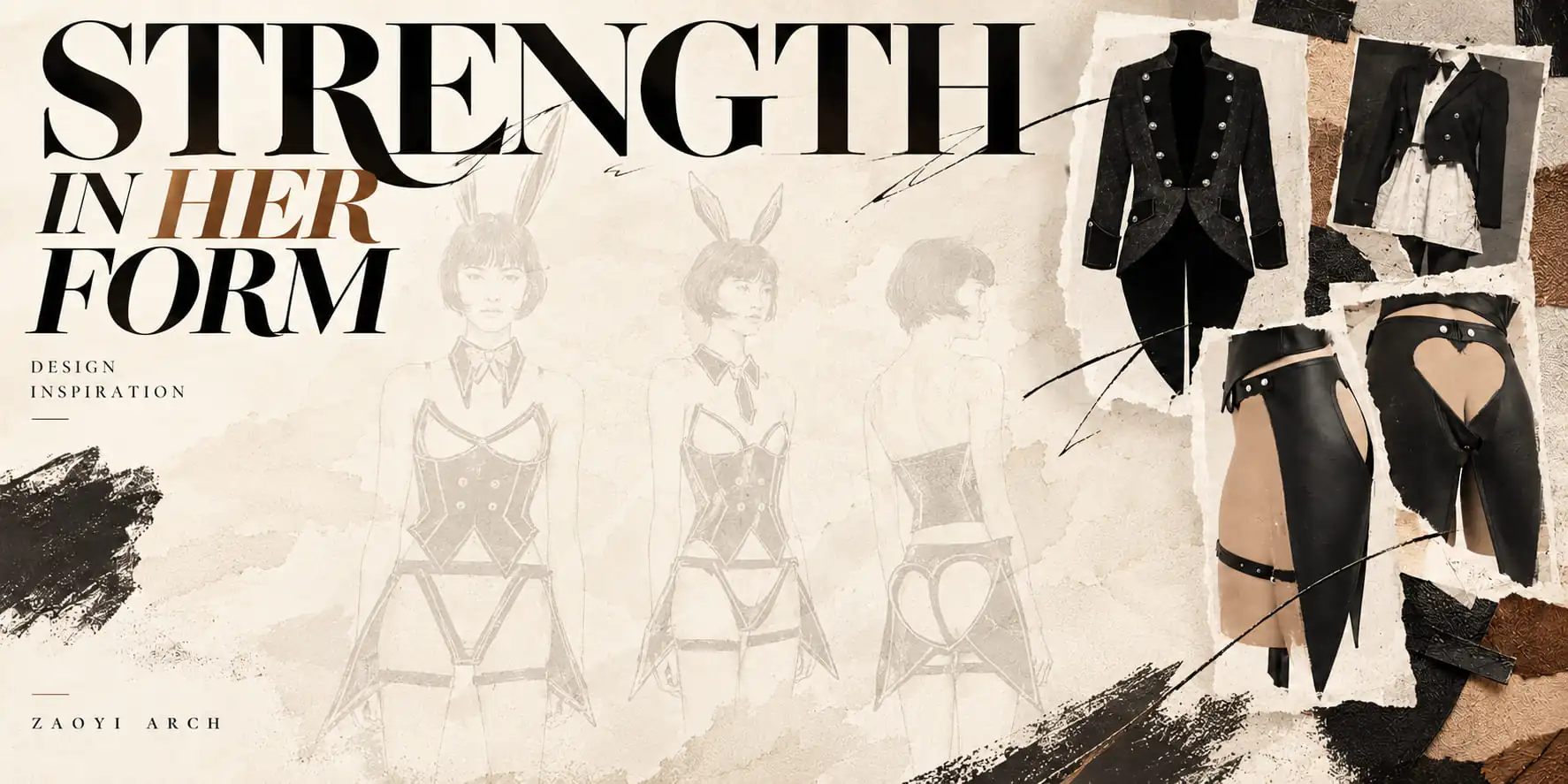
A sketch, reference image or existing sample can provide a starting point for a custom harness project. Each communicates different information.
A sketch may show the intended silhouette without explaining the construction. A photograph may communicate the style while leaving the back view, fastening method or measurements unclear. An existing sample can show how the product is assembled, but you still need to identify which features should change.
Start by explaining what you want to develop and which details matter most to your brand.
Useful information includes:
- Front, back and side views where available.
- Reference images with notes identifying the relevant features.
- How and where the product is intended to be worn.
- Preferred materials, colors and hardware finishes.
- Key measurements and the intended size range.
- Details you want to retain, change or explore.
Instead of sending a photograph with the instruction “something like this,” explain whether you are referring to its waist shape, panel proportions, strap arrangement or material finish.
If your technical pack is incomplete, separate confirmed decisions from details that still need discussion. This helps establish the development scope before sampling begins.
If you are still defining your design direction, browse our harness and lingerie collection to explore different silhouettes and component arrangements. Identify which details are relevant to your project and which you would like to change.
2. What Should You Confirm Before Leather Harness Sampling?
Before pattern development begins, the design needs enough information to guide construction. The following details help turn a visual concept into a clearer sample brief.
Silhouette and Panel Proportions
The relationship between individual sections determines the overall appearance of a harness.
For a corset-inspired design, important details may include the waist-section height, lower-panel length, opening placement and direction of pointed edges. For a strap-based harness, strap widths, spacing and connection positions may need closer attention.
Use multiple views to show how these elements should relate to one another.
Measurements and Adjustment Range
A size label alone does not fully describe a harness.
Depending on the design, the specification may need waist measurements, strap lengths, panel dimensions, buckle positions and the intended adjustment range.
Also explain whether the product will be worn directly against the body or over clothing. This provides context when reviewing the proposed dimensions.
Materials and Thickness
“Black leather” leaves several construction decisions open.
A material specification may also need to identify thickness, flexibility, surface texture, backing, lining and edge treatment. These characteristics influence how panels bend, how edges are finished and how layers are assembled.
If you are considering genuine leather, PU or another alternative, identify the options clearly. Changing the material may require adjustments to the pattern or construction.
Hardware and Connections
Hardware needs to be considered alongside the design.
Buckle dimensions, ring sizes and connector shapes affect strap widths, attachment positions and the available space between components. Color and finish are only part of the specification.
Custom hardware may also require separate artwork, dimensional review, tooling and sourcing discussions.
Branding and Packaging
Include the intended logo position, approximate size and preferred application method where known.
Identify labels, branded charms and packaging requirements early. Clarify which elements need to appear on the first prototype and which can be developed separately.
Material, hardware and branding decisions should be considered together. Explore our OEM/ODM customization options for an overview of the details you can discuss when preparing your sample brief.
3. How Does Custom Leather Harness Development Work?
Custom leather harness development involves translating visual references into patterns, components and assembly decisions.
The work often includes discussions between the project coordinator and the pattern maker before the first physical sample is ready. Questions about shape, materials, fastening and construction need clear answers to guide the next step.
Design and Construction Review
The initial review establishes the intended result and identifies missing information.
This is the time to discuss unclear measurements, unavailable components, material choices and construction details that require further consideration.
Pattern Development
The pattern translates the design into individual parts.
Panel outlines, strap positions and assembly details need to work together. Adjusting one section can affect a neighboring area, so the pattern should be reviewed as a complete arrangement.
First Prototype
The first prototype provides a physical reference for evaluating the design.
Depending on the agreed approach, an early sample may focus on shape and proportions, while a later sample addresses additional materials or finishing details. The purpose of each development round should be clear before work begins.
A prototype made in substitute material can help review certain features, but it does not confirm how the intended production material will behave.
Sample Review
Once the sample is available, photographs, measurements and review notes can be compared with the design brief.
The review should identify which details match the intended direction, which need adjustment and which require further assessment.
For more background on our approach to materials, sample construction and manufacturing, visit ZAOYI ARCH’s workshop and production overview.
4. See the Process in a Real Development Project
Our Leather Corset & Harness Development Case Study presents the project through design references, the first prototype, annotated revision notes and revised sample details.
The review records requested adjustments to areas including the waist section, heart-shaped opening and side-panel outline.
These records show how a visual design intention can be translated into specific points for the next development round.
View Our Leather Harness Development Case Study →
5. Why Might the First Sample Need Revisions?
A flat drawing and a physical sample reveal different information.
A panel that looks balanced in a sketch may appear different when wrapped around a form. An opening may need adjustment in relation to the waistline. A pointed edge may extend in a different direction from the original intention.
Reviewing these details helps define the next steps.
It is useful to distinguish between:
- A detail that differs from an agreed specification.
- A design decision that was not fully defined before sampling.
- A new preference introduced after reviewing the sample.
This distinction helps clarify the revision scope and its possible effect on cost or timing.
How to Communicate Sample Revisions Clearly
Specific feedback is easier to act on than a general request such as “make it closer to the sketch.”
For each revision, record:
- Location: Which panel, strap, opening or connection needs attention?
- Observation: What can be seen or measured in the current sample?
- Requested change: What should be adjusted?
- Reference: Is there a marked photograph, measurement or updated drawing?
- Status: Is the adjustment requested, completed or still under review?
Numbered annotations help connect each comment to the correct area. Include the sample version and review date so earlier instructions are not confused with the latest request.
When comparing versions, use similar camera angles and clear labels. Photographs can document visible changes; fit, comfort and performance require appropriate assessment.
6. What Affects Sample Cost and Development Time?
There is no single sample cost or development schedule that applies to every custom leather harness.
An adaptation of an existing construction and an original design with new components may require different amounts of work. The estimate should reflect the actual project requirements.
Factors that can affect costs and timing include:
| Factor | What needs to be considered |
|---|---|
| Design complexity | Number of parts, shaped panels and assembly details |
| Specification readiness | Whether measurements and construction decisions are clear |
| Material sourcing | Availability, color requirements and suitability for the design |
| Hardware | Existing components or separately developed parts |
| Branding | Logo methods, labels, charms and other custom elements |
| Revisions | Small pattern adjustments or substantial design changes |
| Review turnaround | Time needed to clarify questions and confirm decisions |
Before proceeding, confirm what the sample fee includes, which materials will be used, how revisions are handled and when the estimated timeline begins.
Where relevant, distinguish sample development from material procurement, shipping and customs clearance.
The Work Between the Visible Stages
A development project may be presented in four stages, but the photographs show only part of the work.
Understanding the design, discussing construction, communicating with pattern makers and clarifying revision notes all take time. Much of this work happens between the photographed stages.
Clear communication, consolidated feedback and timely decisions help the project move forward. The aim is to create a well-understood sample that provides a reliable reference for the next step.
7. What Should Be Confirmed Before Bulk Production?
A revised sample and an approved production reference represent different stages.
Before authorizing bulk production, record the agreed specifications clearly. Depending on the project, these may include:
- Material, color, thickness and lining.
- Dimensions, size range and adjustment positions.
- Hardware specifications and finish.
- Construction and edge-finishing details.
- Logo, label and branding placement.
- Packaging requirements.
- Inspection criteria and any agreed testing.
- Approved sample version and outstanding conditions.
If a detail remains unresolved, state it explicitly. A photograph of the latest sample should not be treated as confirmation that all production requirements have been approved.
8. What to Send for a Development Review
You do not need every answer before starting a conversation. Explaining what is confirmed and what still needs development provides a useful starting point.
Prepare the following information where available:
| Project information | What to include |
|---|---|
| Design references | Sketches, reference images, technical drawings or an existing sample |
| Product direction | Intended silhouette, wearing position and essential design details |
| Materiales | Preferred material, thickness, color, lining and finish |
| Measurements | Key dimensions, proposed sizes and adjustment requirements |
| Hardware | Shapes, dimensions, finish and custom-component requirements |
| Branding | Logo artwork, placement, labels, charms and packaging |
| Quantity | Estimated quantity per style, with color and size breakdowns if known |
| Schedule | Target sample-review date and intended launch timing |
| Open questions | Details requiring advice, clarification or further development |
Planning a custom leather harness development project? Share your sketches, reference images or technical pack with ZAOYI ARCH. Include your preferred materials, key measurements, estimated quantities and target schedule so we can review the requirements and discuss the next steps.