

BDSM Restraint Factory
BDSM Restraint Factory: A Comprehensive Guide to Sourcing Customized Leather Restraints from Chinese Boutique Artisan Workshops
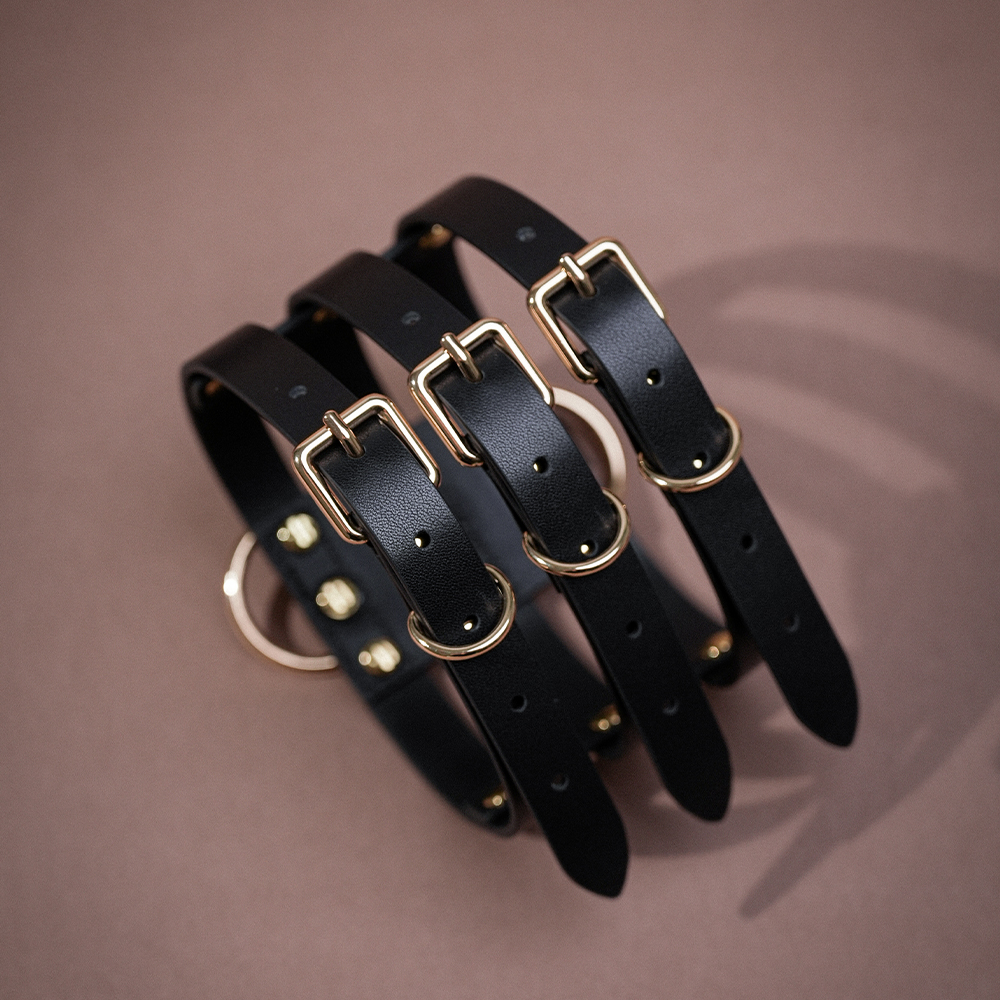
For brands and wholesalers operating in the discerning markets of Australia, Europe, and the United States, identifying a reliable and high-quality BDSM restraint factory in China is paramount. This report provides an in-depth analysis and strategic framework for partnering with specialized Chinese boutique artisan workshops to produce customized leather BDSM restraints, ensuring superior craftsmanship, ethical sourcing, and seamless global distribution. Our brand, Zaoyi (ZY) Bondage, at bondagerestraint.com/, specializes in high-end, customized bondage gear, and this guide reflects the rigorous standards and insights necessary for success in this niche yet growing market.
1. Market Demand and Brand Requirements for Customized Leather Restraints
The global market for BDSM products, particularly customized leather restraints, is experiencing significant growth, driven by evolving consumer attitudes and increased online accessibility. The U.S. BDSM sex toys market alone was estimated at USD 1.4 billion in 2023 and is projected to reach USD 2.4 billion by 2030, growing at a CAGR of 8.13% 13. Restraints dominated this market with a 30.86% revenue share in 2023 and are expected to see the fastest growth 4. This robust expansion underscores the critical need for a capable BDSM restraint factory that can meet escalating demand.

Market Dynamics and Consumer Trends: The consumer base for BDSM products is expanding, notably among young adults and the LGBTQ+ community 1. There’s a growing comfort in discussing BDSM/Kink/Fetish activities, influenced by social media and the entertainment industry 1. The COVID-19 pandemic even positively impacted the adoption of BDSM products, including customized whips and leather handcuffs 1. This shift in societal acceptance fuels demand for personalized and high-quality items.
Material and Customization Trends: A significant trend is the move towards higher-quality materials. While premium PU leather and neoprene are popular for their durability and comfort, there’s also a rising demand for genuine leather, which is a key differentiator for high-end products 5. Eco-friendly options like vegan leather, bamboo, and recycled fabrics are also emerging 10. Customization is no longer a luxury but an expectation, with options for fit, color, restraint mechanisms, engraving, and bespoke pieces becoming increasingly prevalent 5. Designs are evolving to blend functionality with visual appeal, and innovative sensory deprivation gear, such as hoods and masks that selectively block senses, are gaining traction 10. Our brand, Zaoyi Bondage, offers a wide range of customizable items, from our Elegant Bondage Cuffs to our Genuine Leather BDSM Hood, reflecting these trends.
Market Drivers and Restraints: Key drivers include rising disposable income, destigmatization of fetish practices, and increased online accessibility 5. The expanding sexual wellness discourse further contributes to market growth. However, social stigma, limited representation in physical retail, and a lack of knowledge among beginners remain significant restraints 4. Despite these, opportunities abound in personalization and smart technology integration.
Pricing Strategies and Competitive Landscape: Custom manufacturing presents unique pricing challenges due to variable costs and high customer expectations 14. Effective strategies include cost-plus pricing with a twist, value-based pricing (focusing on perceived customer value), and tiered pricing 14. The competitive landscape includes prominent players like Lovehoney Group Ltd. and Doc Johnson Enterprises 3. Many seek manufacturing from private-label OEM companies, while others, like Doc Johnson, produce their own 3. Established Chinese suppliers with high order volumes demonstrate market presence 5. Major companies are also expanding their product lines and presence in Europe 7.
Retail and Distribution: E-commerce dominates distribution, holding a 59.0% revenue share in 2023, with specialty stores also playing a significant role 4. Discreet packaging is increasingly prevalent, addressing privacy concerns 48. Businesses must decide between leveraging digital marketplaces (Shopee, TikTok Shop) or investing in their own e-commerce websites (Shopify, WooCommerce) 17. Mainstream brick-and-mortar retailers often avoid BDSM products due to potential backlash 4.
Geographic Insights: The Asia-Pacific region, particularly China, is a dominant manufacturing and export hub 5. North America and Europe are the largest consumer markets, driven by established communities and purchasing power 5. Europe, with its high access to raw resources, shows great potential for leather products 7.
Brand Requirements for a BDSM Restraint Factory: Wholesalers require a BDSM restraint factory with:
- Customization Expertise: Proven OEM/ODM capabilities for custom designs, logos, and branding 19.
- Material Quality & Options: Access to genuine leather (cowhide), vegan leather, PU leather, and high-quality metal hardware 20.
- Ethical Sourcing & Certifications: Adherence to ethical labor practices and certifications like Leather Working Group (LWG), OEKO-TEX LEATHER STANDARD, SMETA/BSCI, and REACH/ROHS 100.
- Quality Consistency: Robust quality control systems, including pre-production, in-production, and post-production inspections.
- Intellectual Property Protection: Willingness to sign NNN (non-disclosure, non-use, non-circumvention) agreements and respect IP rights 21.
- Flexible MOQs: Some manufacturers offer lower MOQs (e.g., 50 pieces per style) for niche products 20.
- Efficient Lead Times: Clear communication on production progress and timely delivery.
- Customized Packaging: Ability to provide branded packaging beyond standard OPP bags 22.
- Effective Communication: Clear and effective communication, potentially with English-speaking staff or sourcing agents 23.
Sourcing Challenges and Mitigation: Challenges include identifying reliable manufacturers (many trading companies pose as factories), managing quality control remotely, and protecting intellectual property 24. IP registration in China is crucial due to its “first-to-file” system 25. Hidden costs, delays, substandard products, and payment issues are also common 26. Clear Incoterms and secure payment methods are vital 23.
Key Manufacturing Regions in China: Guangdong Province, especially Guangzhou, Dongguan, and Shenzhen, is a major hub for leather goods, offering a complete supply chain and experienced OEM/ODM factories 28. Wan Chai is also noted for sex toy manufacturing 29.
2. Specialized Manufacturing Processes for Boutique Leather Restraint Production in China
The production of high-quality, customized leather BDSM restraints at a boutique scale demands specialized artisan techniques and stringent quality control. China, despite a cautious local market for BDSM products, possesses a comprehensive supply chain and skilled craftsmen capable of manufacturing sophisticated leather bondage gear 34.
Artisan Manufacturing Techniques and Material Handling: A top-tier BDSM restraint factory will demonstrate expertise in:
- Leather Selection: High-end leather is often imported as unfinished hides and then processed domestically in China, balancing cost-effectiveness with quality 34. This allows for precise control over the tanning and finishing processes to achieve the desired texture, durability, and aesthetic for products like our Luxury Gothic Handcuffs or Genuine Leather BDSM Blindfold.
- Cutting: Precision cutting, often using advanced laser cutters or skilled hand-cutting for intricate designs, ensures consistency and minimizes material waste. This is crucial for the complex patterns seen in items like our Irresistible Leather Bondage Lingerie.
- Stitching: The choice between machine and hand stitching is critical. While machines offer speed and uniformity, hand stitching provides superior strength, durability, and a distinct artisanal finish, often preferred for high-end restraints. The type of thread (e.g., waxed polyester for strength and longevity) and stitch density are also vital.
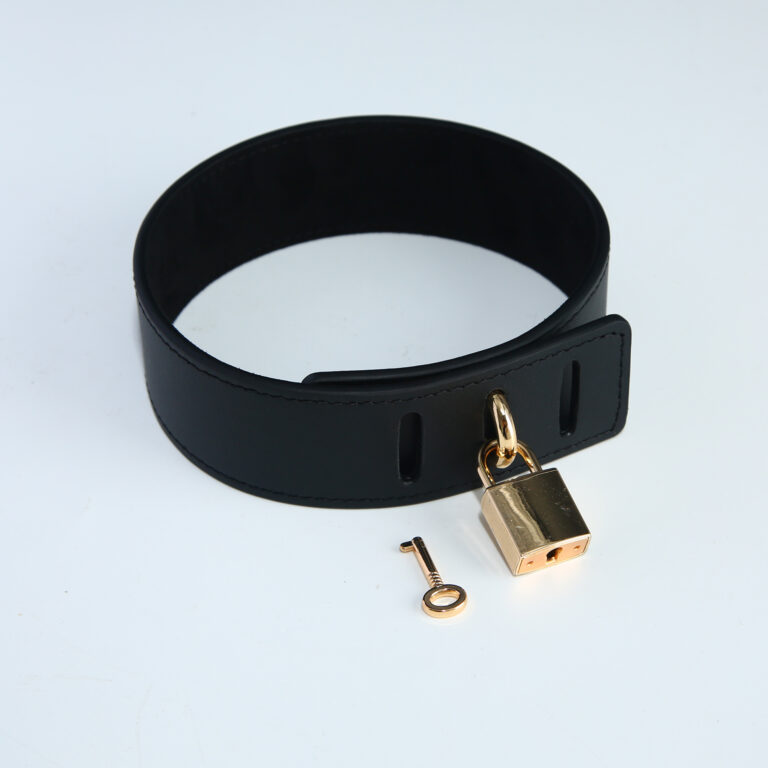
- Edge Finishing: This is a hallmark of quality leatherwork. Techniques include burnishing (smoothing and sealing edges with friction), painting (applying multiple layers of edge paint), or folding (folding leather edges for a clean, soft finish). Proper edge finishing prevents fraying and enhances comfort, essential for items like a BDSM Fetish Collar.
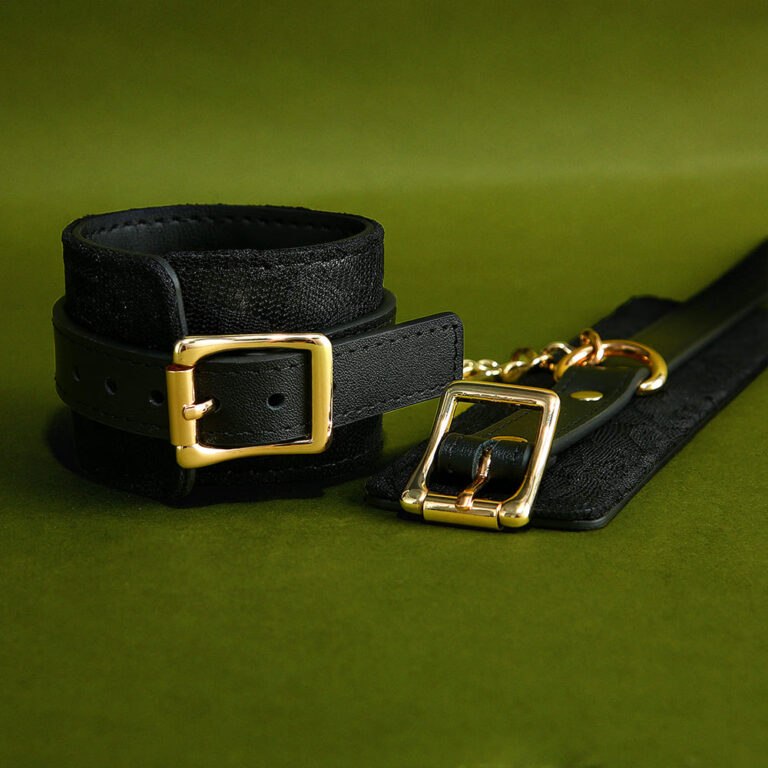
- Hardware Integration: The quality of metal hardware (buckles, D-rings, rivets, O-rings) is paramount for both functionality and safety 34. A boutique BDSM restraint factory will source high-quality, often custom-molded and plated, metal parts that are durable, corrosion-resistant, and free from sharp edges. The integration process must be secure, using appropriate tools and reinforcement to prevent detachment under stress. Our Zaoyi Chain-Collar exemplifies the importance of robust hardware.
- Adhesives: High-quality, non-toxic adhesives are used sparingly and strategically to reinforce seams or attach lining materials, ensuring longevity without compromising the leather’s integrity or user safety.
- Craftsmanship: The overall craftsmanship reflects the artisan’s skill, attention to detail, and understanding of the product’s intended use. This includes symmetrical designs, even stitching, and a flawless finish.
Quality Control Protocols at Boutique Scale: Robust quality control is integrated throughout the production process:
- Incoming Material Inspection: Raw hides are visually graded for defects, mapped, and tested for thickness, moisture content, and pH 100. Chemical residue verification (e.g., heavy metals, formaldehyde) via third-party lab assays ensures compliance with REACH and CPSIA 100. Hardware is inspected for finish, strength, and absence of burrs.
- In-Process Monitoring: Checks are performed for thickness consistency post-splitting, color matching using spectrophotometer readings, rub and light fastness tests, and tensile/tear strength 100. This ensures that each component meets specifications before assembly.
- Post-Production Full Inspection: A comprehensive check of finished products for functional performance (e.g., buckles, straps), construction quality, visual appearance (scratches, stains, broken stitches), size/weight conformity, and labeling/packaging accuracy 101. Defects are classified as Critical, Major, or Minor, with acceptance thresholds based on AQL standards (e.g., 0% for critical, 2.5% for major, 4% for minor) 109.
- Niche Product Expertise: Many Chinese leather factories focus on common items like bags and belts. Therefore, finding a BDSM restraint factory with specific experience in niche products like bondage gear is crucial due to the small order quantities and high-quality requirements 34. Some factories specialize in these products, understanding the unique demands for safety, durability, and aesthetic appeal.
Examples of Specialized Products: Beyond basic cuffs and collars, a sophisticated BDSM restraint factory can produce a variety of items, including:
- Rope bondage components, requiring knowledge of knots and safety 35.
- Specialized cuffs and restraints made from various materials 35.
- Bondage furniture components, such as benches or suspension rigs 35.
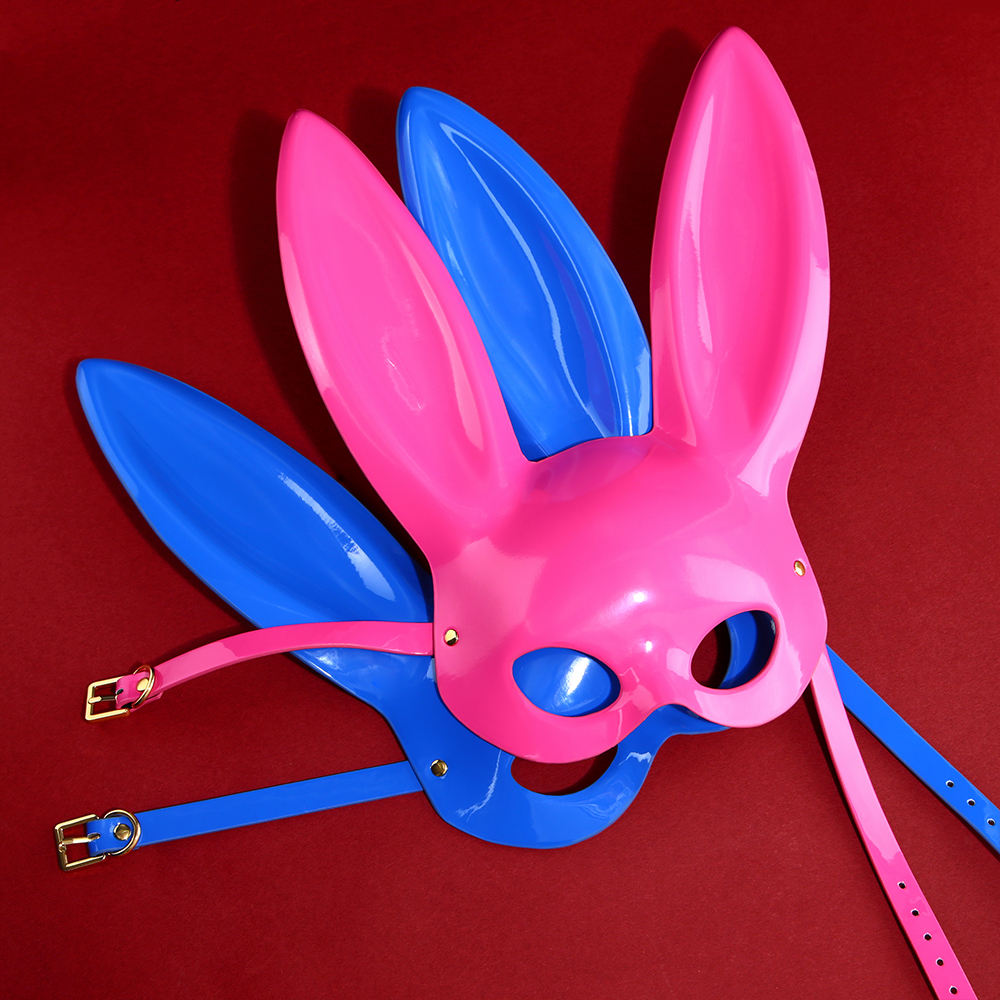
- Complex items like our Zaoyi Bondage Hood Mask or Luxurious Pet Play BDSM Mask.
Chinese suppliers like Shenzhen Qianhai Kingstar Technology Co., Ltd., Ohyeah Trade (Xiamen) Co., Ltd., and Shanghai Huaqi Industrial Co., Ltd. are examples of manufacturers listed on platforms like Global Sources 36. UPKO, a Chinese luxury brand, exemplifies the high-end capabilities, using quality leather and custom-molded, often gold-plated, metal parts to create sophisticated and artistic gear 34.
3. Global Supply Chain and Logistics for China-to-AU/EU/US Distribution
Efficient global supply chain and logistics management are critical for delivering customized leather BDSM restraints from a Chinese BDSM restraint factory to markets in Australia, Europe, and the United States. This involves navigating international shipping, customs clearance, duties, and last-mile delivery with a focus on discretion and compliance.
International Shipping, Customs Clearance, and Duties:
- Harmonized System (HS) Codes: Leather goods typically fall under HS Chapter 42 (“Articles of leather; saddlery and harness; travel goods, handbags and similar containers”) 37. The specific HS code for leather BDSM restraints will depend on the exact product description and composition, which is crucial for determining accurate duty rates.
- Trade Agreements:
- China-Australia Free Trade Agreement (ChAFTA): This agreement has eliminated tariffs on various goods, including hides, skins, and leather, potentially reducing import duties on leather goods from China to Australia 37.
- EU Customs Duties: The EU applies customs duties based on HS codes, with preferential rates possible under specific trade agreements. The EU’s TARIC database is essential for determining applicable rates and regulations 43.
- US Customs Duties: The US levies duties based on HS codes and country of origin. Section 301 tariffs on Chinese goods can significantly impact these rates 4.
- Incoterms (International Commercial Terms): These define buyer and seller responsibilities 3840. Common Incoterms include FOB (Free on Board), CIF (Cost, Insurance, and Freight), and DDP (Delivered Duty Paid), with DDP placing maximum responsibility on the seller, including customs clearance and duties 42.
- Required Documentation: Standard documents include a commercial invoice, packing list, bill of lading (or airway bill), and certificate of origin. A certificate of origin may be needed to claim preferential duty rates 43.
- Import Restrictions and Regulations: Countries may have restrictions on leather goods due to chemical content or environmental concerns. Specific labeling requirements for leather products also apply 43.
- Customs Clearance Procedures: This involves submitting documentation, paying duties/taxes, and inspections. Delays can arise from incomplete documentation, incorrect valuation, or suspicion of prohibited items 44.
- Mitigating Customs Delays: Strategies include accurate documentation, using a reputable customs broker, proactive communication with authorities, and pre-clearance programs 44.
- Freight Forwarding Services: Companies like DHL, FedEx, and UPS, along with specialized freight forwarders, offer international shipping and can assist with customs clearance and regulatory guidance 46.
- “Sensitive” Product Considerations: While not illegal, leather BDSM restraints may face closer scrutiny from customs. Transparent labeling and documentation are crucial to avoid delays or seizures 46.
- EORI Number: Businesses importing into the EU require an EORI number for customs identification 43.
Last-Mile Delivery: Efficiency, Discretion, and Cost-Effectiveness: Discreet last-mile delivery is paramount for privacy-sensitive products like BDSM restraints.
- General Discreet Shipping Practices:
- Plain Packaging: Use unbranded boxes or envelopes with no logos or marketing 4850.
- Generic Labels: Shipping labels should contain only essential details, no product names, and neutral sender information (e.g., company initials) 48.
- Customer Privacy: Discreet shipping protects privacy, builds trust, and reduces cart abandonment 48.
- Staff Training: Employees must be trained on proper discreet packaging procedures 48.
- Tracking: Provide tracking information for customer assurance 49.
- Specific Logistics Providers and Solutions:
- Amazon MCF: Offers “Blank Box” and “Block Amazon Logistics” options, though the latter incurs a surcharge 51.
- ECMSGlobal: Provides end-to-end logistics for global e-commerce, with hubs in Asia, Europe, and North America, serving over 40 markets 52.
- J&J Global Fulfilment: Has global fulfillment centers in North America, Europe, and Australia, offering same-day dispatch and fast shipping within Australia 53.
- ShipBob: A 3PL provider with a global network, including US, UK, EU, Canada, and Australia (Sydney, Melbourne), offering fast shipping and branded packaging options 55.
- AMS eGroup: Specializes in Australian e-commerce fulfillment, with hubs across Australia and New Zealand, offering end-to-end solutions 56.
- Sendle (Australia): Offers low rates, free pickup, carbon-neutral delivery, and DDP (Delivered Duty Paid) Price Guaranteed for some destinations 58.
- FreightAmigo: A digital logistics platform assisting with discreet shipping and carrier requirements 59.
- Returns Management:
- Complexity: International returns are complex due to varying customs, logistics, and costs 62.
- Returns Management System (RMS): Automating returns reduces errors and ensures consistent record-keeping 62.
- Local Return Gateways: Using regional micro-fulfillment centers or 3PL partners can streamline returns 62.
- Clear Policy: A transparent return policy, including timelines and refund methods, is essential 62.
- HS Codes: Products must match original HS codes on returns for customs 62.
- Duty Exemptions: Duty exemptions for returns vary by country 62.
- AfterShip Returns & Passport: Solutions like these offer features for managing international returns efficiently 63.
- Cost and Efficiency: Utilizing local fulfillment centers in target markets significantly reduces shipping times and costs compared to direct shipping from China 65. Strategic locations in major e-commerce hubs and efficient inventory management are crucial 65.
- Customs and Regulations (US): Travelers returning to the US must complete a CBP Declaration Form 6059B, itemizing all merchandise 66. Duty-free exemptions range from $200 to $1600 66.
4. Regulatory Compliance and Product Safety Standards for AU, EU, and US Markets
Navigating the complex web of international regulations is non-negotiable for any BDSM restraint factory aiming for global distribution. Compliance with chemical restrictions, product safety, and labeling standards is critical for lawful market entry into Australia, Europe, and the United States.
European Union (EU) Regulations:
- REACH (Registration, Evaluation, Authorisation and Restriction of Chemicals): REACH Annex XVII places absolute limits on harmful substances in articles. Compliance is mandatory, and non-compliant products cannot be legally placed on the market 68. Many restricted substances are also covered by product-specific standards like EN ISO 21420:2020 for protective gloves 68. This is particularly relevant for leather, which can contain various chemicals from the tanning process.
- CE Marking: For products classified as Personal Protective Equipment (PPE), such as certain restraints, CE marking under PPE Regulation ((EU) 2016/425) is required. This involves assessment by a Notified Body 68. However, CE marking does not automatically cover all additional legal obligations, such as environmental restrictions on substances, which apply to all products 68.
United States Regulations:
- California Proposition 65 (Prop 65): This regulation requires businesses to either prove their product does not contain listed chemicals at levels posing a significant risk or provide a clear warning label 68. Some chemicals have “safe harbor levels” below which they are considered safe 68. Warnings must be clearly visible at the point of sale and on product pages for online purchases 68. The Office of Environmental Health Hazard Assessment (OEHHA) discourages unnecessary warnings, as they can dilute the legislation’s impact 68. Non-compliance risks targeting by consumer advocacy groups or law firms 68.
Australian Product Safety Standards: Australia enforces mandatory safety and information standards for various products, and supplying non-compliant goods is an offense 69. The Australian Consumer Law (ACL) provides consumer guarantees regarding safety, acceptable quality, and fitness for purpose 70.
- Import Requirements:
- Import Declaration: Required for goods valued over AUD 1000, with applicable duties and taxes 74.
- No Import License (Generally): While generally not required, permits may be needed for specific goods 75.
- Trade Description: Imported goods must be correctly labeled with a trade description, country of origin, and a true description in English 76. The Australian Border Force (ABF) can seize incorrectly labeled goods 76.
- “Made in Australia” Claims: Country of origin claims must be accurate and truthful to avoid penalties under the ACL 78.
- Care Labeling: Clothing, textiles, furnishing, suede skins, leathers, and furs must have adequate care labeling instructions 80. The Consumer Goods (Care Labeling) Information Standard 2023 allows for international care symbols, English instructions, or a combination 80.
- Online Sales: Australian product safety standards apply to both local and international businesses selling to Australian consumers online 70.
- Product Recalls: Suppliers must recall unsafe products and report related deaths, serious injuries, or illnesses within two days 83.
- Leather Goods Specifics:
- Tariff Classification: Chapter 42 of the Australian Customs Tariff covers articles of leather 83.
- “Leather Look” Labeling: Clear disclosure is required if products are only partially leather to avoid misleading consumers 27.
- Flammability: Natural leather is generally more fire-resistant than synthetics, with thicker leather offering better resistance 85.
- Import Restrictions: Substances of human or animal origin are important considerations for leather goods 86.
- Toy Safety Standards (Applicability to BDSM Products): While BDSM restraints are not typically classified as children’s toys, it’s crucial to understand that if any component could be mistaken for a toy or if the product could foreseeably be accessed by children, toy safety standards might be considered. Australia has mandatory toy safety standards, largely harmonized with AS/NZS ISO 8124 69. For toys for children up to 36 months, stringent requirements for small parts and battery compartments apply 88.
- Third-Party Testing: Amazon Australia requires sellers to work with third-party testing, inspection, and certification (TIC) providers for certain ASINs 84. Third-party agencies certified to ISO IEC 17025 provide impartial testing 87.
Global Compliance Considerations: Manufacturers operating globally must consider the legal requirements of all countries they supply to, as non-compliance can lead to significant legal repercussions 68. This includes understanding Chinese national standards (GB) and industry standards (QB/T) for leather goods, such as GB 20400-2006 for Azo dyes and formaldehyde, and GB 30585-2014 for Chromium VI limits 111. China also has strict product quality surveillance systems led by the Administration of Industry and Commerce (AIC) or the General Administration of Quality Supervision, Inspection & Quarantine (AQSIQ) 111.
5. Factory Evaluation and Partnership Framework for Boutique Artisan Workshops
Selecting the right BDSM restraint factory in China requires a comprehensive evaluation framework that goes beyond mere production capabilities. It encompasses proven customization expertise, consistent quality control, ethical labor practices, effective communication, and demonstrated adherence to international standards.
Ethical Labor Practices and Auditing: Ethical sourcing is a growing concern for brands and consumers. While large manufacturers like Foxconn face scrutiny over labor compliance and audit transparency, boutique artisan workshops also require diligent oversight 95.
- Audit Transparency: Concerns have been raised about the opacity of audit disclosures, with calls for independent verification of factory names, addresses, audit dates, and assessment ratings 95. An audit system’s legitimacy is compromised without independent verification 95.
- Ethical Requirements: Reputable platforms like Source Fashion require manufacturers to hold Sedex or Beta audits, aligning with fair trade and environmentally responsible practices 96. This is often a prerequisite for working with major retailers.
- Challenges in Small Workshops: Smaller artisan workshops may not have formal certifications like larger factories. Due diligence must involve direct engagement, unannounced visits (if feasible), and a focus on transparency and fair working conditions 96.
- Multi-Stakeholder Approach: Addressing labor abuses, as seen in cases like Gucci’s Shenzhen factory, often requires a multi-stakeholder approach that considers both traditional ethics and modern labor rights 98.
- Audit Deception: Investigations reveal that audit deception is a pervasive problem, with employers concealing labor rights violations 99. This necessitates changes to conventional audit processes, including increased worker involvement and enhanced transparency around audit findings 99. Complementary measures include supporting worker organizing, proactive rights training, effective third-party grievance mechanisms, and sustained buyer-supplier relationships 99.
Quality Control Framework for Customized Leather Goods: A robust QC framework is essential for customized leather BDSM restraints, ensuring every piece, from a simple Collar to a complex Luxury Bondage Set, meets exacting standards.
- Multi-Stage QC: Quality control should be integrated at every stage: incoming material, in-process, and final pre-shipment inspection 100.
- Incoming Material Inspection: This includes visual grading of raw hides for defects, thickness measurement (tolerance of $\pm0.1$ mm), moisture content (target 12-16%), pH testing (target pH 3.8–5.5), and chemical residue verification (heavy metals, formaldehyde) via third-party lab assays to ensure REACH and CPSIA compliance 100. Hardware is also rigorously checked for quality and durability.
- In-Process Monitoring: Checks for thickness consistency post-splitting, color matching using spectrophotometer readings (objective Lab* values, target $\Delta E \le 1.0$), rub and light fastness tests (ASTM D5053), and tensile/tear strength (ASTM D2209, $\ge 14$ MPa tensile strength) 100.
- Pre-Shipment Inspection: A full-scale quality check when production is 80-100% complete and packed. This includes functional performance (e.g., buckles, straps), construction quality, visual appearance (scratches, stains, broken stitches), size/weight conformity, and labeling/packaging accuracy 101.
- Acceptable Quality Limit (AQL) Standards: AQL is a statistical tool defining the maximum acceptable number of defective items in a batch 105. AQL tables (ISO 2859-1, ANSI/ASQC Z1.4-2008) determine sample size based on lot size and inspection level (Level II is common) 104. Standard AQL levels for consumer products are often 0% for critical defects, 2.5% for major defects, and 4% for minor defects 106. For end-users, tighter AQL standards are recommended 106. Buyers can customize defect classifications and AQL limits based on their specific quality expectations 109.
- Detailed QC Checklists: These should cover:
- Material Quality: Tears, holes, substandard material, dye transfer, color variations. Lab tests for REACH, CPSIA, CA Prop 65 compliance 101.
- Functional Testing: Zippers, snap buttons, buckles, strap adjustments 101.
- Appearance & Aesthetics: Scratches, stains, broken stitches, misaligned logos/labels, poor edge binding 101.
- Specifications & Workmanship: Dimensions, material, rust on metal accessories, missing components 101.
- Safety Concerns: Sharp edges, exposed metal, mildew, strong odors, non-compliant materials 101.
- Packaging & Presentation: Correct labels, sufficient protection, undamaged cartons, correct logo printing 101.
- In-House QC vs. Third-Party Inspection: While some small factories rely on owner supervision 106, third-party inspection firms offer real-time error identification, objective evaluation, and ensure audits cover material quality and product longevity 102. Companies like QIMA, VICC, SGS, Intertek, V-Trust, AQF, HQTS, and InSpec by Bureau Veritas are reputable options 102. V-Trust, for example, has over 600 full-time inspectors and 2,500+ customized checklists 101.
- Certifications: Look for ISO 9001 (quality management), ISO 14001 (environmental), ISO 45001 (health & safety), Leather Working Group (LWG), SMETA/BSCI (social compliance), and REACH/ROHS (chemical safety) 100.
Communication Efficacy: Effective communication is the bedrock of a successful partnership with a Chinese BDSM restraint factory.
- Clear and Visual Communication: Use plain, straightforward language, supplemented with visuals like pictures, charts, and videos to clarify requirements 112. This is especially important for custom designs like our Cowboy BDSM Collar.
- Detailed Specifications: Provide comprehensive details on product characteristics, colors, dimensions, structure, and functional needs 113. Share prototype samples, CAD drawings, or sketches 113.
- Regular Updates and Documentation: Schedule regular check-ins, maintain detailed records of all discussions and agreements, and confirm everything in writing to avoid misunderstandings 112.
- Cultural Sensitivity: Be aware of cultural differences to foster strong working relationships 113. Acknowledge Chinese festivals to keep communication channels open 115.
- Single Point of Contact: Designate a single point of contact on both sides to streamline communication 113.
- Sourcing Agents: Employing a fluent sourcing agent can bridge language barriers and provide local insights 116.
- Building Relationships: Prioritize building rapport with suppliers before focusing solely on business deals; personal connections can lead to better accommodation and pricing 115.
- Proactive Problem Solving: Be aware that silence from a Chinese supplier often signals a problem. Promptly follow up to address concerns 113.
Demonstrated Adherence to International Product and Operational Standards: A reliable BDSM restraint factory will not only meet quality and ethical standards but also demonstrate a commitment to continuous improvement and compliance with evolving international regulations. This includes:
- IP Protection: Registering trademarks, design patents, and copyrights in China and using China-centric NNN agreements 21.
- Factory Audits: Conducting simple factory audits to verify legitimacy and basic production capacity, and more detailed audits to assess production capacity and QC systems 101.
- Supplier Background Checks: Thoroughly research potential suppliers, checking references, certifications, financial stability, and compliance with international standards 116.
- Clear Contracts: Finalize agreements with comprehensive contracts detailing product descriptions, quality standards, payment schedules, and delivery timelines 115.
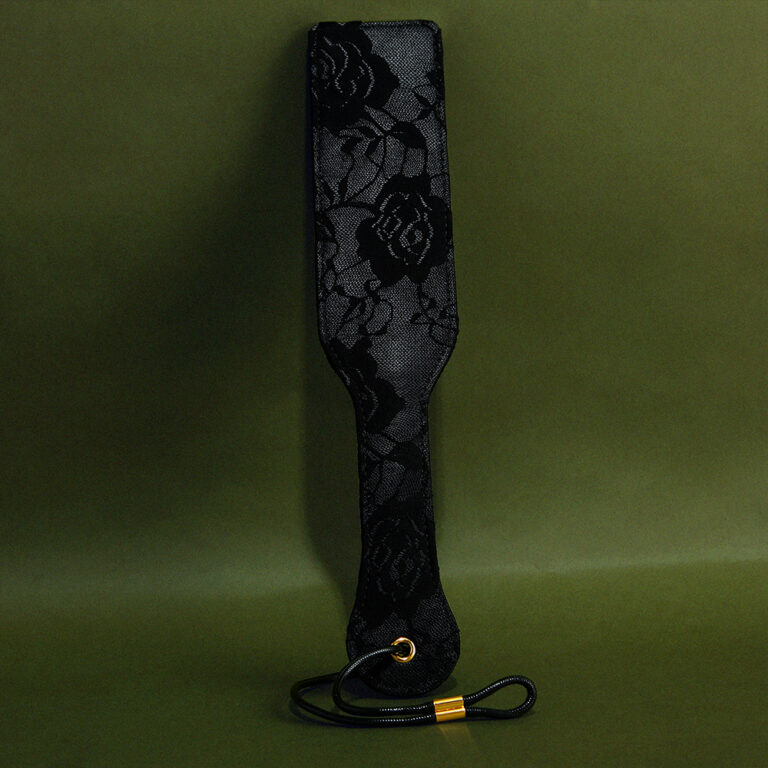
By meticulously applying this framework, brands and wholesalers can identify and forge successful, long-term partnerships with Chinese boutique artisan workshops, ensuring the production of high-quality, customized leather BDSM restraints that meet global market demands and ethical expectations. Our commitment at Zaoyi Bondage (bondagerestraint.com/) is to these very principles, offering a range of premium products from Fetish Ankle Cuffs to Luxurious Cowboy BDSM Spanking Paddle, all crafted with precision and care.