Custom Belt Manufacturer: 2026 OEM/ODM Sourcing & Low-MOQ Guide
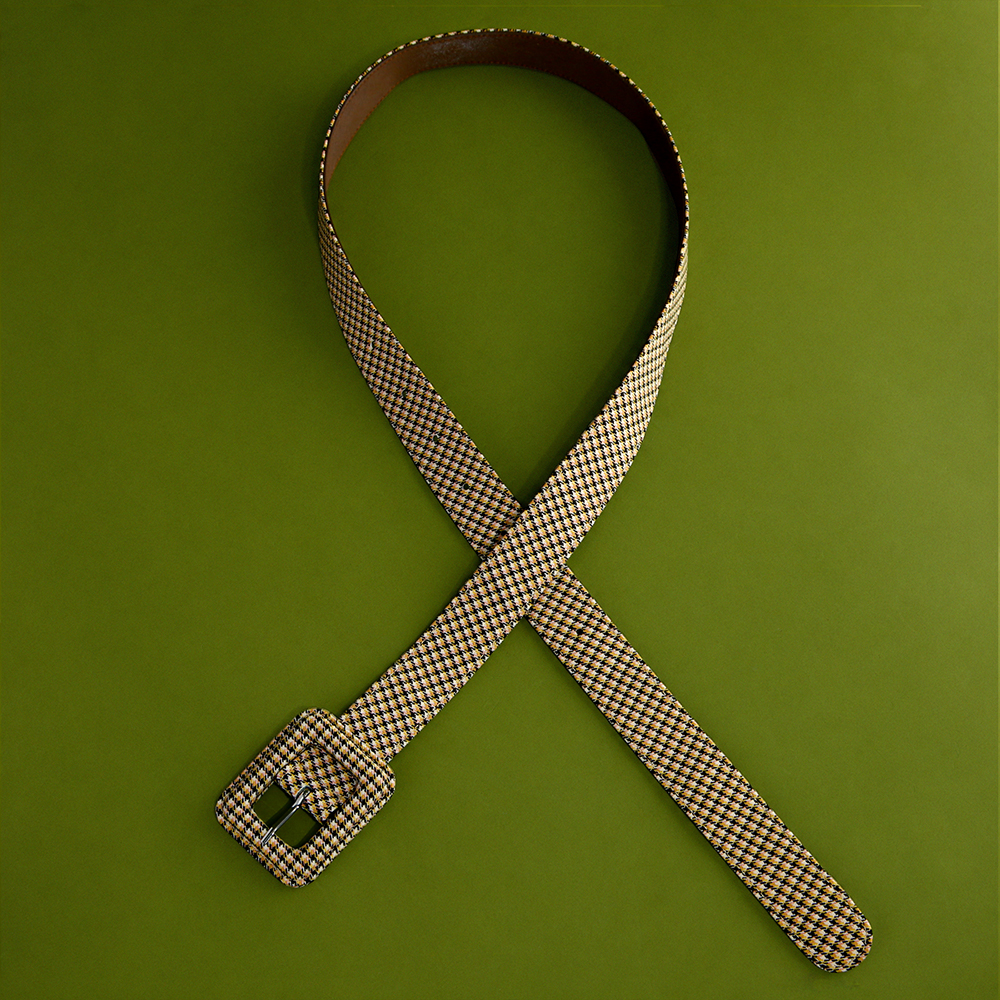
Finding a reliable custom belt manufacturer is one of the most critical decisions a modern fashion label, designer studio, or private-label brand will make. Whether you want to develop an elegant houndstooth waist belt, an artisanal leather strap, or specialized harness accessories, shifting from a flat sketch to a retail-ready product requires deep material engineering, strict precision cutting, and dependable workshop coordination.
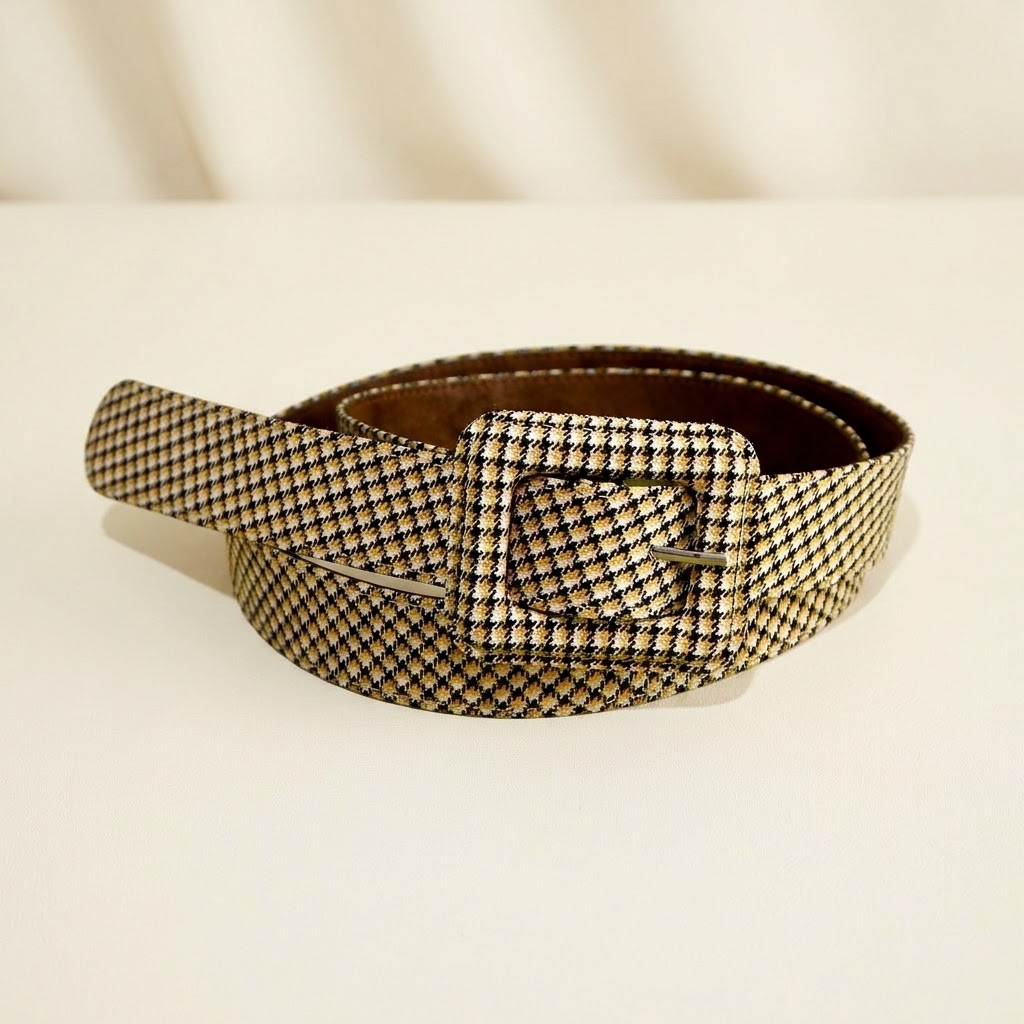
Today’s commercial fashion ecosystem does not reward rigid production models. Emerging labels, fast-growing boutiques, and niche designers face unpredictable demand, making massive minimums a distinct liability. Sourcing professionals now actively look for an agile OEM fashion accessories supplier that combines technical prototyping with responsive small-batch runs.
Below is an in-depth breakdown of how an experienced manufacturing team executes private label development, manages multi-layer composite textiles, balances low order volumes, and delivers export-grade consistency.
What Defines an Experienced Custom Belt Manufacturer?
A qualified production partner does far more than cut and stitch raw materials. They act as an extension of your technical team, identifying structural failure points before an order goes into mass production.
Material Formulation ➔ Tooling & Die Cutting ➔ Core Reinforcement ➔ Precision Stitching ➔ Edge Sealing ➔ Hardware Assembly ➔ 100% Quality Assurance
Advanced Material Processing and Multi-Layer Lamination
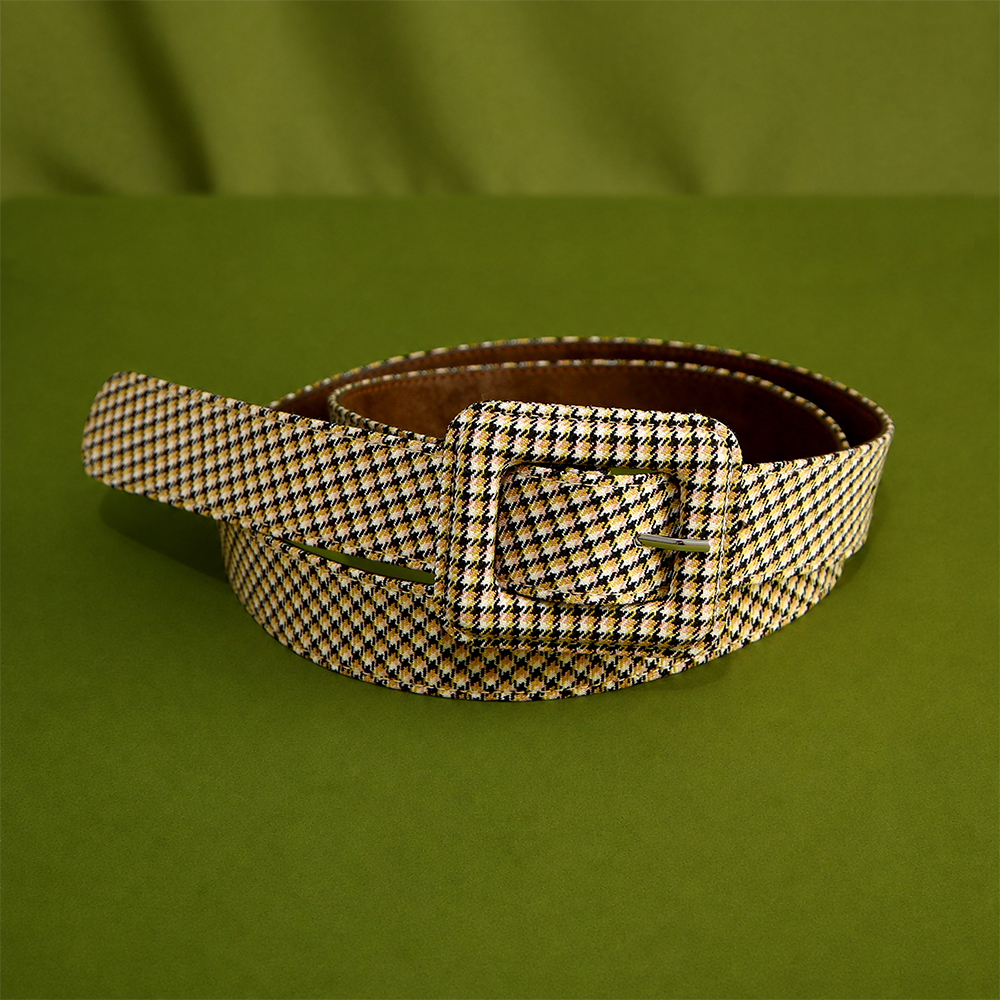
A high-grade belt demands structural stability that prevents stretching, curling, or deforming over repeated wear. When manufacturing classic statement items like a houndstooth belt Custom Belt Manufacturer batch, the outer textile cannot simply be stitched directly to a base. It requires:
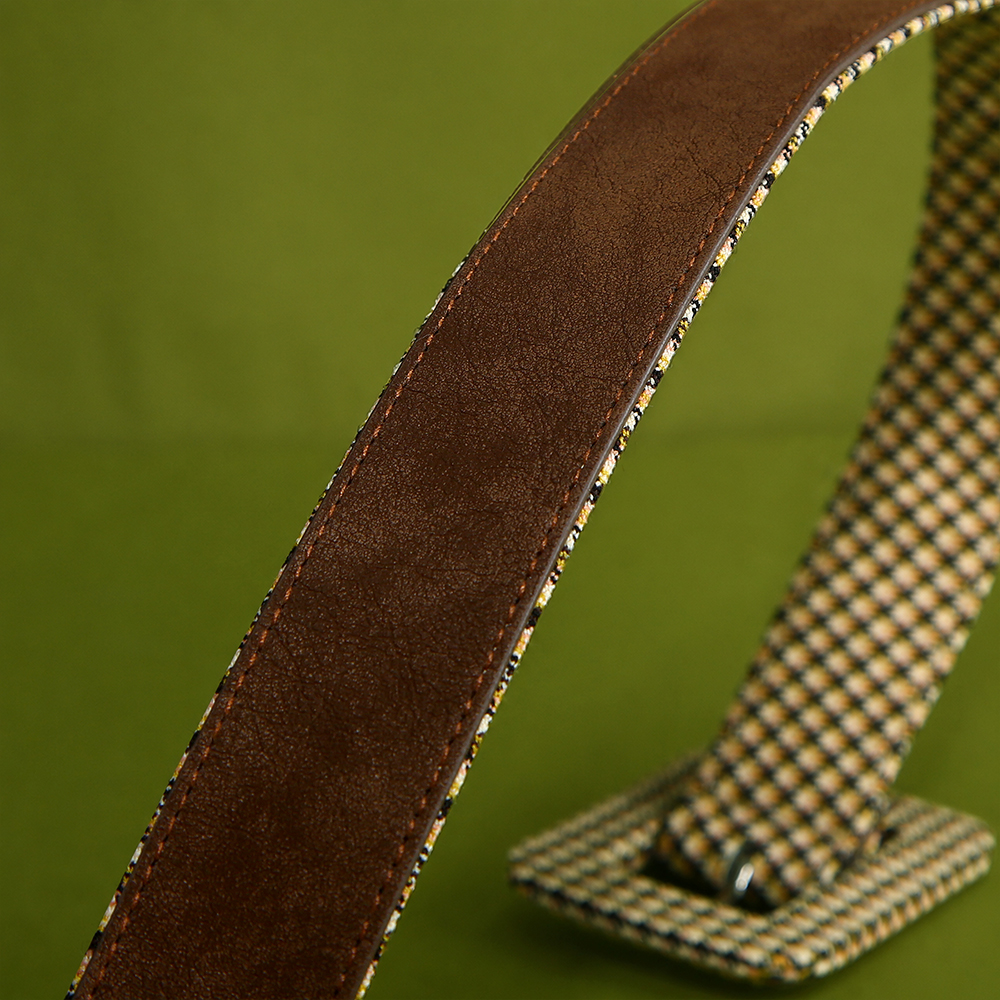
- Precision Fabric-to-Core Bonding: Pairing woven fabrics (such as wool blends, tweed, or jacquard) with a split leather or bonded micro-fiber backing using non-toxic, heat-cured adhesives.
- Anti-Stretch Structural Liners: Inserting non-stretch poly interlinings inside the core to maintain dimensional accuracy under tension.
- Multi-Pass Edge Coating: Sanding raw edges through three sequential grit stages, followed by hand-applied edge dye to create a smooth, chip-resistant perimeter.
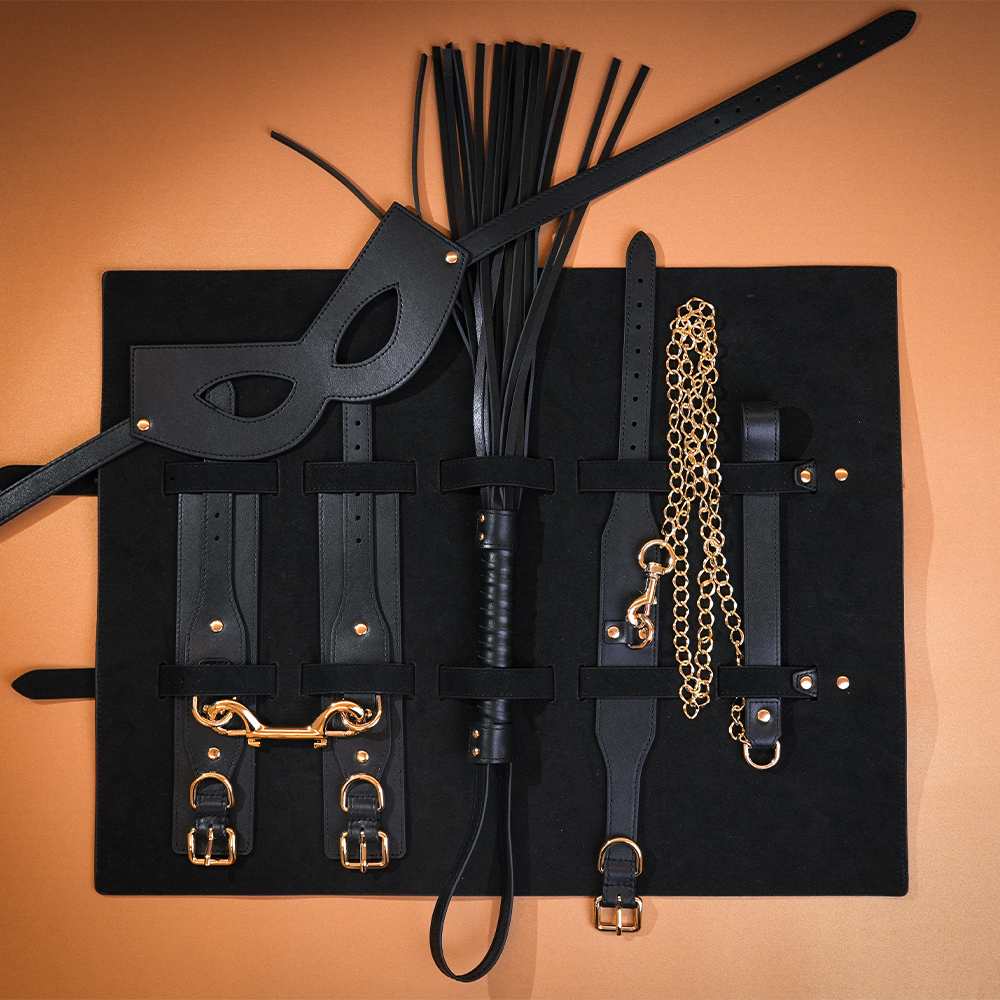
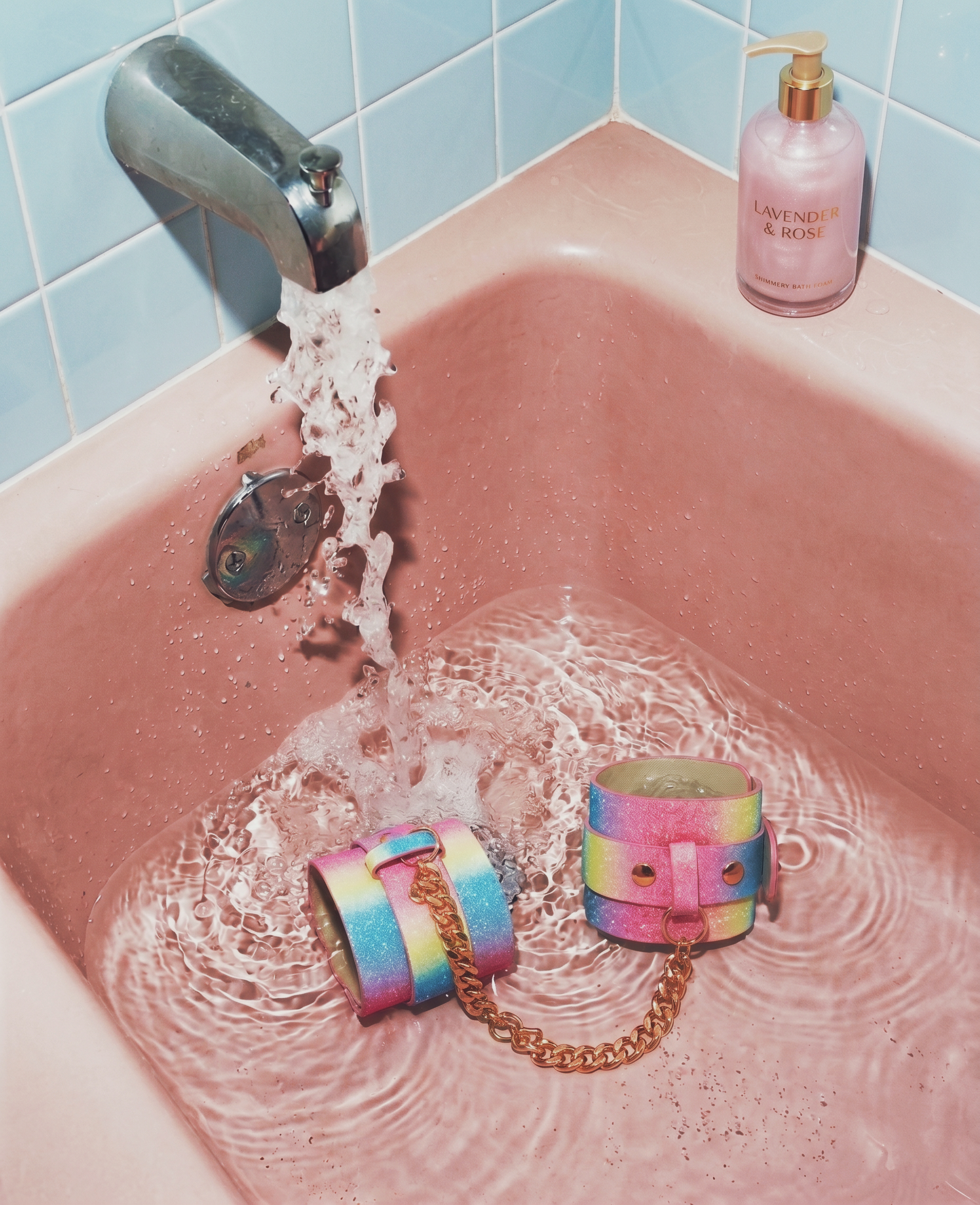
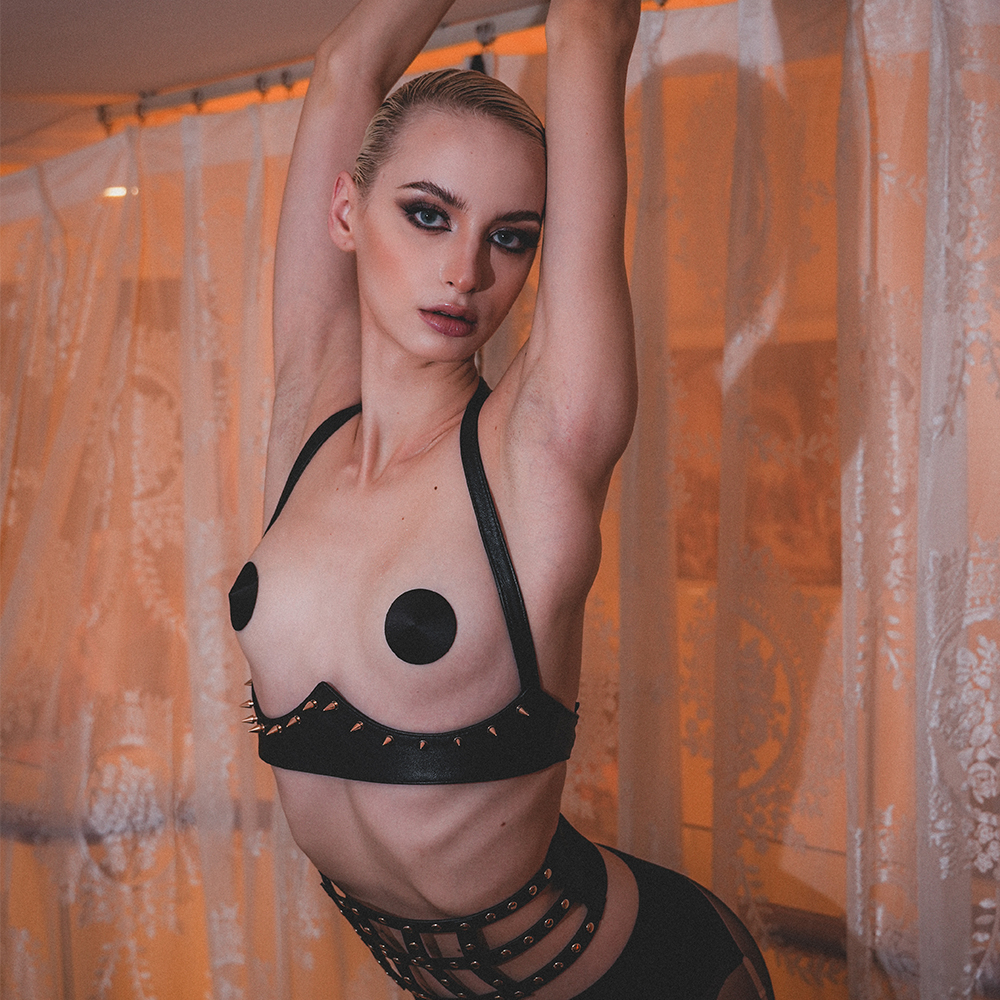
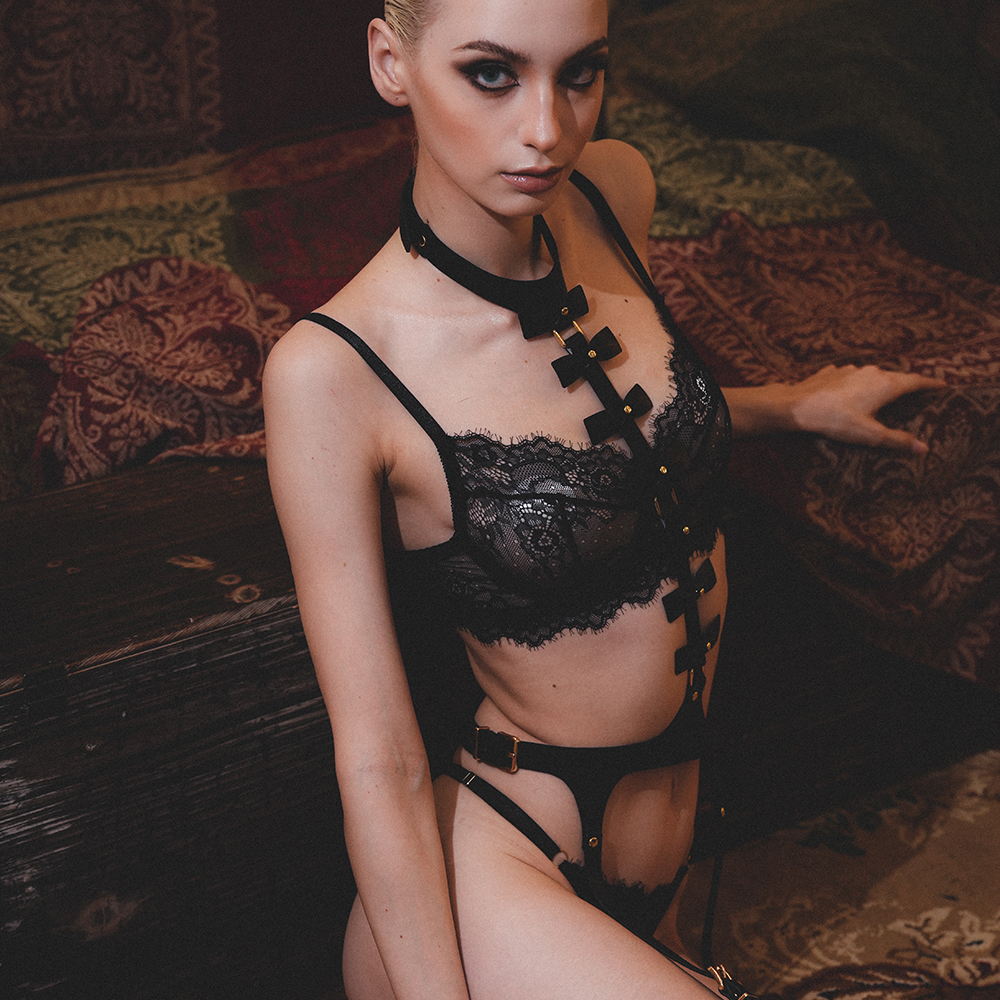
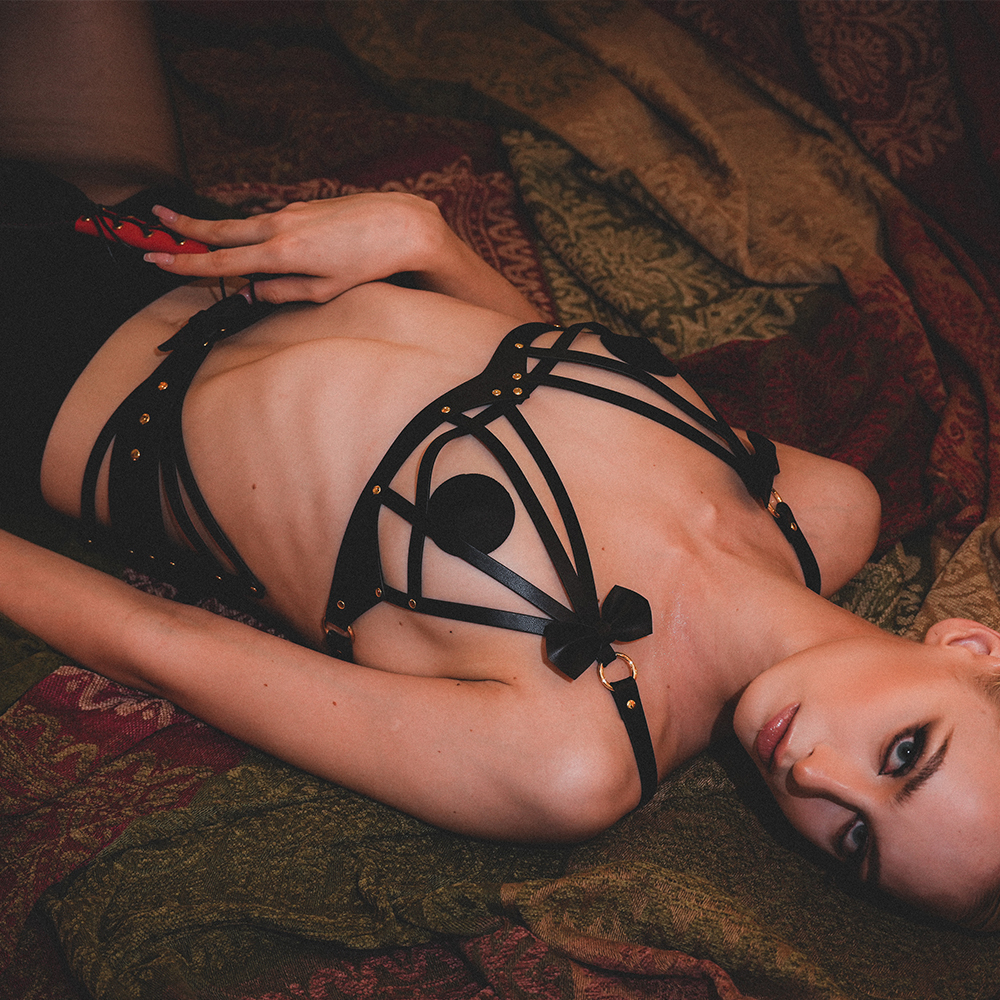
For specialized collections that require durable, body-hugging hardware and structural straps, you can review our technical construction techniques at [suspicious link removed].
Dedicated Tooling, Molds, and Die-Cutting Capabilities
A reliable custom belt manufacturer maintains an extensive in-house library of standard strap dies, prong dies, and buckle molds. If your collection requires a proprietary geometric silhouette, bespoke belt tips, or engraved brand insignias, the factory should offer CAD-assisted zinc-alloy molding, brass stamping, and laser cutting to minimize prototype lead times.
Evaluating an OEM Fashion Accessories Supplier: Core Service Models
When partnering with a manufacturing facility, aligning your project with the correct production method protects your design budget and shortens your go-to-market schedule.
+---------------------+------------------------------------------+------------------------------------------+
| Parameter           | OEM (Original Equipment Manufacturing)   | ODM (Original Design Manufacturing)      |
+---------------------+------------------------------------------+------------------------------------------+
| Design Source       | Brand provides tech pack / 3D CAD files  | Factory provides catalog & open molds    |
| Customization Level | Full custom (geometry, materials, hardware)| Modular (colors, logos, textile swaps) |
| Tooling Investment  | Custom mold & die fees apply             | Zero to minimal tooling fees             |
| Sampling Speed      | 5 to 7 business days                     | 2 to 4 business days                     |
| Ideal For           | Distinctive signature collections        | Fast seasonal capsule drops              |
+---------------------+------------------------------------------+------------------------------------------+
Full-Scale OEM Belt Manufacturing Process
If you operate an established studio with dedicated technical designers, your brand relies on Original Equipment Manufacturing (OEM). You supply complete specifications: strap width, thickness tolerance (e.g., $3.0\text{ mm} \pm 0.2\text{ mm}$), stitch density (e.g., 7–8 stitches per inch), edge paint hue, and electroplating finishes (such as matte brushed gold or shiny nickel-free palladium).
Your custom belt manufacturer verifies the bill of materials, reviews structural feasibility, fabricates the stamping dies, and creates initial counter-samples for physical sign-off before raw material bulk purchasing.
Streamlined ODM Fashion Development
If you need to launch a seasonal capsule quickly without spending weeks engineering new patterns from scratch, Original Design Manufacturing (ODM) provides ready-to-produce master blocks. You can select proven silhouettes and customize the outer shell—incorporating textured seasonal fabrics, contrast edge paints, custom foil debossing, or wrapped hardware.
To explore modular options for specialty accessories, harness straps, and premium lifestyle goods, browse the product developments available through our [suspicious link removed].
Working with a Low MOQ Custom Belt Manufacturer Factory for Modern Fashion Labels
High inventory carrying costs remain a primary reason emerging fashion businesses struggle. Historically, legacy factories enforced minimum order quantities of 500 to 1,000 units per colorway. Today, agile brands demand flexibility.
Standard Order Sizing vs Agile Production:
Traditional Bulk:  [---------------- 1,000 pcs per SKU ----------------] (High Risk)
Agile Low-MOQ:     [-- 50-100 pcs --] [-- Fast Reorder --] [-- Fast Reorder --] (Controlled Risk)
Working with a dedicated low MOQ Custom Belt Manufacturer factory provides significant advantages:
- Controlled Market Testing: Produce 50 to 100 units of an editorial statement piece (such as a bold patterned waist belt) to gauge direct-to-consumer response before committing major capital.
- Agile Inventory Allocation: Keep production runs small across multiple colorways, reducing dead-stock clearance and protecting brand prestige.
- Rapid Reorder Turnaround: Once a specific variant sells through, a flexible custom belt manufacturer with staged material inventory can re-cut, assemble, and dispatch replenishment stock within two weeks.
Specialized Craftsmanship: Fabric-Covered Buckles and Structural Assembly
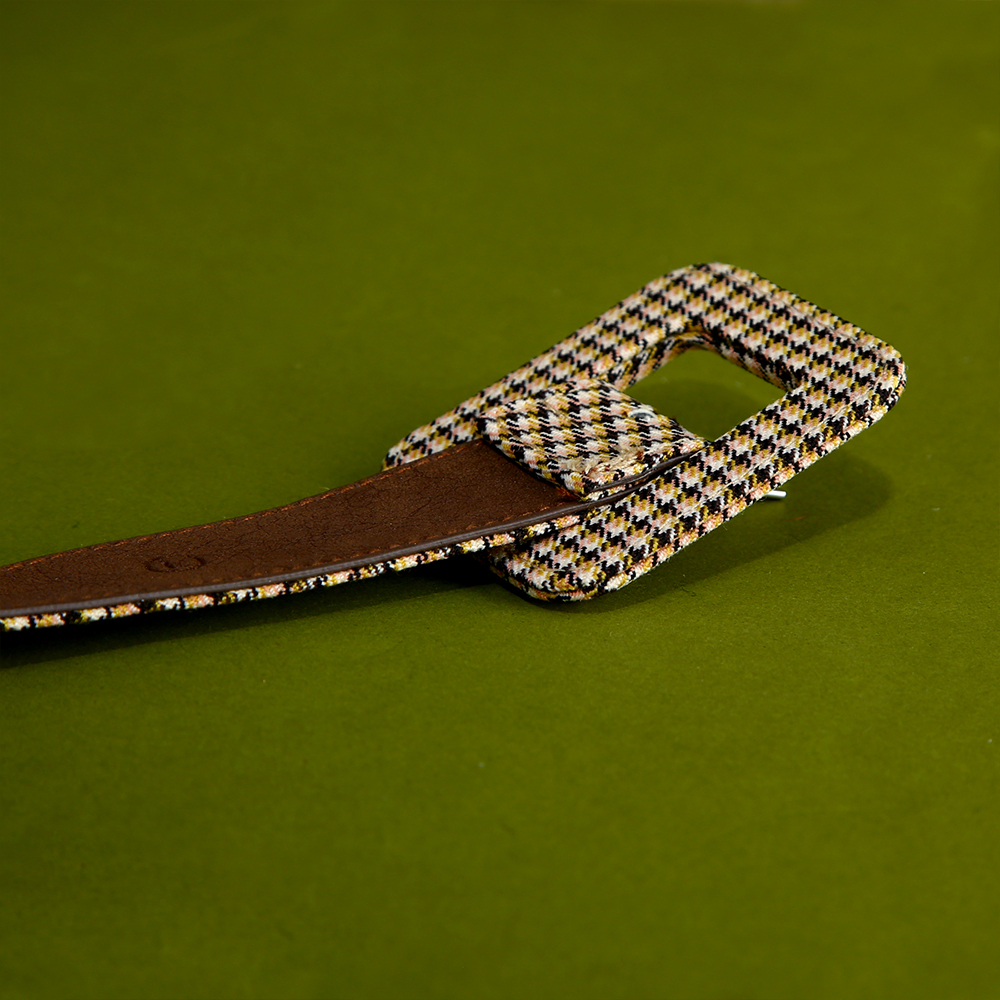
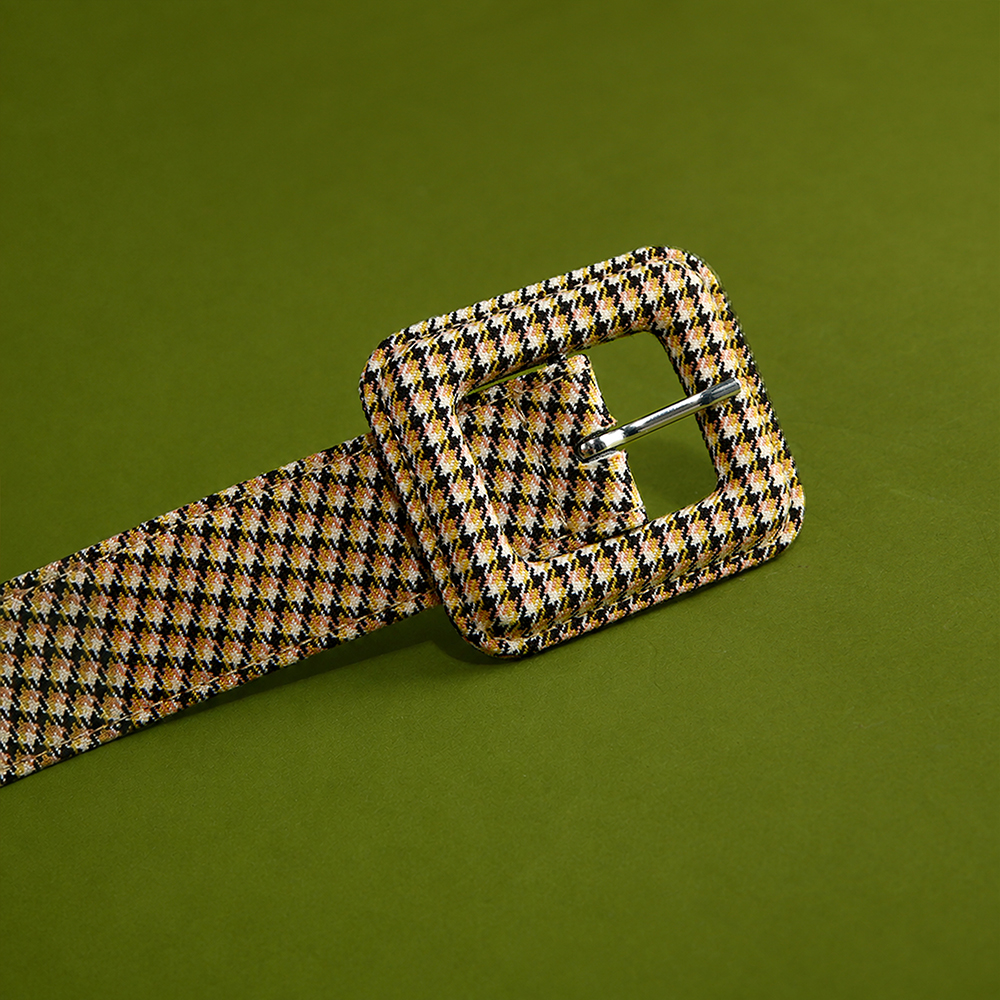
Statement belts frequently feature covered hardware, where the metal pin frame is neatly wrapped in matching surface fabric or premium nappa leather. This technique requires meticulous hand-finishing that automated machines cannot replicate.
Metal Frame Stamping ➔ Skiving Material Edge ➔ High-Tack Adhesive Wrap ➔ Hand-Folding Miters ➔ High-Pressure Curing
Precision Skiving and Edge Folding
To achieve a completely flat, crease-free finish on square or rectangular pin buckles, the outer textile or leather must be skived down to a fraction of a millimeter around the perimeter. Craftsmen wrap the material evenly around the metal core, mitering each internal corner by hand to eliminate unsightly lumps or uneven seams.
Rigorous Hardware Tension and Salt-Spray Testing
Belts undergo continuous mechanical stress across the prong hole, pin hinge, and strap loop. A responsible custom belt manufacturer subjects every hardware batch to:
- Salt-Spray Corrosion Tests: Ensuring electroplated coatings withstand humidity, sweat, and oxidation without discoloration.
- Tensile Pull Testing: Testing prong rivets and buckle joints against sustained pull loads to prevent breakage during active wear.
- Lead and Nickel Compliance: Guaranteeing metal components pass stringent international safety regulations for wearable accessories.
Step-by-Step Production Roadmap with Your Manufacturing Partner
A structured workflow keeps both brand managers and workshop directors aligned from initial brief to final customs clearance:
- Tech Pack & Specification Review: Submit dimensional drawings, Pantone color codes, and packaging requirements for line-item costing.
- Prototyping & Counter-Sample Creation: The sample room creates a master prototype within 3 to 5 business days, allowing your team to evaluate tactile hand-feel and waist drape.
- Fit & Wear Adjustments: Any adjustments to strap length, buckle tension, or stitch spacing are locked into an approved production golden sample.
- Bulk Batch Assembly: Materials undergo precision hydraulic clicker-cutting, edge-beveling, computer-controlled line stitching, and hand assembly.
- Multi-Point QC & Packaging: Every finished unit undergoes manual inspection for loose threads, surface scratches, and dimensional consistency, followed by individual dust bagging, hangtag application, and master carton export packing.
Scale Your Brand Collections with a Trusted Manufacturing Partner
Developing distinctive fashion lines requires a manufacturing ally that values structural integrity, material craftsmanship, and small-batch agility just as much as you do. As a dedicated custom belt manufacturer, our workshop provides the machinery, sourcing networks, and technical expertise required to turn intricate design concepts into durable, retail-ready collections.
Whether you are preparing an upcoming seasonal rollout, testing custom fabric combinations, or exploring specialized harness and strap hardware through [suspicious link removed], our engineering team is ready to evaluate your specifications.
Submit your tech pack today to review physical material swatch options, receive comprehensive itemized pricing, and request your first round of physical samples.