
The Ultimate Guide to Bondage Devices Every Couple Should Try
Exploring the world of consensual bondage can be a profoundly enriching experience for couples, deepening trust, enhancing communication, and igniting new dimensions of intimacy. This comprehensive guide delves into the realm of bondage devices, focusing specifically on the versatile and sensual materials of rope and leather. Designed for all experience levels, from curious beginners to seasoned practitioners, we will navigate the landscape of sensations, emphasize paramount safety protocols, and inspire playful scenarios that foster connection and imaginative exploration. Our commitment at bondagerestraint.com/ is to provide premium, high-quality bondage devices that facilitate safe, sane, and consensual play, ensuring every couple can confidently embark on their journey of discovery.

1. Foundations of Consensual Bondage: Trust, Communication, and Safe Exploration
The bedrock of any fulfilling BDSM practice, especially involving bondage devices, is an unwavering commitment to trust, clear communication, and safe exploration. Without these foundational elements, what could be a journey of profound connection risks becoming detrimental. BDSM, by its very nature, demands explicit, enthusiastic, and ongoing consent from all participants, fundamentally distinguishing it from any form of abuse or exploitation 1. This isn’t a one-time agreement; consent is a continuous dialogue, requiring regular check-ins throughout any scene or interaction 1.

Honest, open, and respectful communication forms the very core of establishing and maintaining consent in BDSM 3. Before any bondage devices are introduced, partners must engage in thorough discussions about their desires, limits, and expectations 26. This proactive approach ensures alignment and mutual understanding.
Several consent models exist to guide these discussions:
- SSC (Safe, Sane, Consensual): A traditional model, though sometimes criticized for implying that any activity can be entirely “safe,” potentially hindering discussions about inherent risks.
- RACK (Risk-Aware Consensual Kink): This model shifts the focus to individual responsibility and a clear awareness of all potential risks, encouraging open dialogue about even low-risk possibilities to ensure truly informed consent 810.
- PRICK (Personal Responsibility, Informed, Consensual Kink): Further emphasizing individual ownership, PRICK ensures each person fully comprehends the activities and their associated risks before offering consent 9.
- SSICK (Safe, Sane, Informed, Consensual Kink): This model explicitly addresses the need to call out “Safety” within the framework 9.

Understanding and articulating personal boundaries is critical. These are typically categorized as:
- Hard Limits: Non-negotiable boundaries that must never be crossed under any circumstances 11. Violating a hard limit can immediately end a scene or even a relationship 12.
- Soft Limits: These are flexible boundaries, open to negotiation and exploration under specific, agreed-upon conditions 11. With growing trust and experience, soft limits can evolve over time 134.
- Requirement Limits: These are essential conditions that must be met for a partner to participate 12.
Negotiation is not a singular event but an ongoing process, a continuous dialogue that evolves with the relationship and individual needs 15. Regularly revisiting agreements ensures they remain aligned with changing dynamics 16. Tools such as pre-negotiation checklists or BDSM negotiation forms can be invaluable, facilitating comprehensive communication by outlining boundaries, preferences, safe words, aftercare needs, and health considerations 17.
Establishing and practicing safe words or signals is paramount. These are crucial for immediately stopping or pausing a scene if consent is revoked, or if physical or emotional discomfort arises. Furthermore, discussing and agreeing upon aftercare preferences is an essential part of consent negotiation, ensuring support and care following any BDSM scene 17.
The intricate dance of power exchange in BDSM relationships relies heavily on trust, which is meticulously built through honesty, consistency, and mutual respect 18. Trust involves a deep belief that your partner will keep you safe, understanding and honoring your vulnerabilities and boundaries 37. Effective communication styles foster safety, well-being, and emotional connection, creating a secure environment where fantasies and desires can be openly explored 57.
Common pitfalls in consent discussions include “magical knowing,” where partners assume they can intuit needs without explicit communication, or the insidious pressure and coercion that pushes a partner into uncomfortable activities 20. Ignoring a partner’s stated preferences or limits is another significant pitfall. To overcome these, strategies like active listening, assertiveness in communicating needs 321, and empathy are vital 3. It is crucial to remember that consent can be withdrawn at any time, and boundaries can be re-negotiated mid-play if necessary.
BDSM can be a powerful conduit for connection, allowing individuals to express facets of themselves that might not fit traditional molds. It necessitates creating a psychologically safe space where both dominant and submissive roles can flourish without fear of judgment or misunderstanding 522. For those navigating complex emotions, kink-aware therapy can provide a safer space to explore interests and address related issues. Even practices like Consensual Non-Consent (CNC), a controversial but mutually agreed-upon act of simulating non-consent, require extreme trust and understanding, often reserved for established relationships 23. Research even suggests that power dynamics can influence trust, with low-power individuals sometimes exhibiting greater trust due to dependence 24. Honesty and integrity are foundational, ensuring consistency between words and actions 3.
It is generally considered unacceptable for consent communication to occur under intoxication, though some studies suggest it might be more acceptable in existing relationships for non-BDSM activities 25. Group play introduces increased complexity and risk, necessitating explicit roles and responsibilities 26. When a submissive enters “subspace,” they should be treated as impaired, and renegotiating consent during this state is not advisable 21. The “FRIES” acronym—Freely given, Reversible, Informed, Engaged, and Specific—serves as a helpful mnemonic for remembering the key elements of consent 1. Ultimately, BDSM is rooted in consent and communication, making it fundamentally different from non-consensual acts 15.
2. Mastering Rope Bondage: From Beginner Knots to Sensual Ties
Rope bondage, a timeless art form, offers a unique blend of aesthetic beauty, tactile sensation, and controlled restriction. For couples venturing into this exciting territory, selecting the right bondage devices and mastering fundamental techniques are crucial for both safety and pleasure.
The choice of rope material significantly impacts the experience. Different materials like jute, hemp, cotton, nylon, and silk offer varying textures, strengths, and stretch properties. Jute and hemp provide a rougher, more natural sensation, while cotton and silk are notably softer against the skin. Nylon, while strong, can be less forgiving. At bondagerestraint.com/, we prioritize materials that offer both durability and comfort, ensuring your bondage devices enhance every moment.
For beginners, foundational knots are the gateway to sensual ties. The square knot, ideal for joining ropes, along with the single column tie and double column tie, are excellent starting points due to their relative ease of learning and adjustability. These simple yet effective ties allow couples to explore gentle pressure and restriction without overwhelming complexity.
Circulation safety is paramount in rope bondage. It is crucial to prevent nerve damage or other injuries by ensuring proper blood flow. Techniques such as using wider ropes, avoiding overtightening, and regularly checking for signs of restricted circulation—like numbness, tingling, or discoloration—are non-negotiable. Beginner-friendly ties often prioritize non-constrictive methods, focusing on gentle pressure and sensation rather than rigid immobilization, thereby minimizing risk and enhancing the sensual experience.
Rope ties can be categorized by the type of sensation they create:
- Compression: Gentle squeezing that provides a comforting or stimulating pressure.
- Suspension: Partial or full weight-bearing, which introduces elements of vulnerability and trust.
- Restriction: Limiting movement to create a sense of delicious helplessness.
Ties also vary in difficulty, from simple wraps and hitches to more intricate patterns inspired by practices like Shibari, the Japanese art of rope bondage, which emphasizes aesthetics and artistic expression alongside sensation. Advanced decorative ties, such as karada and takate kote, can incorporate complex patterns while maintaining a focus on safety and sensation.
Common beginner mistakes include using the wrong type of rope (too thin or too abrasive), tying knots too tightly, failing to check for circulation, and neglecting aftercare. Understanding the physics of rope tension is crucial; factors like rope diameter, knot type, and pulling force all contribute to the pressure exerted on the body.
Open and honest communication between partners remains essential throughout any rope bondage session, establishing boundaries, ensuring comfort, and addressing concerns. The use of a “safe word” is a universal practice. Aftercare, including gentle massage and moisturizing, helps alleviate any discomfort or tension post-session.
Beyond the rope itself, accessories like padding, emergency shears (for quick release), and specialized bondage benches can enhance the experience and improve safety. Numerous online resources and communities, such as bondage.com and r/shibari on Reddit, offer tutorials and support. Professional instruction from experienced rope practitioners can provide invaluable hands-on guidance.
Rory Thomassen, a respected figure in the community, offers tutorials on various wrist and ankle restraints, including single and double column braided cuffs 40. These tutorials emphasize safety and proper technique, particularly regarding pressure distribution to avoid duress on wrists 40. The single column braided cuff, which extends from wrist to hand, is a favorite for its elegance and effectiveness 40. For partners who tend to “wiggle” or “escape,” the Lark Head Double Column Restraint is highly effective, involving passing the middle of the rope beneath the wrists and keeping the rope straight 40. The Twisted Double Column Wrist Restraint, a technique learned from Twisted Monk, involves cycling the ends of the rope through the middle until the double strand is secured 40.
A critical safety tip from these teachings is the importance of vertical tightening. When cinching rope restraints, always tighten vertically around the middle portions of the restraint, not horizontally on the wrists. This prevents undue pressure on tendons, nerves, muscles, and tissues inside the wrists 40. An overhand knot can be used after the first part of a square knot to provide more control when cinching down 40. The rope can also be used as a lead, pulling down through the palms, which applies pressure to the middle portions of the restraint 40. Some techniques can even be performed “upside down” for a cleaner aesthetic, though this requires learning the reversed method 40.
3. Exploring Leather Restraints: Cuffs, Collars, and Their Unique Sensations
Leather bondage devices offer a distinct blend of aesthetic appeal, durability, and a unique tactile and psychological experience. At bondagerestraint.com/, we specialize in high-end leather restraints, understanding that the material and craftsmanship profoundly influence the depth of play.
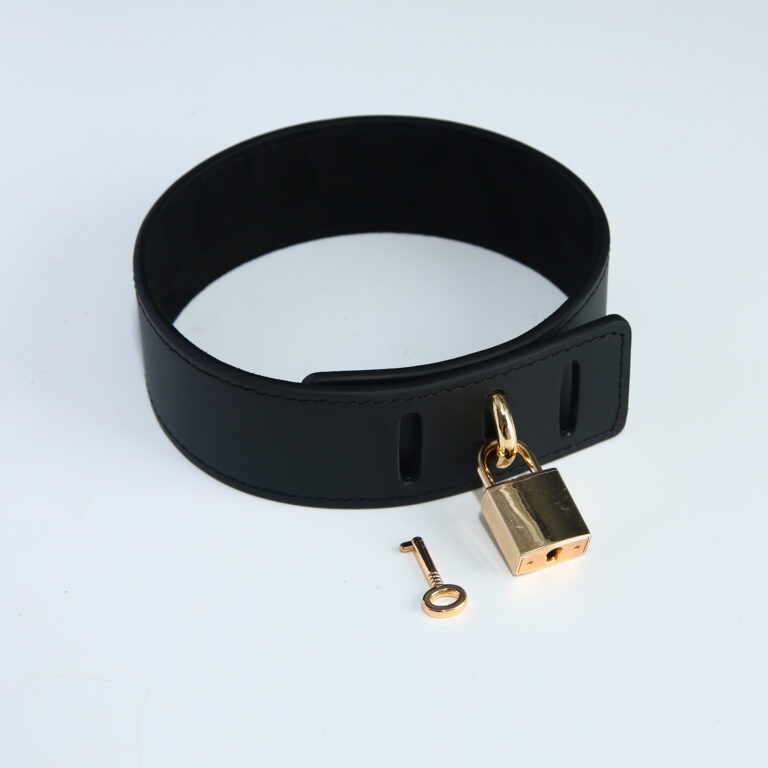
Our collection of leather bondage devices includes a wide variety of collars and cuffs. Collars come in numerous styles, from discreet day collars to more overt training, protection, play, and formal collars. Posture collars, both standard and tall, and corset collars offer specific physical and psychological effects. For those seeking a classic yet premium option, our Collier is an excellent starting point. For a touch of rugged elegance, consider the Collier BDSM Cowboy (1 Pièce), or for a more enigmatic style, the WEDNESDAY Bondage Collar (1 Piece). Modern aesthetics are captured in the Empowered Cyber BDSM Necklace and the BDSM Fetish Collar, while the Vintage Bondage Collar (1 Piece) offers a timeless appeal.
Cuffs are available for wrists, ankles, and thighs, each designed to provide specific sensations and levels of restriction. Our Cuffs exemplify the quality and craftsmanship we offer. For versatile styling, the Stylish Sex Cuffs 2 Straps are a popular choice. Those with a penchant for the dramatic will appreciate our Luxury Gothic Handcuffs, while the Elegant Bondage Cuffs offer refined restraint. We also provide specialized options like Fetish Ankle Cuffs and the opulent Diamond BDSM Cuffs. For a truly personalized experience, our Leather Bondage Cuffs can be customized to your desires. Looking ahead to 2025, we are excited to introduce the Fluff Tender BDSM Cuffs (2025 Winter) et l'audacieux Bad Blood Bondage Cuffs (2025 Edition). For a softer, yet equally captivating touch, explore our Black Lace Fetish Handcuff and the Elegant Vintage Lace Sex Handcuffs.
Closure mechanisms are a key feature of these bondage devices. Common types include standard single-prong buckles, often made of stainless steel for durability, and locking buckles that symbolize a deeper level of submission 32. D-rings are frequently incorporated for attaching leashes or other accessories. Other options include snaps, Velcro, press studs, and even handmade leather buttons or toggles.
The grade of leather significantly impacts the quality, durability, and feel of the restraint 28.
- Full-grain leather: The highest quality, most durable, and develops a beautiful patina over time, retaining its natural markings 28.
- Top-grain leather: Durable with a consistent texture, though it undergoes some processing 28.
- Split-grain leather: Often marketed as “genuine leather,” but is of lower quality 28.
- Bonded leather: Mostly synthetic and the least durable 28.
Beyond leather, bondage devices can be crafted from PVC, metal (like 316L grade stainless steel for sensitive skin), lace, or fabric 29. Vegan alternatives are also available. Customization is a hallmark of premium leatherwork, allowing for unique designs, stamped personalization, and specific hardware choices, including colors and embellishments 30.
The lining of leather gear also affects comfort and sensation. Unlined, single-sided, or double-sided options exist, with linings like deerskin or buckskin offering a soft, luxurious texture against the skin 31. This is particularly important for addressing sensory needs, especially for individuals with neurodiversity or sensitive skin 31.
Leather bondage devices offer a rich array of tactile and psychological sensations. The smooth, supple feel of high-quality leather contrasts with the rougher texture of unlined options, with material thickness and padding further influencing the experience 31. Psychologically, collars symbolize power exchange, ownership, submission, commitment, trust, and belonging within BDSM relationships 37. The act of collaring can be a deeply personal and emotional experience, akin to a formal commitment 32. A collar can serve as an invitation to explore a different mindset or role, reminding wearers of human fragility, connection, and the courage to be authentic 34. Restraints like cuffs can evoke feelings of being secured, owned, restricted, or even empowered, depending on the context.
Durability is highest with full-grain leather, especially with two-ply construction 28. Comfort is determined by material, fit, and lining, with adjustable options being crucial for extended wear 35. Leather requires more care than metal or silicone; it should be wiped down, air-dried, and lightly conditioned 36. Vegetable-tanned leather may stretch over time and be prone to dye bleeding 39.
Historically, collars have symbolized ownership and loyalty since ancient civilizations 37. In the 20th century, BDSM collars evolved to represent ownership, submission, and commitment within relationships 38. They embody the dominant partner’s authority and responsibility 37. Collaring rituals are significant, signifying mutual trust and dedication, often progressing through stages from a collar of consideration to a formal collar 37. Collars are also integral to pet play, representing the animal being portrayed 38.
Ergonomic design ensures comfortable and safe restraints, with material thickness and padding (like deerskin) playing a key role 31. Safety discussions are paramount before using any bondage devices 33.
4. Synergizing Rope and Leather: Creative Combinations for Enhanced Play
The true artistry of bondage often lies in the creative synergy between different bondage devices, particularly the combination of rope and leather. This fusion allows for more complex, visually appealing, and sensationally rich scenarios, blending the soft, intricate embrace of rope with the firm, symbolic hold of leather.
Leather cuffs and collars, with their inherent structure and locking mechanisms, provide excellent anchor points for rope work. For instance, a sturdy leather cuff can serve as a secure base from which ropes can extend, creating intricate patterns across the body without directly constricting sensitive areas. This approach leverages the strengths of both materials: the unyielding security of leather and the versatile, tactile nature of rope.
Consider integrating our premium leather cuffs, such as the Elegant Bondage Cuffs or Leather Bondage Cuffs, as primary restraints for wrists or ankles. From these, ropes can be tied using techniques like the single column braided cuff or the twisted double column wrist restraint, as taught by experts like Rory Thomassen 40. These techniques, while primarily rope-based, can be adapted to start from a leather cuff, adding layers of sensation and security. The leather provides a comfortable, broad surface against the skin, while the rope adds intricate pressure and visual appeal.
For those seeking to explore more dynamic connections, a leather collar can be paired with a chain leash. Our Collier à chaîne Zaoyi or the Elegant T-Chain BDSM Collar can be combined with a Laisse BDSM en chaîne en T (1 Ensemble), offering a powerful visual and tactile connection. Rope can then be used to create additional body harnesses or to connect the collar to other anchor points, enhancing the sense of control and aesthetic complexity.
When combining these bondage devices, the principles of safe tying remain paramount. Rory Thomassen’s emphasis on vertical tightening for rope restraints is particularly relevant here 40. When securing rope to leather cuffs, ensure that any cinching is done vertically around the middle portions of the restraint, avoiding horizontal pressure on tendons, nerves, and tissues 40. This technique, often aided by an overhand knot for better control, ensures that the pressure is distributed safely and effectively 40.
Creative combinations can also involve using rope as a “lead” from leather restraints. For example, after securing a partner’s wrists in our Luxury Gothic Handcuffs, a rope can be threaded through the D-rings and used to guide or position the partner, applying pressure to the middle portions of the restraint rather than directly on the wrists 40. This allows for dynamic movement and sensation play within a secure framework.
For more advanced scenarios, consider how different bondage devices can be integrated into a larger setup. A hogtie, such as our Lavish “X” Hogtie BDSM Dangerous, can be enhanced with rope ties that connect to other parts of the body or to suspension points, creating a multi-layered experience of restriction and vulnerability. The “upside down” technique, where ties are reversed for a cleaner aesthetic, can also be applied to combinations, requiring careful practice to master 40.
Our curated Luxury Bondage Set, Luxury Bondage Straps Set (3 Pieces), and Bad Blood Restraint Kit (3 Pieces) are designed to offer a variety of bondage devices that naturally complement each other, encouraging experimentation and creative combinations. These kits provide a foundation for couples to explore the rich possibilities of synergized rope and leather play, fostering deeper connection and shared adventure.
5. Bondage Play Scenarios: Igniting Imagination and Connection
Beyond the mechanics of tying and restraining, the true magic of bondage devices lies in their ability to ignite imagination and deepen connection through playful scenarios and role-play. Consensual and responsible BDSM practices offer profound psychological benefits, including stress relief, empowerment, self-discovery, enhanced communication, and stronger bonding and trust between partners 41. These experiences can provide a safe outlet for emotional release and catharsis, allowing individuals to process emotions in a controlled environment 41.
BDSM can also foster body positivity, encouraging acceptance and celebration of one’s body 41. Studies suggest practitioners often experience improved mental well-being, resilience, and lower psychological distress, largely due to the emphasis on communication, trust, and consent 47. Engaging in BDSM role-play can induce a pleasant altered state of consciousness and reduce psychological stress 45. Practitioners tend to exhibit positive psychological traits, such as being more extroverted, open to new experiences, and less neurotic 45. Research indicates higher levels of trust, communication, and relationship satisfaction among BDSM practitioners compared to the general population 47. Some studies even suggest that being dominant in BDSM play can boost work ethic 44, and the activities can increase awareness of one’s attachment style 48. The experience of “subspace” during play, characterized by deep relaxation and temporary depersonalization, is linked to the release of endorphins and epinephrine, with trust in the dominant partner being key to achieving this state 48.
For couples new to bondage devices, starting with bedroom experimentation is common, often involving simple ties and intimate connection 49. Integrating sensory play significantly enhances the experience. This involves deliberately engaging and manipulating one or more senses to heighten erotic sensations 57. Blindfolds, scented massage candles, flavored lubricants, and spanking can all intensify the scene 50. Our Leather BDSM Blindfold et Fetish Bondage Blindfold are excellent bondage devices for sensory deprivation, while our range of paddles, including the Pagaie BDSM et Luxurious Cowboy BDSM Spanking Paddle, can introduce varied sensations.
A playful approach is paramount; laughter, giggling, and playful struggle should be encouraged 49. Always discuss and agree upon limits beforehand, ensuring the dominant partner never exceeds these boundaries 49. Experimenting with role-switching can also add dynamic layers to your play 49.
Here are some imaginative scenarios and themes that can be explored with bondage devices:
- Soldier & Prisoner: A fear-play scenario where the dominant soldier captures and controls the submissive prisoner 53.
- Intruder & Homeowner: A consensual non-consent (CNC) scenario where a thief restrains and gags a homeowner 50.
- Doctor & Patient: A classic where a doctor takes control during an intimate medical examination 53.
- Pet Play: One partner embodies an animal (cat, dog, pony) while the other acts as its owner 53. Our Bunny BDSM Mask et Luxurious Pet Play BDSM Mask are perfect bondage devices for this theme.
- Power Exchange: Scenarios like Daddy/stepdaughter, professor/student, or boss/employee can explore power dynamics 54.
Various bondage positions can be explored, including spooning bondage, handcuffing to the bed, hogtie, ball tie, frogtie, cowgirl, chair bondage, and rear-entry bondage 51. Shibari, the Japanese art of decorative rope bondage, offers a rich source of inspiration for intricate ties 51. For those just starting, even DIY bondage using scarves or ties can be a playful introduction 53.
Our Boîte aveugle de bondage Zaoyi, Forbidden BDSM Blind Box, and Kinky BDSM Blind Box offer exciting, curated selections of bondage devices to inspire new scenarios. Similarly, our Kits de contrainte Zaoyi, BDSM Kit Wild Bondage, Luxury Bondage Set, Luxury Bondage Straps Set (3 Pieces), and Bad Blood Restraint Kit (3 Pieces) provide comprehensive collections of bondage devices for diverse play.
Sensory play can be further enhanced with bondage devices like our Masque de cagoule de bondage Zaoyi, Fetish BDSM Hood, and Genuine Leather BDSM Hood for visual deprivation. Nipple covers and clamps, such as the Cache-téton fétichiste Zaoyi, Tease Black Nipple Pastie, Luxury Nipple Cover for Midnight Bondage, and Nipple Clamp Alluring BDSM, add another layer of sensation. Lingerie, like our Provocative BDSM Teddies (1 Piece), Irresistible Leather Bondage Lingerie (3 Pieces), Luxury BDSM Harness Lingerie (1 Piece), Lingerie BDSM Harnais Sexuel (3 pièces), and Lingerie Fetishwear Exclusive Confiance (1 pièce), can also be integrated to heighten the visual and tactile experience.
Safety remains paramount. Always establish and use safe words 42. Written contracts can formalize consent and identify off-limits acts 45. Adhere to Safe, Sane, and Consensual (SSC) principles 50. Pay close attention to non-verbal cues during sensory play 52. Be acutely aware of the risk of positional asphyxia in certain bondage positions, especially hogties, and avoid compressing the chest 56. Avoid stretchy materials like bungee cords and cotton rope, as they can cinch too tightly 56.
6. The Pillars of Safe Play: Comprehensive Consent, Communication, and Aftercare
The responsible use of bondage devices is inextricably linked to the pillars of comprehensive consent, continuous communication, and diligent aftercare. These elements are not merely suggestions but ethical imperatives that ensure a positive, healthy, and deeply connecting experience for all partners.
As established, consent must be explicit, enthusiastic, and ongoing 1. This means clearly discussing desires, limits, and expectations before, during, and after any scene involving bondage devices 26. The “FRIES” acronym—Freely given, Reversible, Informed, Engaged, and Specific—serves as a robust framework for understanding true consent 1. Partners should be aware of hard limits (non-negotiable boundaries) 11, soft limits (flexible boundaries open to negotiation) 11, and requirement limits (essential conditions for participation) 12. Negotiation is an ongoing process, not a one-time event, and agreements should be revisited regularly 15. Pre-negotiation checklists and forms can be invaluable tools for this 17.
Crucially, safe words or signals must be established and practiced. These are the non-negotiable means to stop or pause a scene immediately if consent is withdrawn or if any physical or emotional discomfort arises. Communication extends beyond verbal cues; active listening and paying attention to non-verbal signals are vital 52. It’s also important to address common pitfalls like “magical knowing” (assuming a partner’s needs) or any form of pressure or coercion 20. Consent cannot be given under intoxication 25.
Aftercare is the ethically non-negotiable provision of emotional, psychological, and physical support following BDSM activities, helping participants transition back to their everyday headspace 5860. Its primary purpose is to re-establish equilibrium, reaffirm bonds, ensure all parties feel safe and cared for, and prevent or mitigate “drop” 5860. Aftercare softens the landing from intense experiences 6264.
The benefits of good aftercare are extensive: it strengthens bonds, helps process intense experiences, creates positive associations with play, demonstrates care and respect, and can lead to increased intimacy and connection 59. It also reinforces trust through post-scene discussions 69. Aftercare is not exclusive to submissives; dominants also require it 6668. Needs are highly individualized and should be discussed and customized before play 6968. Planning for aftercare involves discussing needs, gathering supplies, clearing schedules, and setting up a calm space.
Physical Aftercare focuses on comfort and recovery:
- Basics: Soft blankets, water, snacks, and comfortable clothes are essential. A first aid kit should always be on hand for minor scrapes or rope burns.
- Practices: Rehydration, replenishing nutrients, gentle massage, and tending to sore spots are crucial. Maintaining body temperature with warmth is also important.
- Touch: Cuddling, hugging, kissing, hair-stroking, and hand-holding release oxytocin, reducing stress and increasing intimacy 59.
- Rest: Napping or sleeping together can foster intimacy and physical connection.
- Environment: Creating a calm environment with dim lighting and soothing music aids relaxation.
Psychological/Emotional Aftercare addresses the mental and emotional impact:
- Practices: Reassurance, validation, active listening, and debriefing are key 59. Providing a safe emotional space for partners to express feelings is vital.
- Affirmations: Verbal affirmations, gratitude, and praising performance offer reassurance and emotional support.
- Debriefing: Post-scene discussions allow partners to address what worked and what didn’t, reinforcing trust 69.
- Emotional Regulation: Helping partners process intense emotions and re-establish connection.
- Space: Some individuals may prefer alone time to process their experiences 66.
- Long-Distance: In long-distance relationships, aftercare can include exchanging emotionally significant items.
Sub Drop and Dom Drop are common post-scene phenomena:
- Sub Drop: An emotional and physical low experienced by submissives, manifesting as sadness, anxiety, fatigue, and vulnerability 74.
- Dom Drop: Emotional and physical exhaustion experienced by dominants, including feelings of emptiness, sadness, anxiety, and self-doubt 75.
- Hormonal Basis: Both are linked to hormonal and neurotransmitter shifts, particularly drops in endorphins and serotonin 76.
- Atténuation : Effective communication, proper aftercare, setting boundaries, and self-care activities can minimize their impact 74.
- Dom Aftercare by Subs: Submissives can provide aftercare to dominants through reassurance, appreciation, and practical help.
- Self-Care for Doms: Dominants should engage in self-care rituals and seek support from peers 75.
Aftercare is deeply intertwined with neurobiology. BDSM activities release endorphins, dopamine, serotonin, and norepinephrine 76. Oxytocin, the “bonding hormone,” is boosted by cuddling and physical touch 59. Cortisol levels can increase in submissives, while power play in dominants and pain play in submissives are associated with increased endocannabinoid levels 76.
Practical Aftercare Techniques incluent :
- Care Words: Using a specific “care word” alongside a safeword to indicate needs like “hug me now” or “I need affirmation” 63.
- Aftercare Kit: Assembling a kit with comforting items like a first aid kit, a favorite blanket, tea, or comforting media.
- “Aftercare Sex”: Tender, slow lovemaking or gentle oral sex can be reassuring and bonding, provided it is fully consensual 59.
- Acts of Service: Simple gestures like cooking a meal, providing water, or brushing hair 61.
- Check-ins: Regular check-ins outside of scene time to inquire about overall well-being.
It is crucial to avoid assumptions about needs, never rush or skip aftercare 68, and be especially patient and understanding with trauma survivors, for whom aftercare is a lifeline 59. If symptoms of drop persist, seeking guidance from a kink-aware therapist is recommended 74.
7. Selecting and Maintaining Your Bondage Gear: Practical Tips for Longevity and Safety
The longevity and safety of your bondage devices depend significantly on proper selection, cleaning, storage, and maintenance. Investing in high-quality gear from reputable sources like bondagerestraint.com/ ensures not only a superior experience but also peace of mind regarding durability and hygiene.
Selecting Your Bondage Devices
When choosing bondage devices, especially ropes and leather, consider the following:
- Rope Material: Different materials offer distinct properties. Nylon is strong and durable, while natural fibers like jute and hemp provide unique textures. Cotton is soft but can stretch and cinch tightly if not managed carefully.
- Leather Grade: For leather bondage devices, full-grain and top-grain leather are superior choices for durability and comfort, developing a beautiful patina over time 28. Avoid bonded leather for any stress-bearing parts 36. Our custom leather bondage cuffs are crafted from the finest materials, ensuring both luxury and resilience.
- Hardware: Ensure all metal hardware (buckles, D-rings, locks) is made from high-quality, body-safe materials like stainless steel (316L grade) to resist corrosion and prevent skin irritation 36.
- Ergonomics and Comfort: Look for designs that prioritize comfort and safety, with smooth edges, appropriate padding, and adjustable features 35. Our Meilleurs vendeurs de bondage Zaoyi et Nouveaux arrivages de bondage Zaoyi collections feature bondage devices that meet these high standards.
Cleaning and Sanitizing Your Bondage Devices
Material-specific cleaning is crucial for both rope and leather bondage devices.
- Rope:
- Nylon/Synthetic Ropes: Can often be hand-washed with mild soap (e.g., dish soap or a gentle detergent) in cool water. Avoid harsh chemicals.
- Natural Fibers (Jute, Hemp, Cotton): These require more delicate care. Hand-wash with a mild, pH-neutral soap. Avoid excessive scrubbing, which can damage fibers.
- Séchage : Air drying is generally preferred for all ropes. Hang them in a well-ventilated area, away from direct sunlight or high heat, which can weaken fibers and cause UV degradation 12. Ensure ropes are completely dry before storage to prevent mildew.
- Sanitization: For hygiene, especially if sharing, consider antibacterial sprays designed for fabrics. Diluted bleach solutions can be used for some synthetic ropes, but always test on an inconspicuous area first.
- Leather:
- Nettoyage : Wipe down leather bondage devices with a damp cloth after each use to remove oils and dirt. For deeper cleaning, use a specialized leather cleaner. Avoid harsh soaps or excessive water, which can dry out or damage the leather.
- Séchage : Air dry leather away from direct heat.
- Sanitization: Use leather-safe antibacterial sprays.
- Ethical Considerations: If sharing bondage devices, strict hygiene protocols are essential to prevent the spread of bacteria or infections. It’s advisable to discourage sharing items that come into direct contact with bodily fluids.
Conditioning and Maintenance
Regular conditioning is vital for leather bondage devices to maintain suppleness and prevent cracking.
- Leather Conditioning: Apply a high-quality leather conditioner (e.g., oil-based or wax-based) regularly, especially for full-grain and top-grain leather. Brands like Lexol, Fiebing’s, and Skidmore’s are often recommended. This prevents the leather from drying out and becoming brittle.
- Leather Polishing: Polishing leather gear not only enhances its appearance but also provides a protective layer against dirt and moisture. Choose a polish appropriate for your leather type.
- Metal Hardware: Clean metal hardware regularly to remove any residue or potential corrosion. Lubricate moving parts, such as buckle pins or lock mechanisms, with a small amount of WD-40 or a similar product to ensure smooth operation.
Storage Solutions
Proper storage significantly extends the lifespan of your bondage devices.
- Rope: Store ropes in a cool, dry place, away from direct sunlight and potential pests. Coil them loosely or hang them to prevent kinks and compression. Avoid storing them in plastic bags, which can trap moisture.
- Leather: Store leather bondage devices in breathable bags (e.g., cotton or canvas) or containers to prevent mildew and allow air circulation. Avoid plastic bags or airtight containers. Keep them away from extreme temperatures and humidity, as environmental factors can degrade materials over time.
- Inspection : Regularly inspect all your bondage devices for signs of wear and tear. For rope, look for fraying, cuts, discoloration, or loss of strength. For leather, check for cracks, tears, stiffness, or weakened stitching. Any compromised gear should be repaired or replaced immediately to ensure safety.
By adhering to these best practices for selecting, cleaning, and maintaining your bondage devices, you ensure not only their longevity but also the continued safety and enjoyment of your consensual explorations. At bondagerestraint.com/, we are dedicated to providing you with the finest bondage devices and the knowledge to care for them, empowering your journey of intimacy and discovery.