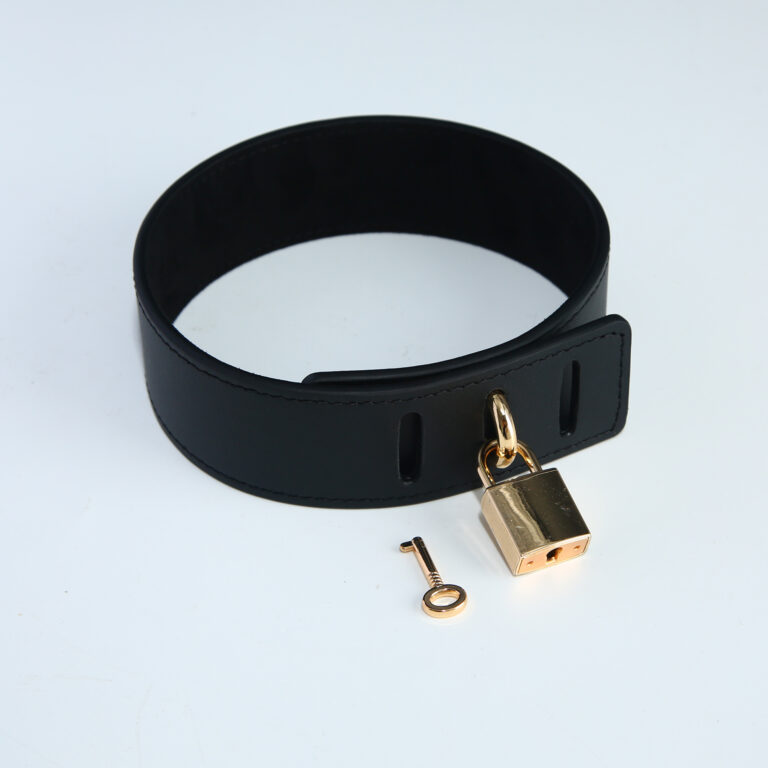

Restrizioni Bondage 101: Consigli per i Dominanti per Prendere il Controllo
For experienced dominants, the art of bondage restraints transcends mere physical immobilization; it becomes a sophisticated dance of power, trust, and profound psychological engagement. This report, crafted for those seeking to elevate their mastery, delves into advanced strategies for scene management, the practical application of diverse bondage restraints, and the nuanced techniques for deepening control. At Zaoyi Bondage, we understand this pursuit of excellence, offering high-end leather bondage restraints that combine unparalleled craftsmanship with ergonomic design, enabling dominants to execute their visions with precision and aesthetic grace. Our commitment to quality ensures that every piece, from a delicate Collar to robust Cuffs, serves as an extension of the dominant’s will, facilitating scenes of exquisite control and unforgettable impact.

The philosophical underpinnings of advanced dominant control in BDSM reveal a rich tapestry of motivations, extending beyond simple pleasure. BDSM can be a “secular religion” or a spiritual practice, tapping into primal human forces and leading to altered states of consciousness through paths of rhythm, ordeal, and flesh 1. Practitioners often structure their BDSM as a religious path, finding self-discovery and spiritual awakening through confronting inner demons 1. This interplay of dominance and submission is an ancient art form with neuropsychological components, where desire is seen as divine, unlocking inner needs and emotions 4. The consensual power exchange, where the submissive grants power out of trust and respect, is a core tenet, distinguishing it from coercion 4. Ethical considerations, such as informed, voluntary, and ongoing consent, are paramount, ensuring that the “gift” of control is always within agreed-upon boundaries 9.

Strategic Restraint Selection for Scene Objectives
The discerning dominant understands that the choice of bondage restraints is not arbitrary but a strategic decision, deeply intertwined with the scene’s objectives, desired aesthetic, and the submissive’s experience and limits. Moving beyond basic application, strategic selection maximizes impact, transforming a simple restraint into a powerful tool for narrative and sensation. Zaoyi Bondage specializes in crafting premium leather bondage restraints that meet these exacting standards, offering a range of products designed for both profound psychological effect and physical comfort.
When selecting bondage restraints, consider the material properties. The tensile strength, flexibility, skin compatibility, thermal properties, hypoallergenic qualities, and non-marking characteristics are crucial [Learning 2]. For instance, medical-grade silicone offers biocompatibility and ease of cleaning, while aerospace-grade metals provide a high strength-to-weight ratio for specific applications. Advanced synthetics can be tailored for specific textures or stretch resistance, offering unique sensory experiences. Zaoyi Bondage’s commitment to high-quality leather ensures durability, comfort, and a luxurious aesthetic that enhances the scene’s overall impact. Our Luxury Gothic Handcuffs or Diamond BDSM Cuffs exemplify this blend of robust construction and refined design.
Comfort, often overlooked in its complexity, is multifaceted. It encompasses breathability for extended wear, non-marking properties to preserve skin health and aesthetic, and the psychological impact of the material’s weight, texture, and temperature [Learning 2]. A heavy metal Collar can evoke intense restriction, while the soft lining of our Manette BDSM Morbide Fluff (Inverno 2025) can create a sense of luxurious surrender. Hygiene is also a critical factor; materials should be non-porous and resistant to degradation from cleaning agents, ensuring repeated safe use [Learning 2].

The submissive’s archetype and the dominant’s style also guide restraint selection. A Service Submissive, who finds fulfillment in performing tasks, might be best suited for bondage restraints that facilitate specific poses or immobility, allowing them to focus on their role 28. A Submissive Brat, who thrives on playful defiance, might require more robust or challenging bondage restraints that emphasize the dominant’s control, such as those found in our Bad Blood Bondage Cuffs (2025 Edition). For a Thrall, seeking complete control and blanket consent, a full bondage restraint kit like the Luxury Bondage Set or a comprehensive Zaoyi Restraint Kits might be appropriate, symbolizing total surrender 30. Dominant styles, ranging from the Sadist to the Caregiver, Master/Mistress, or Brat Tamer, will naturally gravitate towards different types of bondage restraints that align with their approach [Learning 1, Point 6].
Furthermore, Zaoyi Bondage offers custom fabrication options, allowing for bespoke bondage restraints that perfectly fit the submissive’s body and meet specific scene requirements, optimizing both comfort and functionality [Learning 2]. This level of customization ensures that the chosen bondage restraints are not just tools, but integral elements of a meticulously planned and deeply personal experience. Consider our Custom Leather Bondage Cuffs for a truly tailored fit.
Mastering Advanced Restraint Application & Setup
The application of bondage restraints is an art form demanding precision, knowledge, and a deep understanding of both the physical and psychological landscape of the scene. For experienced dominants, mastering advanced techniques ensures not only security and comfort but also elevates the aesthetic and thematic coherence of the experience. Zaoyi Bondage’s premium leather bondage restraints are designed with this mastery in mind, offering superior quality that facilitates intricate setups and enduring performance.
When incorporating suspension, a profound form of bondage restraints, a thorough understanding of biomechanics and safety is paramount. Load distribution is critical; uneven distribution can lead to structural failure and endanger participants 24. The center of gravity (COG) of the suspended individual must be accurately assessed to ensure stability and prevent tipping 25. Rigging systems should equalize the load across multiple points, preventing excessive stress on any single component 25. The rigging angle significantly impacts the load on each lifting point; a 30-degree sling angle, for instance, can double the load on the rigging, necessitating a safety factor (SF) of at least 5:1, meaning the equipment can withstand five times the maximum expected load 26. Dynamic loading, or rapidly changing forces, must also be accounted for, as it can drastically alter load distribution [Learning 3, Point 6].
Advanced knotting techniques are essential for rope bondage restraints, ensuring security without compromising circulation or causing nerve damage. Beyond basic ties, exploring decorative and functional knots that integrate seamlessly with the scene’s aesthetic adds another layer of sophistication. For suspension, rigging for mechanical advantage (MA) systems can amplify force, making it easier to lift and position the submissive 38. However, friction, arising from rope contact with surfaces, low-quality pulleys, or mechanical rope bends, can significantly reduce the theoretical MA, sometimes turning a 3:1 system into a 2:1 system 42. High-quality pulleys with sealed bearings (90%+ efficiency) are crucial, as rope bending over sharp edges can reduce efficiency by up to 50% 42.
Integrating bondage restraints with furniture or custom setups requires creativity and structural awareness. This could involve using specialized anchor points, custom-built frames, or even adapting existing furniture with reinforced attachment points. Zaoyi Bondage’s robust Zaoyi Chain-Collar and various Cuffs are designed to withstand the rigors of such setups, providing secure and aesthetically pleasing options.
Safety protocols extend to hardware and equipment. Regular inspections of wire ropes, slings (chain, wire rope, synthetic), hooks, shackles, and turnbuckles are crucial 2948. Wire rope, for example, should be removed from service if wear or corrosion affects individual wires over more than 1/3 of the original diameter 47. Load cells, transducers that convert mechanical force into an electrical signal, can be integrated into rigging systems for real-time load monitoring, providing an objective measure of force and tension 44. This proactive approach, akin to aviation safety protocols, emphasizes rigorous checklists and redundancy, minimizing distractions during critical setup phases [Learning 4, Point 3].
Potential hazards, such as unbalanced loads, overloading, and the dangerous “Reverse Suspension Syndrome” (where rope tied around the torso can cause severe visceral injuries), must be meticulously avoided through careful planning and execution 53. Competent personnel, trained and certified in rigging, are indispensable for complex setups, adhering to standards like ASME B30.5 [Learning 3, Point 11]. Zaoyi Bondage’s commitment to quality materials and design supports these advanced applications, ensuring that the physical integrity of the bondage restraints matches the dominant’s expertise.
Dynamic Scene Management: Orchestrating Control and Flow
Dynamic scene management is the art of constructing, escalating, maintaining, and de-escalating a bondage scene, with the dominant orchestrating the narrative, managing energy, and ensuring a compelling and controlled experience from initiation to conclusion. This requires a profound understanding of psychological triggers, communication nuances, and the strategic application of control.
Neuro-linguistic programming (NLP) techniques offer powerful tools for dominant scene narrative control. Building rapport, founded on trust and understanding, is fundamental for influence 60. Techniques like mirroring and matching subtly reflect the submissive’s body language, voice tone, and words, creating a sense of connection and receptiveness 58. Pacing and leading involve matching the submissive’s emotional state before gently guiding the scene’s direction 58. Anchoring, associating a specific stimulus (gesture, word, sound) with a desired emotional or behavioral response, can be used to evoke specific states or sensations during the scene 67. For instance, a particular touch or phrase could be anchored to feelings of deep surrender or intense pleasure, to be triggered at the dominant’s discretion. Zaoyi Bondage’s exquisite Leather Bondage Cuffs or a finely crafted BDSM Paddle can become physical anchors, imbued with meaning through repeated use.
Communication, both verbal and nonverbal, is the bedrock of power dynamics. The dominant’s body language, facial expressions, eye contact, and tone of voice significantly impact trust and convey power and status 72. High-power individuals often use expansive gestures and direct eye contact, subtly reinforcing their role 72. Active listening allows the dominant to tailor their communication, responding to the submissive’s cues and enhancing influence [Learning 3, Point 12]. The power exchange in BDSM is a consensual “gift” of control, not coercion, and this understanding underpins all interactions 4.
The psychological aspects of bondage are profound. BDSM allows for the exploration of identity, desires, and fantasies, leading to greater self-awareness, acceptance, and empowerment 14. Activities trigger the release of endorphins, dopamine, and oxytocin, creating euphoric states, pleasure, bonding, and pain relief 15. The dominant can strategically leverage these neurochemical responses to deepen the submissive’s experience. Emotional play, the deliberate manipulation of emotions within a consensual dynamic, can explore feelings like fear, humiliation, adoration, or caretaking, creating a rich emotional landscape 20.
Constructing a scene involves careful planning, including proactive risk assessment. Adapting methodologies like Failure Mode and Effects Analysis (FMEA) or Hazard and Operability (HAZOP) studies can identify potential failures (e.g., rope slippage, equipment malfunction, panic attack) and their effects, allowing for prioritized mitigation [Learning 4, Point 1, 2]. Aviation safety protocols, with their rigorous checklists and redundancy, offer a model for pre-scene checks and emergency procedures [Learning 4, Point 3]. Environmental factors such as temperature, humidity, and noise levels should also be assessed and managed to ensure safety and comfort [Learning 4, Point 5].
Escalation and de-escalation require a keen sense of timing and the ability to read the submissive’s subtle cues. The dominant guides the narrative, building tension and intensity, then gently bringing the scene to a satisfying conclusion. This dynamic flow is crucial for preventing “sub drop,” the emotional low experienced by submissives after intense sessions, linked to hormonal and neurotransmitter changes 21. Aftercare, essential emotional and physical support, helps regulate emotions and reinforces trust, ensuring a positive overall experience 19. Zaoyi Bondage’s Zaoyi bondage blind box or Luxury Bondage Straps Set (3 Pieces) can be part of a thoughtful aftercare ritual, symbolizing care and connection.
Leadership parallels from the business world, such as strategic and transformational leadership, can be applied to power exchange dynamics, where dominants lead with empathy and authority, fostering trust and collaboration [20][Learning 1, Point 9]. Ethical dominance, distinct from manipulation, balances safety with intensity and involves erotic intelligence, ensuring that influence is always consensual and for mutual benefit 23.
Advanced Communication & Safety Protocols in Dominance
In the realm of advanced bondage restraints and dominance, communication and safety protocols evolve beyond basic understanding to sophisticated, continuous processes. For experienced dominants, this means mastering nuanced methods for consent negotiation, interpreting non-verbal cues, and strategically implementing safety measures that enhance, rather than detract from, the intensity of the scene.
Ethical BDSM is fundamentally built upon informed, voluntary, and ongoing consent 9. This is not a one-time agreement but a continuous dialogue, often non-verbal, throughout the scene. The FRIES model—Freely Given, Reversible, Informed, Enthusiastic, and Specific consent—serves as a robust framework 9. Beyond explicit verbal consent, the dominant must be adept at reading subtle shifts in the submissive’s body language, breathing, and vocalizations. Non-verbal communication, including eye contact, micro-expressions, and muscle tension, provides critical feedback on the submissive’s state, allowing for real-time adjustments to intensity or technique.
Safe words, while foundational, can be strategically implemented with greater nuance. Beyond the basic “red light” signal to stop, a “yellow light” could indicate a need for a pause, a change in activity, or a check-in, allowing the scene to adapt without full cessation. This creates a more fluid and responsive dynamic, empowering the submissive to communicate their needs without breaking the immersive experience. The dominant’s role in ethical sadism and mastery begins with controlling their own behavior to avoid unintended suffering, ensuring that the pursuit of pleasure does not cross into harm 12.
Comprehensive aftercare strategies are not merely post-scene rituals but are integrated into the entire scene management process. This includes pre-negotiating aftercare preferences, ensuring the submissive feels heard and cared for, and actively participating in the emotional and physical recovery. BDSM activities trigger the release of endorphins, dopamine, and oxytocin, which contribute to pleasure, bonding, and pain relief 15. Understanding these neurochemical responses allows the dominant to anticipate and mitigate “sub drop,” the emotional low that can follow intense scenes, by providing comfort, reassurance, and physical closeness 21. Our Luxury Bondage Set can be part of a thoughtful aftercare ritual, symbolizing care and connection.
Proactive risk assessment frameworks are crucial for complex scenes involving multiple bondage restraints. This includes adapting industrial safety methodologies like FMEA (Failure Mode and Effects Analysis) to identify potential failure modes of restraints or scene elements, and HAZOP (Hazard and Operability) studies to systematically identify hazards and operability problems [Learning 4, Point 1, 2]. Psychological risk assessment tools, such as anxiety scales or trauma history questionnaires, can proactively identify submissives at higher risk for adverse reactions, requiring careful ethical consideration and informed consent [Learning 4, Point 4].
The integration of technology offers innovative solutions. AI-assisted risk management, for instance, could analyze real-time physiological data (heart rate, respiration rate, movement patterns) to detect potential problems and alert the dominant or spotters, enhancing safety in complex scenarios [Learning 4, Point 9]. Digital scene planning tools could include restraint libraries, risk checklists, and emergency contact information, streamlining preparation and ensuring all safety measures are considered [Learning 4, Point 8].
Community standards and best practices for risk assessment are vital, fostering a culture of safety and shared knowledge [Learning 4, Point 11]. Post-scene debriefing and analysis, a structured process for both dominant and submissive to reflect on the scene, helps identify areas for improvement in risk assessment and mitigation [Learning 4, Point 13]. This continuous learning loop ensures that each experience contributes to greater safety and deeper understanding. Zaoyi Bondage is committed to supporting this culture of informed and safe play, providing bondage restraints that are not only luxurious but also reliable and designed for responsible use.
Leveraging Restraints for Deeper Psychological Impact
The strategic application of bondage restraints extends far beyond physical control; it is a potent catalyst for amplifying psychological dynamics, enhancing surrender, and deepening the power exchange within a scene. For the advanced dominant, understanding the interplay between physical control and the submissive’s mental state unlocks profound and transformative experiences.
BDSM, particularly with bondage restraints, can serve as a pathway to altered states of consciousness (ASCs), akin to spiritual or ecstatic religious practices 1. Sensory deprivation, achieved through blindfolds like our Leather BDSM Blindfold or a full Zaoyi Bondage Hood Mask, combined with physical restriction, can induce a state of heightened awareness or “sub-space” 88. This state, often described as transcendental, allows individuals to escape the self, confront inner demons, and achieve spiritual awakening 3. The physical sensation of being bound, the weight of the leather, or the tension of the ropes, can become a focal point, drawing the submissive deeper into their internal experience and away from external distractions.
The psychological impact of bondage restraints is multifaceted. It can facilitate a profound exploration of identity, desires, and fantasies, leading to greater self-awareness and empowerment 14. The act of surrender, enabled by the physical inability to move, can be a powerful way for the submissive to learn to release their preconceived notions of “self” and open up to new experiences 21. This requires immense trust in the dominant to lovingly and respectfully hold space for this process, even when it involves intense sensations or emotional vulnerability 21. The physical control exerted by bondage restraints can reduce stress and anxiety for the submissive, providing a paradoxical sense of security and freedom from decision-making 13.
NLP techniques can be strategically employed to enhance this psychological impact. Anchoring, as discussed earlier, can link specific physical sensations from the bondage restraints to desired emotional states, such as deep relaxation, intense focus, or complete surrender 67. Reframing, another NLP technique, allows the dominant to guide the submissive in perceiving the experience in a way that amplifies its positive or transformative aspects [Learning 3, Point 8]. For example, the feeling of being utterly helpless can be reframed as a profound release from responsibility, leading to a deeper sense of peace.
The aesthetic of the bondage restraints themselves plays a significant role in psychological impact. The luxurious feel of Zaoyi Bondage’s premium leather, the intricate design of a Cowboy BDSM Collar (1 Piece), or the provocative nature of 61. Irresistible Leather Bondage Lingerie (3 Pieces) can evoke specific fantasies and enhance the immersive quality of the scene. The visual and tactile elements contribute to the overall narrative, deepening the submissive’s engagement and emotional response.
For those exploring the boundaries of sensation and control, Zaoyi Bondage offers a range of products designed to facilitate these deeper psychological journeys. From the subtle suggestion of control with a Zaoyi Fetish Nipple Cover to the complete immobilization offered by a Lavish “X” Hogtie BDSM Dangerous, each piece is crafted to be a tool for profound connection and transformation. Our Zaoyi Bondage Best Sellers and Zaoyi Bongdage New Arrivals showcase innovative designs that push the boundaries of both aesthetics and functionality, catering to the evolving needs of experienced dominants.
Ultimately, leveraging bondage restraints for deeper psychological impact is about creating a meticulously crafted experience where physical control serves as a gateway to mental and emotional liberation. It is a testament to the dominant’s skill, empathy, and understanding of the intricate human psyche, facilitated by the quality and design of exceptional bondage restraints from Zaoyi Bondage.