

1. Synthesis of Use Cases and Restraint Modalities
The design mandate for this BDSM RESTRAINT KIT centers on achieving maximum versatility within a minimal three-piece configuration, effectively bridging the gap between beginner sensory play and advanced impact/high-tension restraint. This necessitates a synthesis of functional requirements that dictate material selection, hardware engineering, and overall component taxonomy.

Bridging the Functional Gap: Load Profile Divergence
Beginner exploration, often involving simple sensory deprivation or light cuffing, primarily requires components rated for static or very low-cycle dynamic loads, prioritizing comfort, ease of application, and rapid, intuitive release mechanisms [Learning 1]. Conversely, advanced impact play and high-tension scenarios demand hardware engineered for high-cycle, high-peak dynamic loading profiles. This advanced requirement mandates rigorous consideration of shear strength, tensile yield strength, and material energy absorption capacity—metrics largely irrelevant to basic sensory use [Learning 1].
To reconcile these divergent needs in a single 3-piece kit, the design must incorporate component-level redundancy [Learning 1]. The critical load-bearing elements must be over-engineered to meet the advanced dynamic load specifications. Simultaneously, these components must feature adjustable tensioning mechanisms—such as multi-point lacing or precision buckles—to scale down safely and comfortably for the beginner’s low-tension requirements [Learning 1]. This hybrid approach ensures that the kit remains accessible for initial exploration while possessing the structural integrity required for more intense activities.
Component Modularity and Sensory Specifics
The versatility of the bdsm restraint kit is heavily reliant on the modularity of its components, particularly how they interface. While basic comfort for low-tension exploration emphasizes non-constrictive fit and rapid release, high-tension use prioritizes secure, non-slip anchoring [Learning 1]. The conflict between these priorities—security versus speed of release—must be managed through intelligent hardware selection, favoring mechanisms that offer both high security under load and controlled, rapid disengagement when required [Learning 1].
For a comprehensive catalog coverage within three pieces, the selection must maximize the number of distinct restraint modalities achievable. The typical high-end configuration leans toward securing the four primary extremities and the neck/torso. A successful 3-piece configuration must therefore be capable of simulating wrist, ankle, and torso/neck bondage through strategic connection points [Learning 2].
2. Core Component Specification: Leather Restraint Taxonomy (3-Piece Focus)
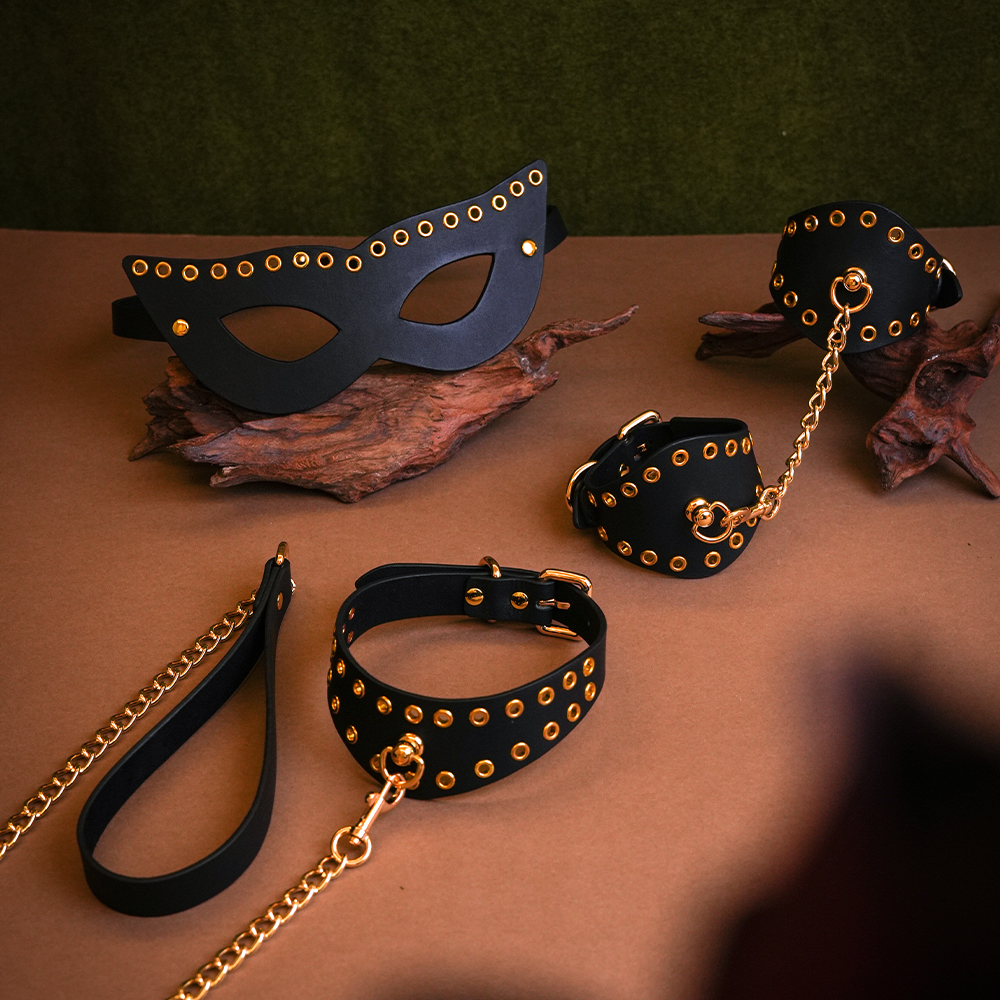
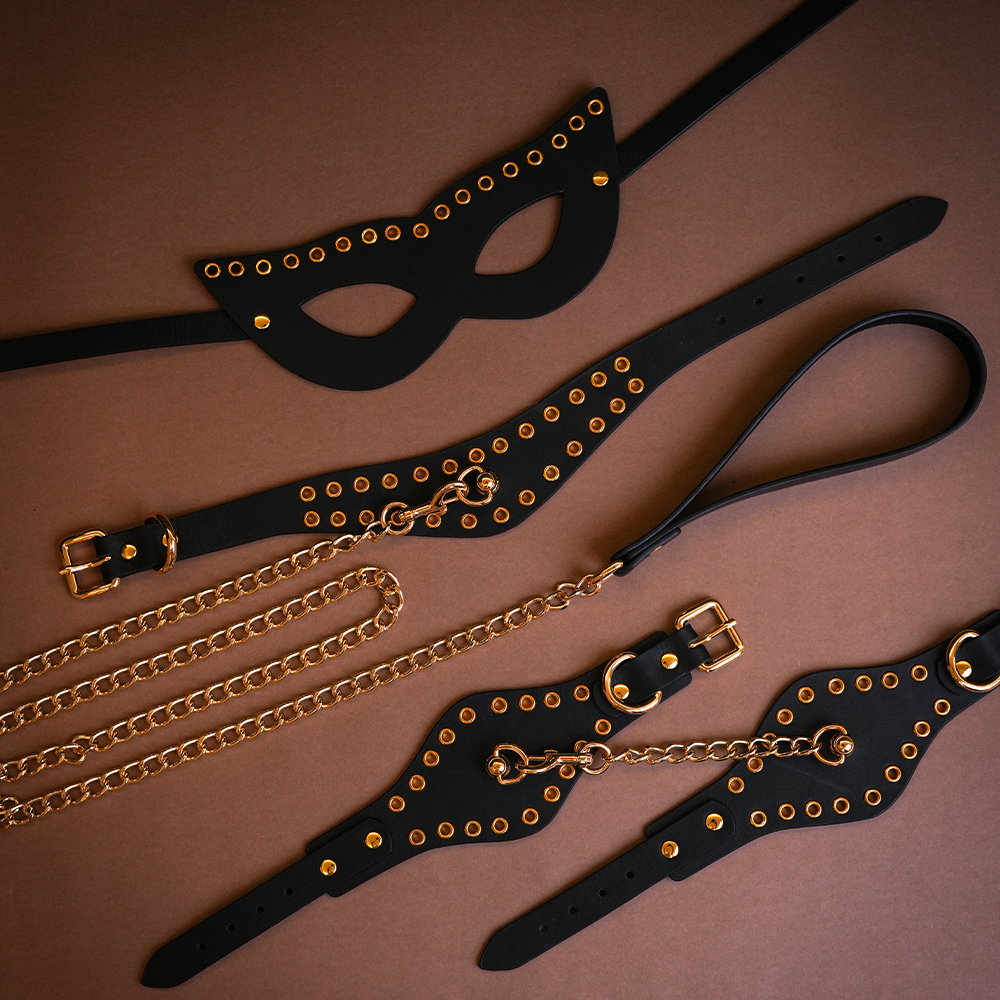
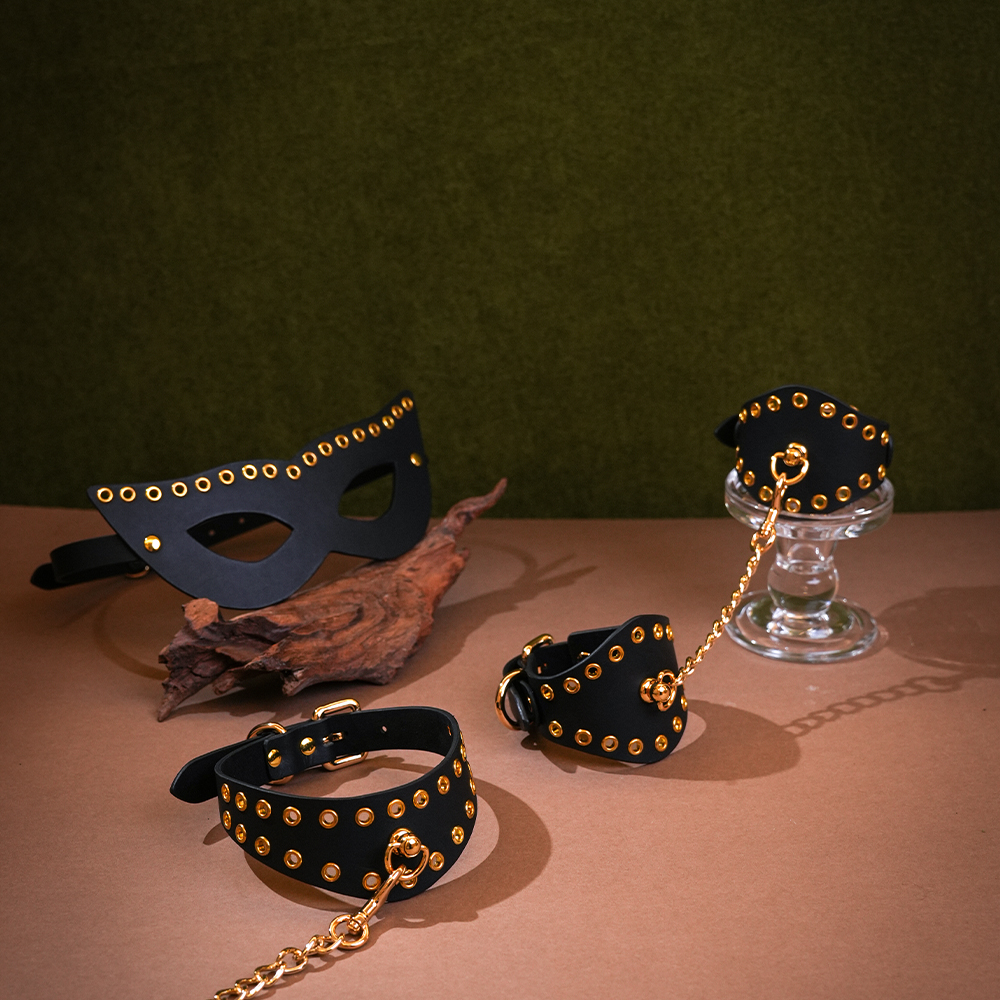
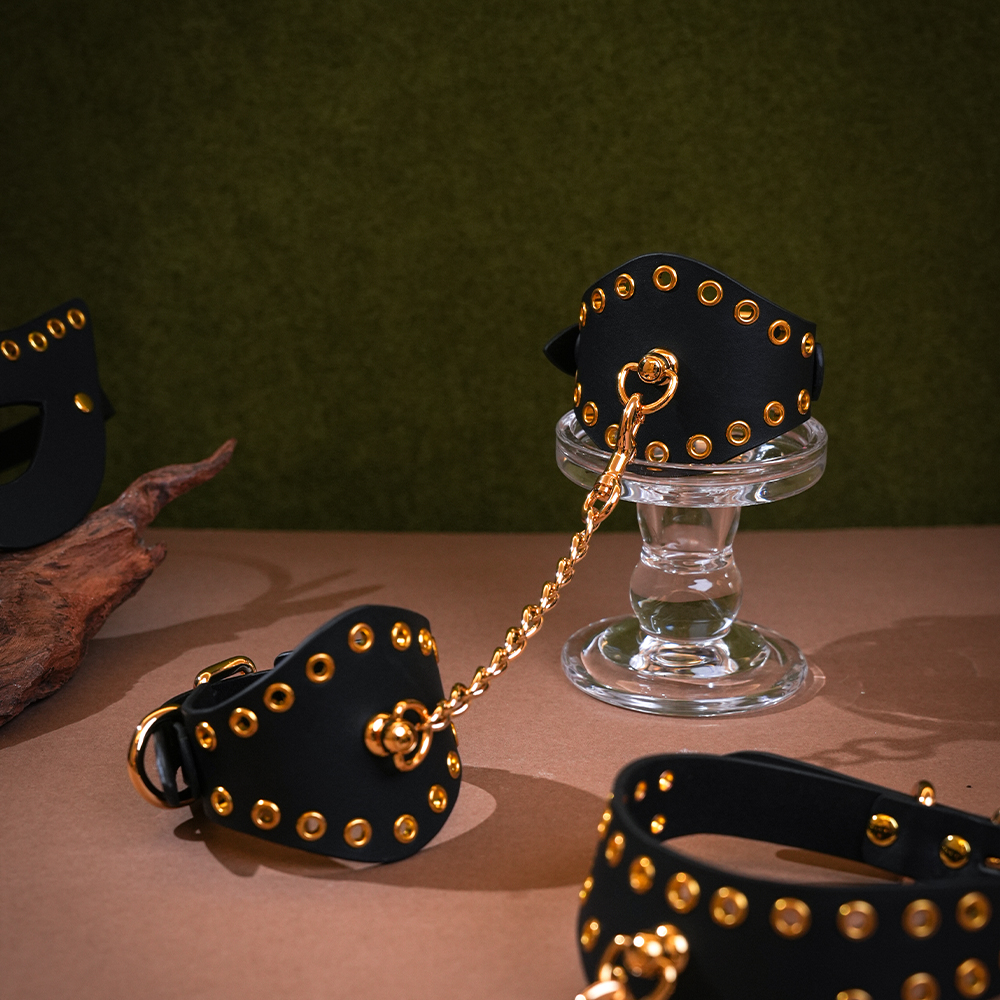
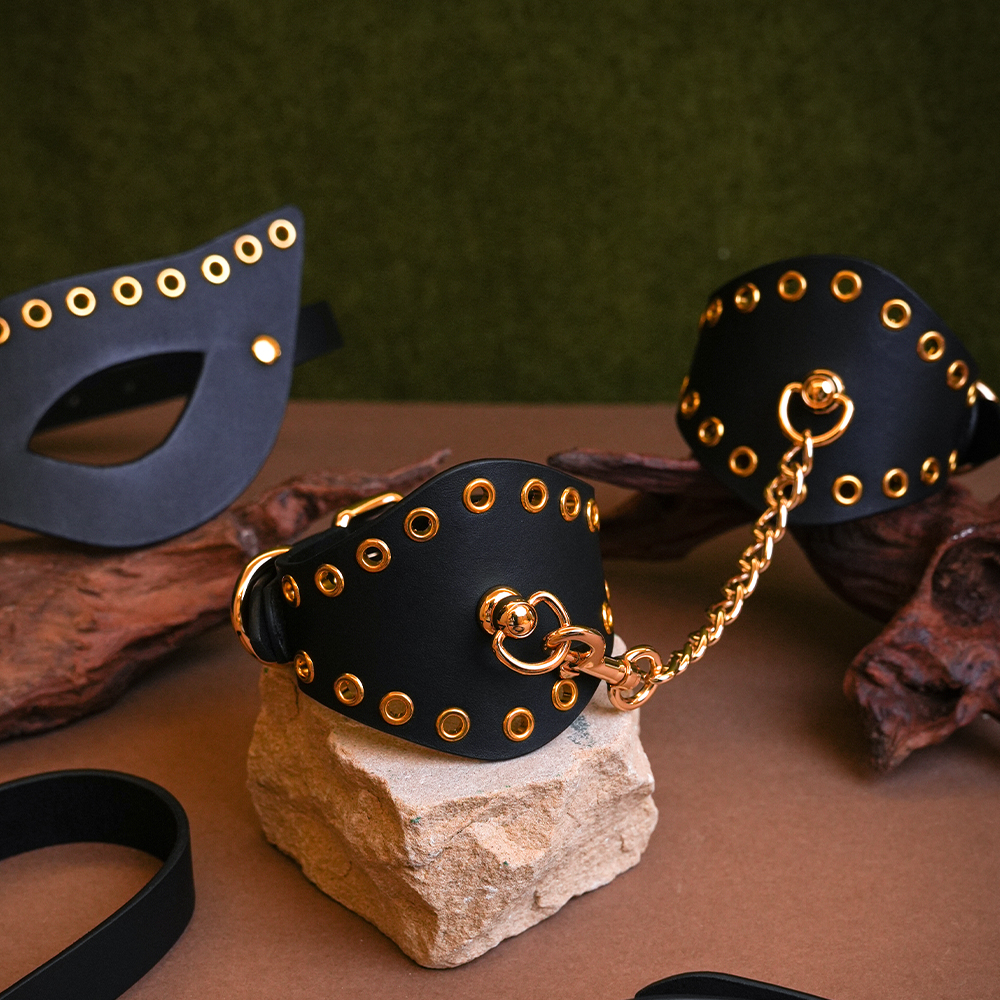
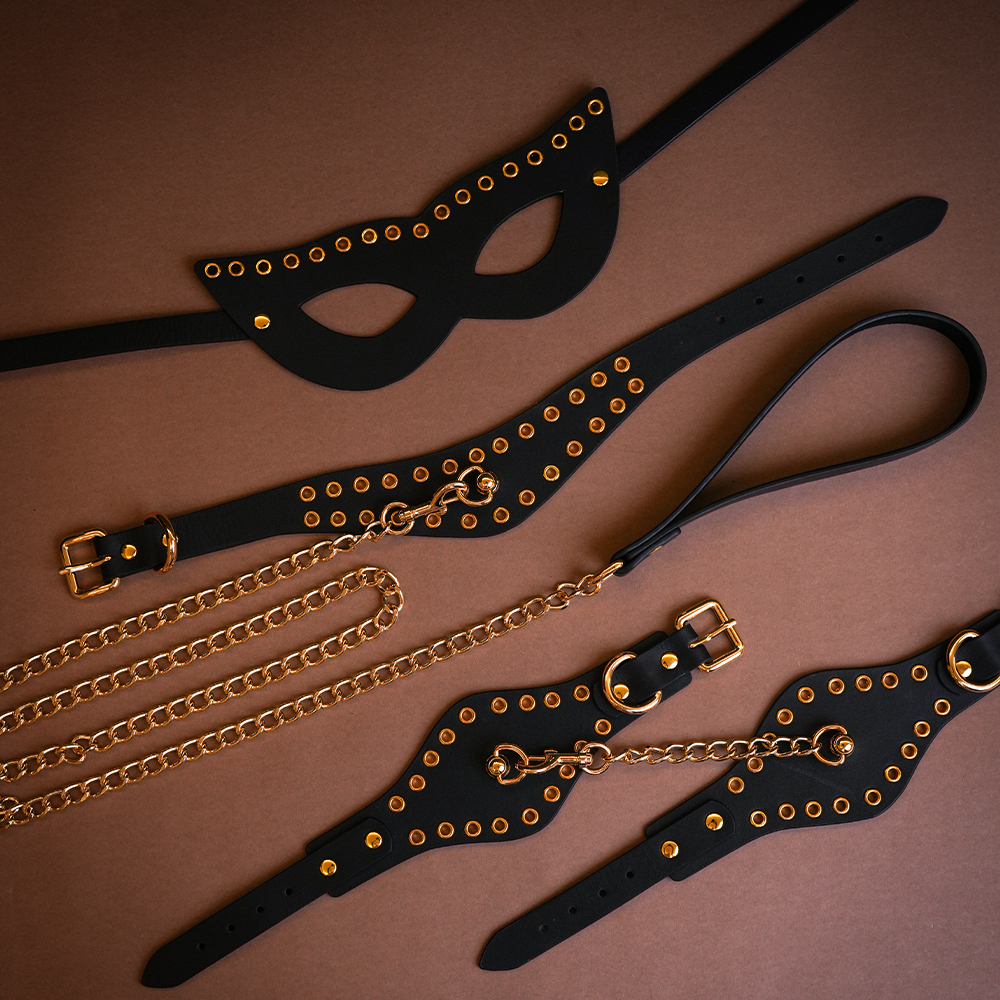
Based on established high-end restraint configurations, the optimal 3-piece BDSM RESTRAINT KIT from Zaoyi Bondage must prioritize the most versatile load-bearing elements. Given the need to cover the broadest spectrum of restraint modalities, the core components are defined as: Wrist Cuffs, Ankle Cuffs, and a Convertible Collar/Harness Element.
Defining the Optimal 3-Piece Configuration
While standard starter sets often include Wrist Cuffs, Ankle Cuffs, and a Neck Collar, achieving “comprehensive catalog coverage” requires the third piece to offer torso restraint capability, which a simple collar may not fully provide [Learning 2].
- Piece 1: Premium Wrist Cuffs: These must be robust enough for high-tension use but lined for comfort. Zaoyi Bondage offers exceptional examples such as the Italy Leather BDSM Cuffs or the highly durable Diamond BDSM Cuffs. The design must incorporate hardware capable of handling dynamic shear forces [Learning 1].
- Piece 2: Premium Ankle Cuffs: Functionally mirroring the wrist cuffs, these must accommodate larger circumferences while maintaining the same high-grade material and hardware standards. The Fetish Ankle Cuffs serve as a baseline for this requirement.
- Piece 3: Convertible Collar/Harness Element: This is the critical piece for versatility. Instead of a static collar, this piece should be engineered as a Convertible Collar/Torso Strap. It must function as a secure neck restraint (e.g., a Premium BDSM Collar) but also possess integrated, heavy-duty attachment points (D-rings or proprietary connectors) that allow it to link with the cuffs to simulate a hog-tie or torso harness configuration [Learning 2]. This modularity is key to achieving comprehensive coverage without needing a dedicated spreader bar or separate torso strap in the base three pieces.
Hardware and Interface Integrity
The transition between these components is where failure modes often manifest. The interface integrity between the leather and the hardware—especially where Dyneema cores might meet metal anchors—is paramount [Learning 1]. High-end manufacturers often utilize proprietary connection systems or standardized, heavy-gauge hardware (like specific snap hooks or D-rings) to ensure cross-component utility [Learning 2]. For Zaoyi Bondage, utilizing hardware rated for the highest dynamic loads is essential, even if the primary use case is low-tension exploration.
3. Material Science and Luxury Leather Sourcing Analysis
The user’s preference for leather within a mid to luxury budget demands an analysis of materials that offer superior durability, aesthetic development (patina), and skin contact comfort. The material choice must support both the high-tension structural requirements and the low-tension tactile experience.
High-End Leather Taxonomy for Restraint Applications
For a luxury BDSM RESTRAINT KIT, the focus shifts from standard chrome-tanned cowhide to materials known for exceptional longevity and unique aging characteristics:
- Shell Cordovan: Derived from equine hide, Cordovan is structurally unique due to its dense, non-grain surface layer. This density provides superior resistance to creasing and cracking compared to typical bovine grain leather, making it ideal for high-wear areas like buckle tongues or high-flex points [Learning 3]. Its patina develops as a deep, lustrous sheen through burnishing, maintaining structural integrity [Learning 3].
- Bridle Leather: This heavy-duty, vegetable-tanned bovine leather is heavily impregnated with oils and waxes (tallow/beeswax) during finishing. This process imparts high water resistance and structural stability under tension, making it structurally superior for load-bearing straps compared to softer chrome-tanned alternatives [Learning 3]. Its patina manifests as visible wax “bloom” and darkening at flex points [Learning 3].
- Exotic Reptile Hides (e.g., Alligator/Crocodile): While aesthetically premium, their strength is anisotropic, being strongest along the muscle fiber axis. Their long-term comfort is highly dependent on the quality of the flesh-side finishing and lining material, as the scales offer poor conformability against skin over extended periods [Learning 3]. For exotic materials, CITES compliance and traceable ethical sourcing are non-negotiable requirements for luxury positioning [Learning 3].
Tanning Method and Performance Correlation
The choice of tanning directly impacts tensile performance. Vegetable tanning (used for Bridle Leather and often for high-end Cordovan finishing) generally yields leather with higher initial tensile strength and superior resistance to dimensional change caused by moisture fluctuations compared to chrome tanning [Learning 3]. For restraints, which must maintain precise dimensions under load, vegetable-tanned components are structurally preferable [Learning 3].
Furthermore, vegetable-tanned leather offers inherent hygienic benefits. Leathers tanned with natural tannins (like Chestnut or Quebracho) exhibit non-leaching antibacterial activity, particularly against Gram-positive bacteria like Staphylococcus aureus, making them inherently suitable for prolonged, hygienic skin contact applications [Learning 3]. Retanning chrome-tanned leather with natural tannins can also achieve this comprehensive antibacterial profile [Learning 3].
Advanced Finishing for Hygiene and Durability
To meet the highest standards of hygiene and hypoallergenic contact, Zaoyi Bondage should integrate advanced finishing techniques:
- Nanotechnology Coatings: Ultra-thin, transparent coatings based on $\text{SiO}_2$ (silicon dioxide), such as Nano4-Leather®, can provide a hydrophobic, fluorine-free barrier that offers antibacterial protection without altering the leather’s feel or breathability, often meeting Oeko-Tex® Standard 100 specifications [Learning 4]. Other solvent-free, UV-curable options like RepelFlex L enhance scratch resistance and repellency [Learning 4].
- Nanoparticle Integration: For potent, long-lasting antimicrobial action, Nano Silver ($\text{nAg}$) or Copper Nanoparticles ($\text{CuNPs}$) can be integrated. Studies show $\text{nAg}$ at concentrations around $20 \mu\text{g}/\text{cm}^2$ achieves significant log reductions against E. coli and S. aureus [Learning 4]. The critical factor here is covalent immobilization—permanently bonding these nanoparticles into the collagen matrix or the polyurethane topcoat to ensure zero leaching over time, which is vital for hypoallergenic claims [Learning 4]. Research into combining $\text{CuNPs}$ synthesized with natural precursors like gallic acid with the vegetable-tanned base offers a synergistic, non-leaching approach Learning 4.
4. Budget Allocation and Tiered Luxury Market Benchmarking
Sourcing materials like Shell Cordovan, high-grade vegetable-tanned hides, and specialized hardware requires a budget allocation strategy that justifies the resulting premium pricing. The goal is to position the 3-piece kit in the Ultra-Luxury Artisan tier.
Cost Structure Analysis and Markup Strategy
Benchmarking against general luxury goods reveals significant potential for brand equity markup, but for artisan goods, the value proposition must be transparently linked to craftsmanship [Learning 2].
| Cost Component | Description | Benchmark Data Implication |
|---|---|---|
| Material Cost ($C_M$) | High-grade vegetable-tanned leather, exotic options, specialized hardware (high-load rated). | Must be significantly higher than general goods (\$35/bag benchmark) 7. |
| Labor Cost ($C_L$) | Hand-stitching, precision cutting, complex hardware integration, safety engineering verification. | Artisan labor must be valued highly (e.g., $>\$20/\text{hour}$) 9. |
| COGS | $C_M + C_L$ | The foundation for value-based pricing. |
| Brand Equity/Overhead ($C_{BE}$) | Marketing, customization overhead, safety certification verification, brand positioning (Zaoyi Bondage). | For established luxury, markups can reach $10x$ COGS or more 8. |
| Retail Price (ARP) | Final consumer price. | Should reflect the value of safety, material science, and exclusivity. |
For the Ultra-Luxury Artisan tier, a Cost $\times 4+$ multiplier on COGS is a reasonable starting point, driven by the exclusivity of the materials (Cordovan, exotic) and the complexity of the safety engineering 10.
Value Proposition Metrics for Zaoyi Bondage
Zaoyi Bondage, operating at bondagerestraint.com, must leverage its customization capabilities and material expertise to justify this premium pricing against established brands 9. The value proposition is not just the item, but the guarantee of performance and hygiene.
We can define the value metric by comparing the percentage contribution of each cost element to the final retail price:
$$\text{Value Metric} = \frac{C_M + C_L}{\text{Retail Price}} \times 100\%$$
A lower value metric (higher markup) is expected in the ultra-luxury segment, but Zaoyi must ensure that the $C_M$ component is visibly high quality (e.g., showcasing the vegetable tanning process or Cordovan sourcing) to validate the price point 10. For instance, if a competitor sells a similar set based primarily on brand heritage (high, Zaoyi can compete by demonstrating superior Material Science and Safety Engineering ($ including testing/design time) 1.
5. Mandatory Safety Protocols and Quick-Release Integration Engineering
Safety is the non-negotiable foundation of this BDSM RESTRAINT KIT. Given the requirement to handle high dynamic loads, standard fashion hardware is insufficient. The integration of reliable, non-destructive quick-release mechanisms is paramount for both beginner accessibility and emergency response in high-tension scenarios.
Engineering for High-Tension Release Mechanisms
The initial exploration into commercial magnetic releases, such as those from FIDLOCK, revealed that standard catalogue items are explicitly “Not suitable for safety-related applications” and often have static breaking loads far below what is required for dynamic impact scenarios Learning 512. This necessitates a pivot toward specialized, engineered solutions.
Shear-Pin and Frangible Link Systems
Since magnetic systems lack the necessary load rating verification for high-tension restraint, the focus must shift to shear-pin or frangible link mechanisms embedded within the leather structure.
- Mechanism Design: These systems rely on a component designed to fail predictably at a specific, pre-calibrated load (the Yield Load, $Y_L$). This yield load must be set significantly above the maximum expected static load for beginner use, but below the catastrophic failure threshold of the leather itself under extreme dynamic stress.
- Material Selection: The shear element should utilize low-yield-strength alloys or specialized, high-strength polymers designed for controlled fracture. The research must identify materials whose shear strength can be precisely controlled during manufacturing to ensure consistency across all components of the 3-piece kit [Learning 5].
- Controlled Activation: The release mechanism must be intuitive, allowing for single-handed activation under duress, mirroring the design philosophy sought in high-end magnetic closures 13. The mechanism must be shielded by the leather to prevent accidental activation during play, yet accessible for emergency intervention.
Integrating Safety into the Leather Structure
The structural integrity of the leather around the embedded hardware is as critical as the hardware itself. Localized stress concentration must be mitigated:
- Reinforcement Layering: The areas where the shear-pin housing or specialized buckles anchor into the leather must utilize composite construction. This involves layering the high-grade leather with internal rigid cores or utilizing specialized, high-shear-strength adhesives to distribute the load across a wider surface area, preventing premature tearing of the hide itself [Learning 5].
- Hybrid Material Utilization: The integration of Dyneema core lacing within the straps (as previously considered for tensile strength) must be carefully managed at anchor points. The interface integrity—the stitching pattern and adhesive shear strength where the Dyneema meets the leather/hardware—must be tested under rapid acceleration/deceleration cycles, which simulate impact loading failure modes [Learning 1].
Safety Protocol Verification and Documentation
For a luxury provider like Zaoyi Bondage, safety documentation must be explicit:
- Dynamic Load Rating Disclosure: Unlike standard consumer goods, the BDSM RESTRAINT KIT must disclose the verified Dynamic Failure Load, not just a static pull rating. This requires engineering verification, potentially referencing standards from related high-tension fields like industrial fall protection harnesses, to establish benchmarks for activation time and failure load [Learning 5].
- Hypoallergenic Assurance: Given the advanced material science explored, the final product must carry a certification or explicit statement regarding the non-leaching nature of any antimicrobial finishes used, ensuring the leather remains hypoallergenic even after extensive use and conditioning [Learning 4]. This directly supports the luxury positioning by guaranteeing skin safety.
Proactive Solutions and Future Considerations
To further solidify Zaoyi Bondage’s position as a leader in high-end, safe restraints, several proactive avenues should be explored beyond the immediate 3-piece kit requirements:
A. Predictive Material Fatigue Modeling
While current research focuses on static and peak dynamic loads, high-cycle use leads to material fatigue. Zaoyi should invest in Finite Element Analysis (FEA) modeling specifically for the leather/hardware interface under simulated long-term use cycles. This predictive modeling can optimize the geometry of D-rings and buckle slots to minimize stress risers in the leather, extending the lifespan beyond what standard material testing predicts.
B. Modular Safety Expansion Packs
Anticipating the user’s need for expansion beyond the base three pieces, Zaoyi should develop a “Safety Expansion Pack” sold separately. This pack would include:
- Torso/Hogtie Strap: Engineered with the same shear-pin technology as the primary kit components.
- Spreader Bar Connector: Featuring integrated, load-rated magnetic or mechanical locking mechanisms that exceed the 150 kg static load cited in commercial magnetic hardware 12. This allows beginners to safely explore suspension points without compromising the core safety philosophy.
C. Digital Twin Documentation for Custom Orders
For custom orders, Zaoyi Bondage should implement a Digital Twin Documentation System. When a client orders a custom piece (e.g., a specific Cowboy BDSM Collar 2 or a Luxury Gothic Handcuff 2), the system generates a unique digital record detailing:
- The specific batch/source of the leather used (linking to tanning/sourcing data).
- The exact hardware SKU and its verified dynamic load rating.
- The specific shear-pin calibration value ($Y_L$) for that item.
This level of traceability elevates the product from luxury craftsmanship to verifiable, high-precision engineering, a significant differentiator in the high-end market. This system supports the value-based pricing model by quantifying the intangible aspects of quality and safety 9.