


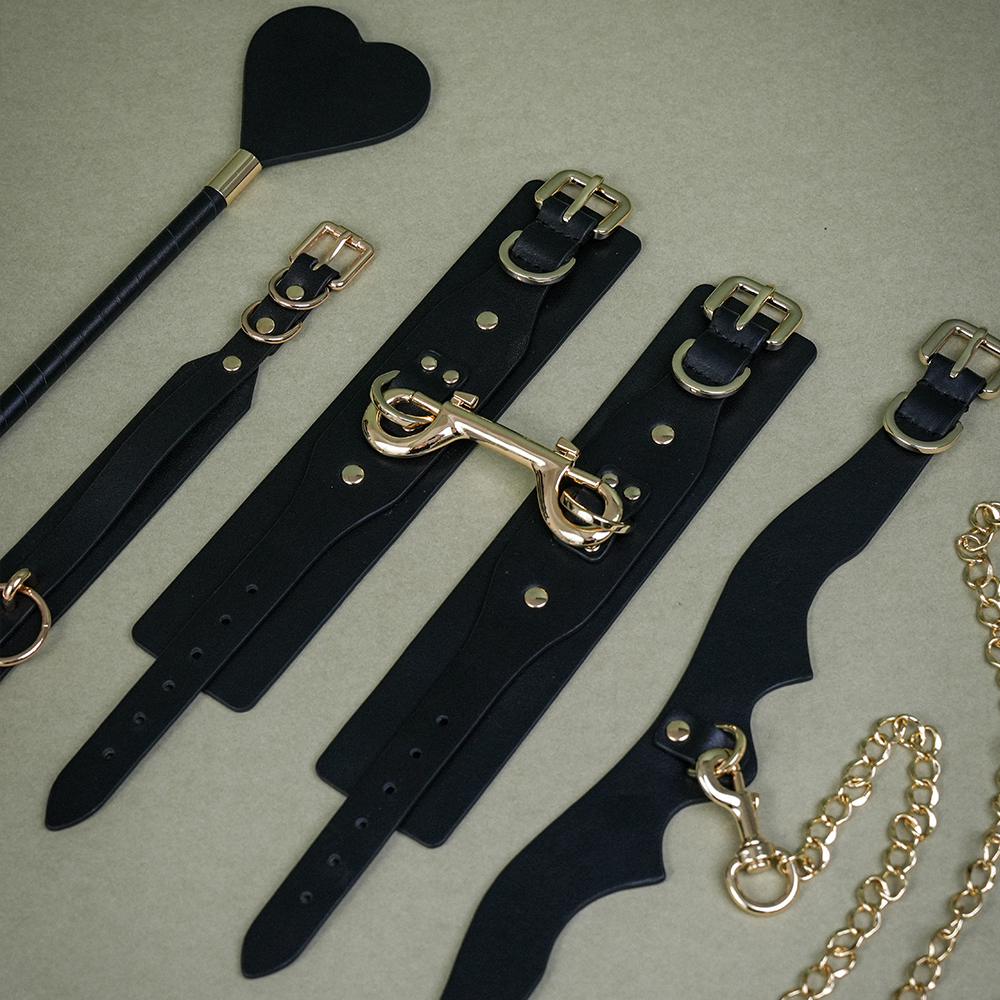
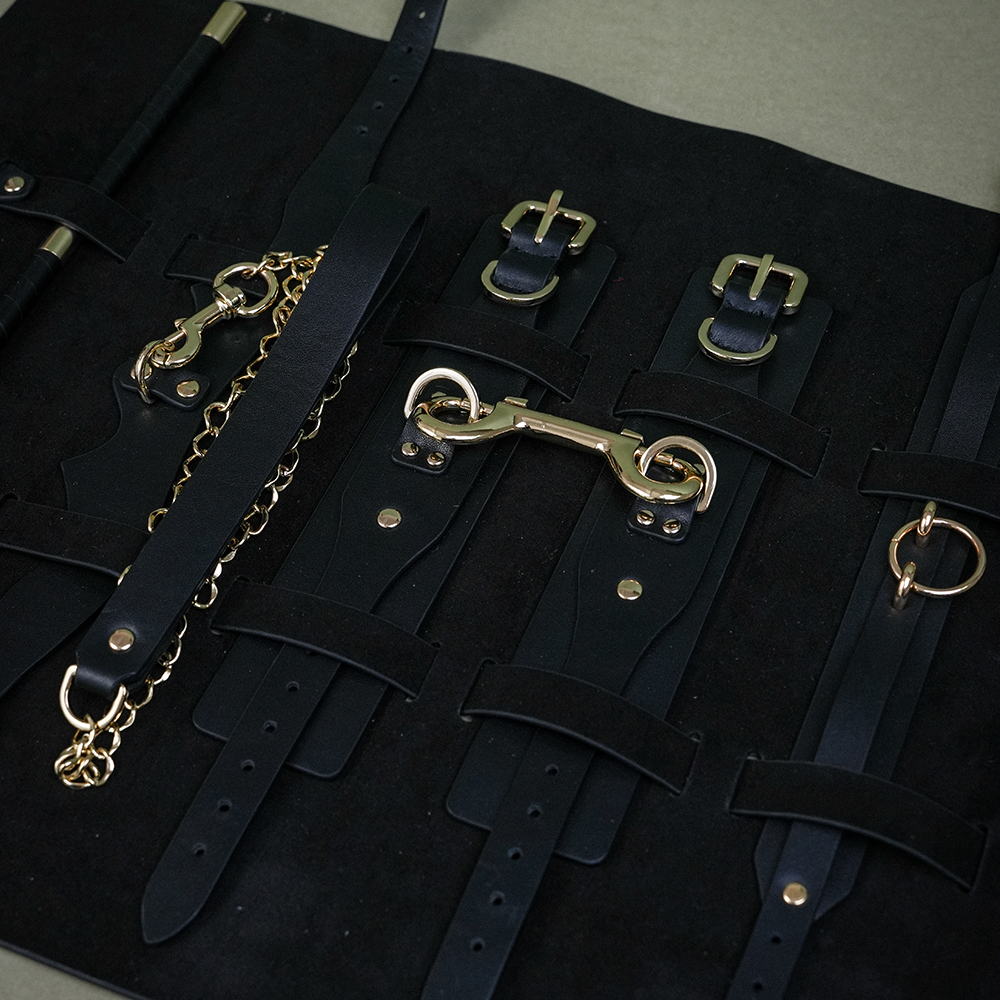
BDSM RESTRAINT SET: Safety, Material Science, and Regulatory Compliance for the Beginner Leather Market
I. Executive Summary and Project Scope
This report provides a comprehensive, safety-centric analysis of beginner-level leather BDSM RESTRAINT SETS, focusing on the critical intersection of material science, engineering safety standards, and global regulatory compliance. The scope explicitly covers core beginner components: cuffs (wrist/ankle), basic harnesses, non-suspension spreader bars, and the necessary quick-release mechanisms.
The primary objective is to establish a technical baseline for manufacturing and procurement that maximizes user safety and minimizes product liability exposure, particularly for high-end, customized leather goods manufacturers like Zaoyi Bondage (bondagerestraint.com). By focusing on superior materials and rigorous safety factors, Zaoyi Bondage can differentiate its premium offerings from the mass-market, low-cost substitutes that often compromise structural integrity and chemical safety 5.
The analysis emphasizes compliance with the stringent chemical safety requirements of the EU’s REACH regulation and the forthcoming product safety mandates under the General Product Safety Regulation (GPSR), alongside establishing conservative Working Load Limits (WLL) for tension play gear.

II. Material Science and Product Taxonomy
1. Leather Specifications and Durability for Restraints
The selection of leather grade and tanning method is the foundational determinant of a RESTRAINT SET’s durability, comfort, and long-term safety. For beginner restraints, the material must balance pliability (for comfort and ease of use) with structural integrity (resistance to stretching and tearing under moderate tension).
A. Preferred Structural Materials: Bridle and Vegetable-Tanned Leather
Bridle Leather is the superior choice for structural components of a RESTRAINT SET due to its high durability and resistance to strain 1.
- Composition and Tanning: Bridle leather is traditionally vegetable-tanned, a process known for producing leather that holds its shape under stress, unlike softer chrome-tanned alternatives 2. It is “hot-stuffed” with greases and finished with wax on both sides, resulting in a firm, stiff temper that is highly resistant to weather, sweat, and strain 1.
- Structural Integrity: This material offers superior resistance to stretching and tearing, making it ideal for straps and cuffs intended to bear tension. The vegetable-tanning process also allows for a clean, professional edge finish (burnishing), which is crucial for comfort 2.
- Cost and Grade: Bridle leather is generally more expensive because it requires the best grades of hides, free of flaws, for the intensive finishing process 4. This aligns perfectly with the premium positioning of Zaoyi Bondage.
B. Alternatives and Comfort Considerations
- Chrome-Tanned Leather (Garment Grade): While softer and cheaper, chrome-tanned leather lacks the necessary structure and is prone to stretching and losing its shape under tension 2. Its failure mode under moderate, non-suspension tension is typically elongation followed by tearing, making it unsuitable for primary load-bearing straps.
- Latigo Leather: Often a hybrid chrome and vegetable-tanned material, Latigo is strong but can be overly stiff and has a tendency for its waxes to transfer and stain clothing, making it a less desirable, higher-maintenance option for novice users 2.
- Thickness and Temper: Bridle leather typically ranges from 3 to 9 oz. (approximately 1.2 mm to 3.6 mm). For beginner restraints, a thickness in the 5-7 oz. range offers a good balance of strength and pliability.
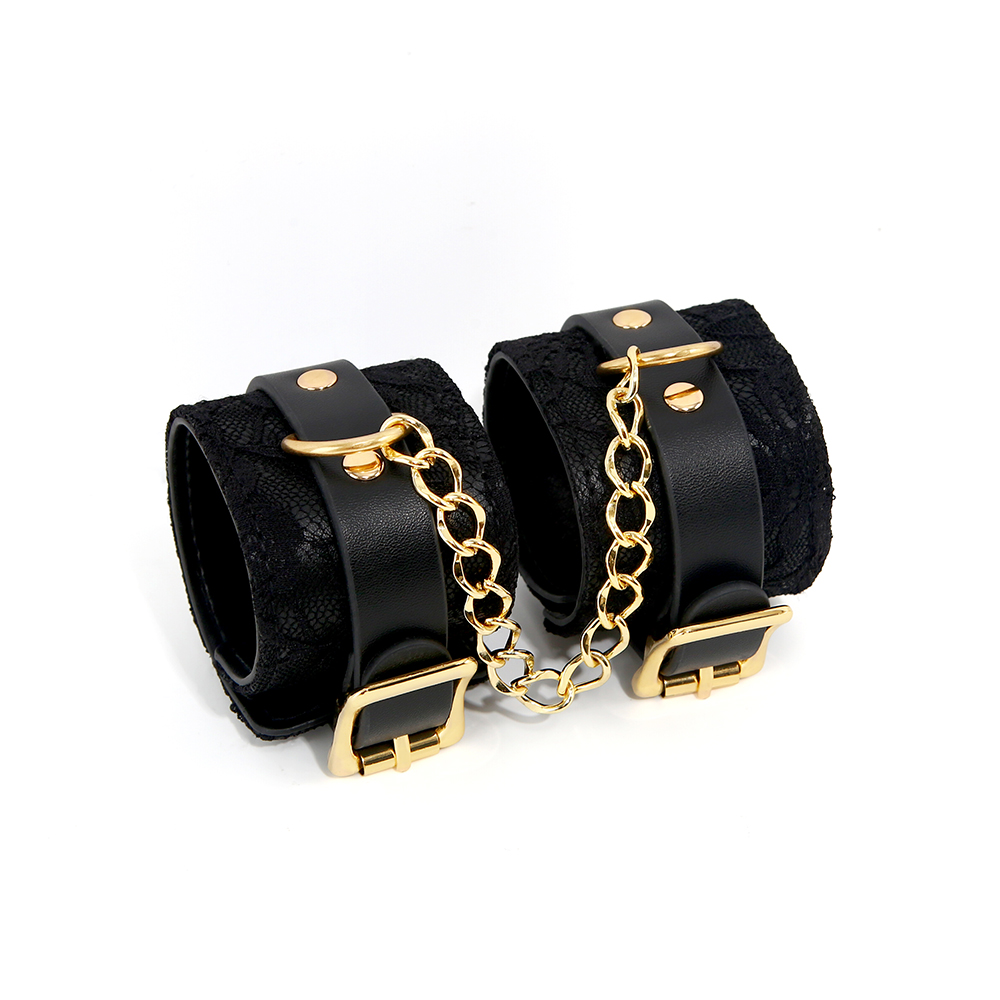
- Edge Finishing: Regardless of the leather type, comfort is significantly enhanced by hand beveling and burnishing the edges to ensure a rounded profile that prevents chafing and irritation, a critical detail for high-quality cuffs like Zaoyi’s Italy Leather BDSM Cuffs 3.
C. Chemical Safety and Regulatory Compliance
For leather in prolonged skin contact, chemical safety is paramount, especially in the EU market.
| Regulatory Body | Restricted Substance | Limit | Implication for Leather Restraints |
|---|---|---|---|
| EU REACH (Annex XVII, Entry 47) | Hexavalent Chromium (Cr(VI)) | $\le 3 \text{ mg/kg}$ (0.0003% by weight) | Mandatory hard limit for all leather components that contact the skin. Cr(VI) is a known allergen and carcinogen 34. |
| EU REACH (Candidate List) | Substances of Very High Concern (SVHC) | $\le 0.1\%$ by weight | Applies to the entire article. Requires notification if exceeded 38. |
| US (CPSIA/Prop 65 Proxy) | Lead (Total Content) | $\le 100 \text{ ppm}$ (0.01% by weight) | While not legally binding for adult products, this is the de facto best practice standard for responsible US manufacturing, especially for dyes and finishes 39. |
2. Design and Functionality of Core Restraint Types
Beginner RESTRAINT SETS must prioritize ergonomic design to prevent nerve compression, circulation restriction, and discomfort, ensuring a positive initial experience.
A. Cuffs (Wrist and Ankle)
Cuffs are the most common component of a RESTRAINT SET. Design must focus on pressure distribution and fit.
- Padding and Lining: High-quality cuffs should utilize soft linings, such as Nappa leather or specialized materials like the lining used in the Fluff Tender BDSM Cuffs, to create a soft barrier against the structural leather 50.
- Strap Width: Straps should be wide enough to distribute pressure evenly, typically in the range of 1.5 cm to 2.54 cm (5/8″ to 1″) 45. Narrower straps increase the risk of “cutting” into the skin under tension.
- Fit Protocol: The fit must be adjustable and adhere to a “Two-Finger Rule” (or similar protocol) to ensure the straps are snug but do not restrict circulation or compress superficial nerves 42.
B. Basic Harnesses (Chest/Thigh)
Beginner harnesses are primarily aesthetic or used for light tension, not suspension.
- Ergonomics and Pressure Points: The design must avoid concentrating force on sensitive areas like the neck, armpits, or soft tissue. Anatomical designs, such as the Y-front or Y-shaped chest plate, are preferred as they align the central connection point with the sternum, distributing pressure across the chest and shoulders 41.
- Hybrid Material Integration: For enhanced comfort and hygiene, especially during extended wear, hybrid materials are advantageous. Neoprene is highly recommended for lining or padding due to its cushioning, flexibility, and crucial property of being sweat-friendly and non-absorbent, mitigating bacteria buildup and skin irritation common with pure leather in warm environments 48.
C. Spreader Bars and Connection Points
Spreader bars are designed to limit mobility and create tension, not to bear vertical load.
- Function: They maintain a fixed distance between two restraint points (e.g., ankles or wrists).
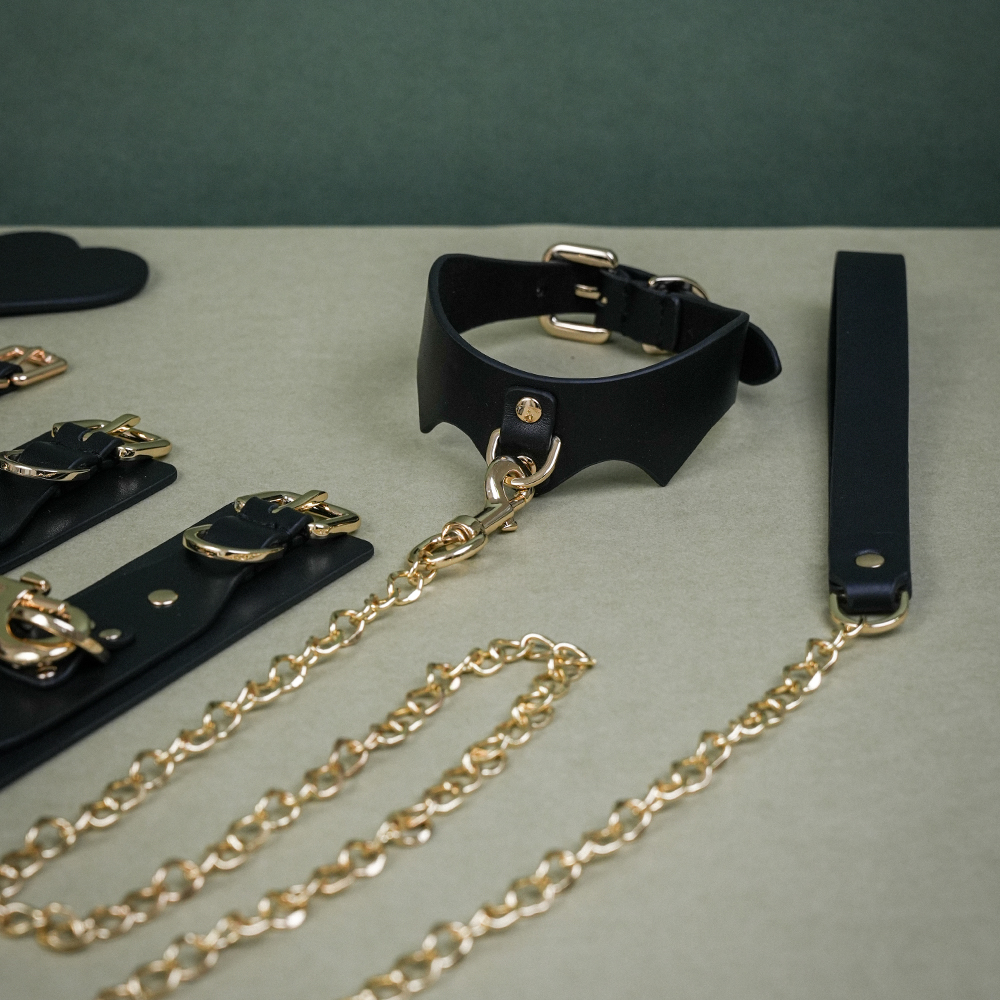
- Hardware: All connection points (D-rings, O-rings) must be welded stainless steel or solid brass to prevent deformation or failure under tension 21. Non-welded hardware is only suitable for purely aesthetic applications.
- Aesthetic Integration: Zaoyi Bondage can leverage its expertise in high-end hardware, such as the components used in the Empowered Cyber BDSM Necklace, to ensure both aesthetic appeal and structural integrity in the connection points of the RESTRAINT SET.
III. Critical Safety Standards and Mechanism Analysis
3. Essential Safety Features and Quick-Release Mechanisms
The most critical safety feature of any beginner RESTRAINT SET is the ability for rapid, single-handed release, especially in scenarios where the key is unavailable or the user is incapacitated.
A. Quick-Release Hardware Mechanics
While standard buckles are common, high-quality beginner gear should incorporate mechanisms designed for rapid, non-jamming release.
- Tactical Benchmark (COBRA®): High-strength tactical buckles (e.g., AustriAlpin COBRA®) are CNC machined from 7075 aluminum alloy and are rated for extreme loads (MBL up to 18 kN or $\approx 4,047 \text{ lbf}$) 6. Critically, these buckles are designed not to open while under load, requiring the tension to be relieved before the two brass clips can be simultaneously pressed for release 8.
- Implication for Beginner Gear: Since beginner gear is intended for tension play (not high-load suspension), the quick-release mechanism must be operable under moderate tension (e.g., up to 50 lbf). Standard side-release buckles are prone to failure modes like Inertial Release (unwanted unlatching from sudden movement) and False Latch (partial engagement) 10.
- Recommended Mechanism: For beginner leather restraints, the most reliable quick-release mechanism is a quick-pull tab or a lever-actuated buckle that is designed to release instantly when the lever is pulled, provided the load is below a critical threshold. If using traditional buckles, the inclusion of a designated shear point is mandatory.
B. Designated Shear Points and Emergency Removal
A designated shear point is an engineered weak link designed to be easily and safely cut in an emergency.
- Engineering the Shear Point: This point should be a clearly marked, accessible, single-layer section of the leather strap. The stitching used to secure this section must be minimal and calculable. For reference, heavy-duty V92 (Tex 90) bonded polyester thread has a single-strand tensile strength of 14.8 lbs (6.7 kg) 11. By controlling the number of stitches, the total shear force required to break the seam can be calculated and documented.
- Emergency Tool Compatibility: The material must be easily severable by specialized, recessed-blade safety shears (e.g., the Leatherman Raptor or S-CUT QE) 13. These tools prioritize user safety over raw cutting power, meaning the leather must be compatible with their blunt-tip, recessed-blade geometry.
4. Load Limits and Safe Application Protocols
Beginner leather RESTRAINT SETS are explicitly designed for tension play and non-suspension use. Establishing clear Working Load Limits (WLL) and Minimum Breaking Loads (MBL) is essential for liability mitigation and user safety.
A. Working Load Limit (WLL) Determination
The WLL for beginner tension gear should be based on conservative ergonomic data for controlled human exertion, not maximum force generation.
| Metric | Value | Rationale |
|---|---|---|
| Target WLL (Static Load) | 50 lbf to 150 lbf | This range comfortably exceeds the average controlled pull strength of an adult (50-90 lbf) but remains well below maximum exertion 17. |
| Minimum Factor of Safety (FoS) | 5:1 | Standard for high-risk equipment where failure is non-catastrophic but injurious. FoS is defined as $\text{FoS} = \text{MBL} / \text{WLL}$ 17. |
| Conservative FoS (Best Practice) | 10:1 | Recommended if the gear could potentially be misused for partial suspension, aligning with personnel lifting standards 17. |
| Required MBL (for 150 lbf WLL @ 5:1 FoS) | 750 lbf | The entire system (strap, stitching, hardware) must withstand this force before failure 25. |
B. Material and Component Strength Analysis
The MBL of the entire RESTRAINT SET is determined by its weakest link, which is almost always the stitching or the hardware attachment point.
- Leather Strap Strength: A standard leather strap (approx. $0.16 \text{ in}^2$ cross-section) has an estimated MBL of only 280-360 lbf26.
- Design Implication: To achieve the required 750 lbf MBL, the strap must be significantly reinforced, likely requiring a doubled, saddle-stitched construction using high-strength thread (e.g., #277 bonded nylon) and a wider cross-section.
- Hardware Strength: Hardware must be robust. Welded D-rings made of Stainless Steel or Solid Brass are mandatory for load-bearing points, as non-welded rings can deform and fail at lower loads 21.
- Stitching Failure: Stitching crosswise on a strap creates a “tear on the dotted line” failure point and must be avoided in critical load zones 25.
C. Safe Application Protocols
To maintain the WLL, the product must be accompanied by explicit warnings regarding dynamic loading.
- Dynamic Load Risk: Sudden, jerking movements (“yanks”) can generate forces up to 2.2 times the static load 24. If a user pulls with 300 lbf of static force, a dynamic movement could momentarily generate 660 lbf, approaching or exceeding the MBL of a poorly constructed restraint.
- Mandatory Labeling: The gear must be clearly labeled: “Non-Suspension Tension Gear – WLL: 150 lbf Static Load.”
- Protocol Requirement: The accompanying instructions must state: “Do not use for full or partial body suspension. Avoid sudden, jerking, or ‘yank’ movements, as these can multiply the static force, exceeding the Minimum Breaking Load (MBL).”
IV. Market Analysis and Audience Profile
5. The Beginner User Profile and Purchasing Criteria
The novice BDSM consumer represents the fastest-growing segment of the market, driven by increasing social openness and media influence 56. Their purchasing criteria are distinct from those of experienced practitioners.
A. Core Needs and Priorities
| Priority | Description | Zaoyi Bondage Advantage |
|---|---|---|
| Perceived Safety | The paramount concern. Beginners seek gear that is easy to remove and clearly non-lethal. | Emphasis on engineered safety (750 lbf MBL, quick-release tabs) and clear labeling. |
| Ease of Use | Simple application and removal mechanisms (e.g., buckle straps over complex lacing). | Focus on intuitive designs, such as the components in the Bad Blood Restraint Kit. |
| Comfort | Desire for soft materials, especially where skin contact is prolonged. Avoidance of chafing and nerve compression. | Use of high-quality Nappa lining, hand-beveled edges, and breathable veg-tan leather 3. |
| Aesthetics/Discretion | Desire for attractive, high-quality leather that can be stored discreetly. | Leveraging the premium, customized aesthetic of Zaoyi Bondage to justify the higher price point. |
| Price Point | Typically seeking entry-level sets in the $90 to $200 range, which represents the high-end of the beginner market 59. | Positioning as a long-term investment rather than a disposable novelty item. |
B. Common Misconceptions
Beginners often fail to differentiate between aesthetic gear and structurally sound tension gear. They may assume that any leather strap is suitable for partial suspension. This necessitates robust Failure to Warn mitigation strategies (see Section V) 33.
6. Global Market Trends and Geographic Regulatory Landscape (US, EU)
The market for BDSM RESTRAINT SETS is robust, dominated by e-commerce, and subject to increasingly strict international regulations.
A. Market Size and Growth Drivers
- U.S. Market: The U.S. BDSM Sex Toys Market was valued at USD 1.45 billion in 2023 and is projected to grow at a CAGR of approximately 8.13% through 2030 55.
- Restraints Segment: The Restraints category holds the largest revenue share (30.86% in 2023) and is forecasted to exhibit the fastest growth, confirming that this product type is central to market expansion 56.
- Distribution: E-commerce is the dominant channel, holding a 58.47% revenue share in the US, driven by the consumer demand for anonymity and discreet delivery 61.
B. European Union Regulatory Landscape (GPSR and REACH)
The EU presents the most complex regulatory environment, requiring proactive compliance for any manufacturer targeting this market.
- General Product Safety Regulation (GPSR): Effective December 13, 2024, the GPSR (Regulation (EU) 2023/988) governs adult novelty restraints as General Consumer Products 29.
- Mandatory Documentation: Manufacturers must conduct an internal risk assessment and maintain a Technical Documentation File for 10 years 29. A Declaration of Conformity (DoC) is required, asserting compliance with the general safety requirement 30.
- Traceability: Products must be affixed with a type, model, or batch/serial number (Article 9(5)). The manufacturer and the EU-based Responsible Person (importer, authorized representative, etc.) must be clearly identified on the product or packaging (Article 9(6)) 29.
- Market Surveillance: The regulation strengthens surveillance, requiring economic operators to use the Safety Business Gateway to notify authorities of dangerous products 31.
- REACH Chemical Compliance: As detailed in Section II.1, strict adherence to the 3 mg/kg limit for Hexavalent Chromium (Cr(VI)) is non-negotiable for leather components in skin contact 34.
V. Conclusion and Strategic Recommendations
The beginner leather RESTRAINT SET market demands a strategic approach that integrates high-end material quality with rigorous, engineered safety standards to mitigate significant product liability risks.
A. Summary of Key Safety Compliance Findings
| Area | Key Technical Requirement | Compliance Standard |
|---|---|---|
| Material Integrity | Use vegetable-tanned (Bridle) leather, 5-7 oz. thickness, with hand-finished edges. | Superior structure, resistance to stretching, and enhanced comfort 1. |
| Structural Load Limit | Minimum Breaking Load (MBL) of 750 lbf for the entire system. | Achieves a WLL of 150 lbf at a conservative 5:1 Factor of Safety (FoS) 25. |
| Hardware | All load-bearing D-rings and O-rings must be welded Stainless Steel or Solid Brass. | Prevents deformation and failure under tension 21. |
| Chemical Safety (EU) | Cr(VI) concentration $\le 3 \text{ mg/kg}$ in skin-contact leather. | Mandatory compliance with REACH Annex XVII 34. |
| Regulatory (EU) | Technical File, Declaration of Conformity (DoC), and EU Responsible Person designation. | Mandatory compliance with GPSR (effective Dec 2024) 29. |
B. Strategic Recommendations for Zaoyi Bondage
To leverage the premium positioning of Zaoyi Bondage and minimize liability exposure in this high-risk category, the following strategic actions are recommended:
1. Engineering and Design Strategy
- Adopt the 5:1 FoS Standard: All beginner RESTRAINT SETS (including cuffs, collars like the Premium BDSM Collar, and spreader bars) must be engineered to the 750 lbf MBL standard. This requires doubling or reinforcing the leather straps and using high-strength, welded hardware.
- Mandatory Quick-Release Integration: Integrate a reliable, non-jamming quick-release mechanism (e.g., a quick-pull tab or a specialized safety buckle) into every primary restraint component.
- Standardize Designated Shear Points: Clearly mark and document the location of the designated shear point on all cuffs and harnesses, ensuring the material is compatible with standard emergency cutting tools.
2. Liability and Risk Mitigation Strategy
Product liability exposure is high, falling under Strict Liability for manufacturing defects and the Risk-Utility Test for design defects 33.
- Conspicuous Failure to Warn: This is the most critical defense mechanism. All packaging, instructions, and product inserts must include clear, conspicuous warnings (minimum 10-point type) about foreseeable risks, including:
- “Risk of Asphyxiation, Nerve Damage, and Circulation Restriction.”
- “Non-Suspension Use Only. WLL: 150 lbf Static Load. Dynamic loads (jerking/yanking) are strictly prohibited.”
- “Always keep a specialized safety cutting tool (e.g., Leatherman Raptor or S-CUT) within reach of the non-restrained partner.”
- Waiver Best Practices: While waivers are not a complete defense against gross negligence, they maximize the defensive value of an Assumption of Risk (AOR) defense. Ensure any waiver is a standalone document, clearly describing the full range of possible injuries, including “permanent disability or death,” and is signed voluntarily 33.
- Insurance Coverage: Given the high severity exposure, secure specialized Product Liability insurance with limits exceeding the industry standard, targeting primary coverage of $2M/$4M/$4M and considering excess/umbrella limits up to $10 million 33.
3. Proactive Regulatory Compliance
- Pre-emptive GPSR Compliance: Implement the necessary traceability systems (batch/serial numbers) now, ahead of the December 2024 GPSR deadline. Appoint or confirm the EU Responsible Person and prepare the Technical Documentation File for all RESTRAINT SETS intended for the European market.
- Mandatory Chemical Testing: Institute mandatory, third-party testing for Cr(VI) and heavy metals (Lead/Cadmium) for every batch of finished leather used in the Zaoyi Bondage supply chain to ensure continuous REACH compliance.
4. Proactive Solution: The Integrated Safety Kit
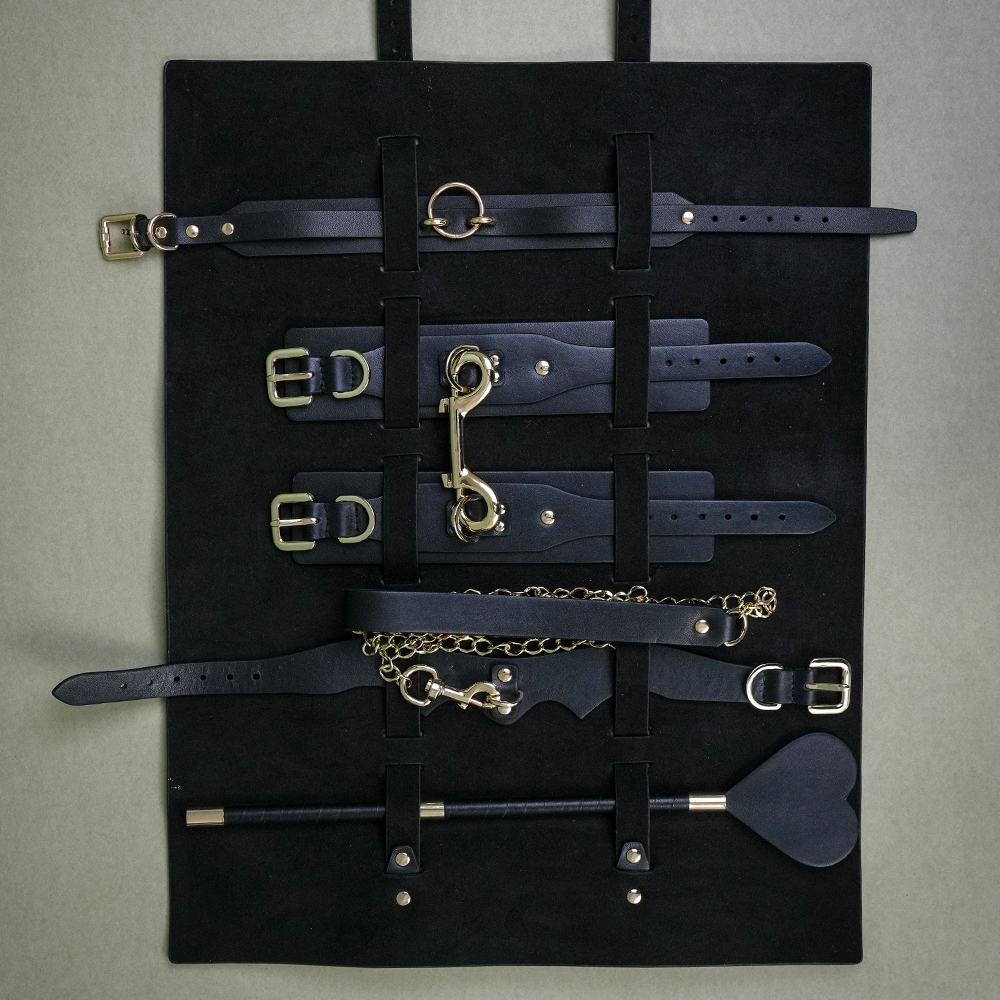
Zaoyi Bondage should market its beginner RESTRAINT SETS not just as individual items, but as a complete, safety-integrated system, such as the Luxury Bondage Set.
- Suggestion: Offer a “Beginner Safety RESTRAINT SET” that includes the cuffs, collar, spreader bar, and a branded, high-quality, recessed-blade safety shear (e.g., a customized version of the Leatherman Raptor) explicitly labeled as the “Emergency Release Tool.” This proactively addresses the “Failure to Warn” risk regarding the necessity of an emergency cutting tool.
This comprehensive approach ensures that Zaoyi Bondage maintains its reputation for high-quality, customized leather goods while establishing a market-leading position in safety and regulatory compliance, justifying the premium price point to the discerning beginner consumer.